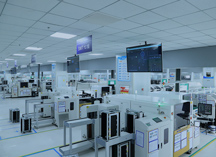
After seeing how Mini PC are assembled in a factory, more and more people start asking the same question: given that two boxes may contain similar circuit boards, where does the real difference between brands lie? Prices can look close on paper. Some details, if overlooked, will multiply maintenance costs later.
Choosing an Industrial Computer brand goes beyond comparing processor models and list prices. Product certifications, supply lifecycle, thermal design, and mounting options each affect on-site reliability. Here is a practical checklist—work through it in order, and few items will slip through the cracks.
Different regions have different requirements for electromagnetic compatibility, electrical safety, and environmental compliance. CE alone is not enough—shipping to North America may require FCC certification, South America may demand ANATEL, and deployment within China needs 3C. Brands whose products carry multi-region certifications have already passed compliance tests for several markets, which saves approval headaches later.
PUSR industrial computers hold 3C, CE, FCC, ROHS, and WEEE certifications across the series. Some models carry additional regional certifications such as RCM, ANATEL, NBTC, and MTC, so export projects can match target-market requirements directly.
A brand that truly focuses on industrial computers usually covers everything from embedded gateways to edge AI boxes, from ARM-based units to x86 systems, from box-style IPCs to panel PCs. A wider product range makes it easier to stick with one brand ecosystem across projects, reducing integration complexity and spare-part inventory.
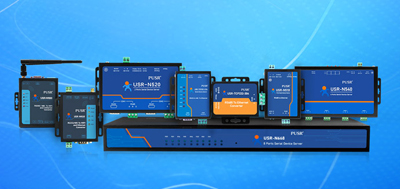
PUSR industrial computers span USR-EG228 (fanless ARM entry), USR-EG528/EG628 (ARM mid-range), USR-EG828-GL (ARM embedded), USR-EG828-EMS (EMS gateway), USR-EG928A (edge AI box with RK3588J, 6 TOPS NPU), USR-EG118 (open-source Arduino-compatible gateway), USR-EC100/EC300/EC500 (x86 industrial computers), and USR-SH800 (industrial touchscreen panel PC). From data acquisition to edge AI, the full sequence is covered.
Fan-cooled PCs dissipate heat through airflow, but that same airflow pulls in dust, metal chips, and fibers. Fanless designs conduct heat through a solid metal chassis, eliminating the fan as a moving-part failure point—an obvious advantage in dusty, humid, or high-vibration industrial sites.
The rule of thumb: fan-cooled units are acceptable in climate-controlled control rooms. Workshop floors, outdoor enclosures, and food washdown lines call for fanless passive cooling. Most PUSR models adopt a fanless all-metal chassis design and operate within -25°C to +75°C.
Not enough serial ports, not enough Ethernet, missing DI/DO lines—these are the most common on-site surprises. When evaluating a brand, list every device that must connect to the PC (PLCs, meters, sensors, cameras), then confirm the brand offers the required RS485/RS232 ports, multi-Ethernet, CAN bus, and video outputs. PUSR industrial computers typically integrate multiple RS485/RS232 serial ports for direct Modbus device connections; select models such as EG628 also include built-in CAN bus for vehicle-mounted or automated equipment.
Commercial PCs usually support only 0°C to 40°C. Industrial sites in winter unheated warehouses or summer sun-exposed outdoor cabinets can easily exceed that range. Wide-temperature design (-25°C to +75°C or wider) ensures processors will not throttle and systems will not reboot under extreme conditions.
Voltage fluctuation is common on industrial sites. Stable 24V DC environments can use fixed-voltage input. Unstable grids, solar-powered, or battery-powered sites need wide-voltage input (e.g., DC 9-36V). PUSR EG528 and select models support wide-voltage DC input to handle voltage swings.
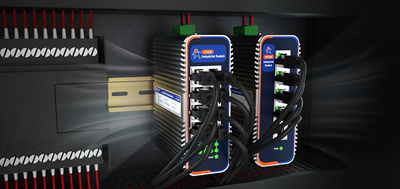
Control cabinet space, DIN-rail width, wall-mount footprint, or panel-cutout dimensions—the available space dictates form factor. A solid brand should offer multiple mounting options so the same product family fits diverse installation scenarios. PUSR industrial computers support DIN-rail, wall-mount, and panel-embedded installation, and select models are compact enough for tight spaces.
Once deployed, industrial equipment often runs for 5 to 10 years. If a brand frequently swaps motherboard designs or discontinues interface modules, the cost of later replacements adds up quickly. Confirm the supplier's supply-commitment period, end-of-life notification window, and compatible replacement plan. PUSR commits to 5-10 years of supply for core products, with 6-12 months' notice before discontinuation and compatible alternatives provided.
Upgrading devices one-by-one on-site becomes a burden as the fleet grows. Brands that support remote firmware updates, remote log retrieval, and remote reboot see significantly lower OPEX. PUSR industrial computers offer remote management features including firmware upgrades, status monitoring, and fault diagnostics over the network.
Every hour of production downtime can cost tens of thousands of dollars. A brand's response time, spare-part availability, and support channels (ticket system, phone, online chat) directly affect downtime duration. Before committing, understand the supplier's after-sales policy, the technical team's expertise, and whether local support is available.
Choosing an industrial computer brand is not about picking the highest specs—it is about matching the right brand to the right scenario. Work through the checklist: certifications, product range, cooling method, interfaces, temperature range, power input, mounting options, supply lifecycle, remote management, and after-sales support.
Once every item has an answer, the right choice becomes clear. PUSR industrial computers cover the full ARM-to-x86 range, carry 3C/CE/FCC/ROHS/WEEE and multi-region certifications, offer fanless designs on most models, support wide-voltage input, and provide multiple mounting options. From data-acquisition gateways to edge AI boxes, from embedded PCs to industrial panel PCs, the most suitable model can be matched to each project's actual needs.
Q1: What is the difference between ARM and x86 industrial computers?
ARM architecture delivers lower power consumption, smaller form factor, and fanless cooling—ideal for edge data acquisition and IoT gateways. x86 architecture provides higher performance and broader software compatibility—suited for SCADA servers, Docker deployment, and video processing. Choose the architecture first based on the application, then compare specific models. PUSR offers both ARM lines (EG228/EG528/EG628/EG828/EG928A) and x86 lines (USR-EC100/EC300/EC500).
Q2: Do fanless industrial computers really need zero maintenance?
Fanless designs eliminate the two most common failure points—fan bearing wear and dust ingestion through ventilation openings—significantly extending maintenance intervals. However, fanless does not mean zero maintenance: interface sealing, heat-dissipation surface cleaning, and firmware version checks are still required periodically. Maintenance cycles are substantially longer than fan-cooled units, but regular checks remain recommended.
Q3: What is the core difference between industrial computers and commercial PCs?
Industrial computers support wide-temperature operation (-25°C to +75°C), wide-voltage input (DC 9-36V), vibration and EMI resistance, and hold CE/ROHS/FCC/3C certifications. Commercial PCs typically operate in 0-40°C environments with stable power and lack these industrial-grade designs. The two categories serve different scenarios and should not be used as simple substitutes.
Q4: What do CE, FCC, ROHS, and 3C certifications mean?
CE is the European market准入 certification covering electromagnetic compatibility and safety; FCC is the U.S. Federal Communications Commission certification limiting electromagnetic interference from electronic devices; ROHS is the EU environmental directive restricting hazardous substances; 3C is China's mandatory product certification. Multi-region certifications indicate that a product has passed compliance testing in multiple countries, eliminating the need for repeated certification on export projects.
Q5: Which operating systems do industrial computers support?
Industrial computers typically support Windows IoT Enterprise, Linux distributions (Ubuntu, Yocto, etc.), and select ARM models support Android. OS selection depends on application software requirements—SCADA software usually requires Windows, while containerized applications work well on Linux.
Q6: What does the IP rating (e.g., IP65) mean for industrial computers?
IP ratings define a device's protection against solid particles and liquids. The first digit (0-6) indicates dust protection level; the second digit (0-9) indicates water protection level. IP65 means fully dust-tight and protected against low-pressure water jets from any direction. Environments with heavy dust accumulation should specify IP65 or higher.
Q7: What distinguishes edge AI industrial computers from standard industrial computers?
Edge AI industrial computers (such as PUSR EG928A) integrate high-performance processors with dedicated NPUs (Neural Processing Units), support AI frameworks like TensorFlow and ONNX, and can run vision inspection, face recognition, and license plate recognition inference tasks. Standard industrial computers focus on data acquisition and control without dedicated AI acceleration hardware.
Q8: How long is the supply lifecycle for industrial computers?
Mainstream industrial computer brands typically commit to 5-10 years of continuous supply, with 6-12 months' advance notice before product discontinuation and compatible replacement models provided. This contrasts sharply with the 1-3 year lifecycle of consumer-grade PCs, ensuring production lines can run stably for years without frequent hardware replacements.