5G Cellular Router: The "Neural Center" Breakthrough for Low-Latency Communication in Flexible Production Lines
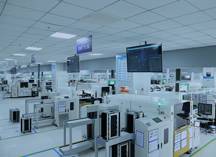
In a flexible production line at a 3C electronics factory in Dongguan, robotic arms are assembling mobile phone camera modules with a precision of 0.1 millimeters. Suddenly, an AGV trolley stalls on the track for 3 seconds due to network latency, disrupting the rhythm of the entire production line—12 devices halt, 300 work-in-progress items back up, and direct losses exceed 150,000 yuan. This is not an isolated case: according to a survey by the China Electronics Standardization Institute, 78% of flexible manufacturing enterprises experience production interruptions due to communication delays, with an average downtime of 2.3 hours per fault and annual losses reaching tens of millions. As manufacturing transitions toward "flexibility, intelligence, and customization," low-latency communication has become the "digital lifeline" determining the survival of flexible production lines.
In a flexible production line at an automotive component manufacturer, the collaboration between a 6-axis robotic arm and a visual inspection system must be controlled within 5ms. However, the traditional Wi-Fi solution causes latency fluctuations of up to 50ms due to signal interference, resulting in delayed robotic arm movements: in welding processes, a 0.1-second delay causes a 0.5mm deviation in the weld seam, driving the defect rate up to 12%. More critically, this latency has a "butterfly effect"—a single workstation's stagnation propagates along the production line, causing an exponential decline in overall efficiency.
The core advantage of flexible production lines lies in rapid model changeovers, but a practice at a home appliance manufacturer exposed communication bottlenecks: when switching the production line from air conditioner assembly to refrigerator production, reconfiguring the IP addresses and communication parameters of over 200 devices took 8 hours using traditional wired networks, while the wireless solution resulted in 30% of devices losing connectivity due to frequency band conflicts. This "changeover equals paralysis" dilemma caused annual capacity losses of 18%.
In an AR-assisted assembly scenario at a precision manufacturing enterprise, operators' helmets need to receive real-time data streams from over 100 sources, including robotic arms, sensors, and ERP systems, with a per-device data throughput of 50Mbps. However, the 4G network's insufficient bandwidth caused stuttering visuals, preventing operators from receiving real-time instructions. This increased the assembly error rate by 27% and raised rework costs by 4 million yuan annually.
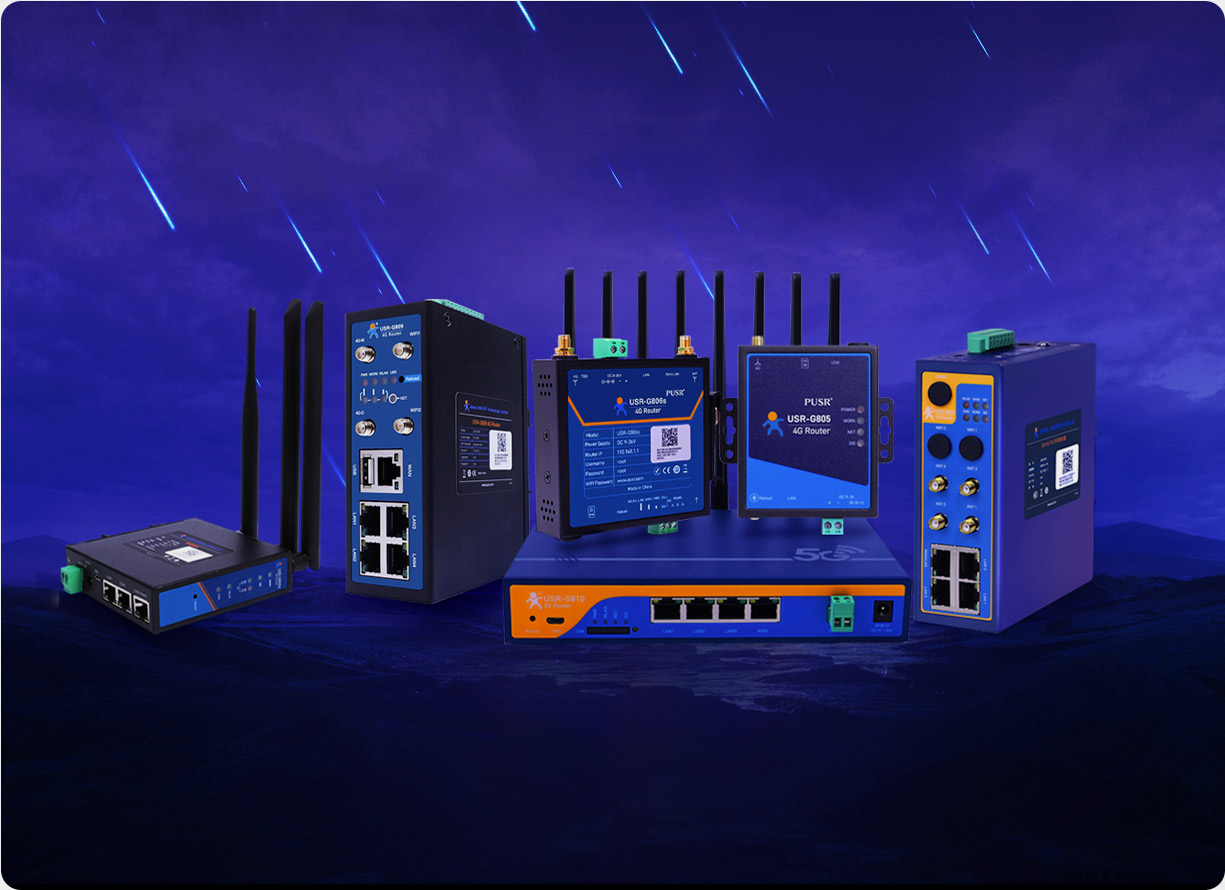
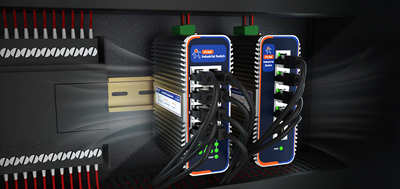
The USR-G816 5G cellular router achieves latency breakthroughs through three key technologies:
Subframe-level scheduling: Utilizing 5G URLLC (Ultra-Reliable Low-Latency Communication) technology, it compresses air interface latency from 10ms to under 1ms, meeting hard real-time requirements for robotic arm control.
Carrier aggregation: Achieving a peak rate of 1.2Gbps through 3CC carrier aggregation, it ensures smooth performance for bandwidth-intensive applications like AR/VR.
Dedicated slicing: Customizing 5G private network slices for enterprises, it isolates public network interference and prioritizes critical business data transmission.
A semiconductor manufacturer's practice validated its effectiveness: after deploying the USR-G816, the collaboration latency between photolithography machines and inspection equipment dropped from 15ms to 0.8ms, improving product yield by 3.2 percentage points and increasing annual revenue by 28 million yuan.
To address the dynamic reconfiguration needs of flexible production lines, the USR-G816 innovatively integrates SDN (Software-Defined Networking) and TSN (Time-Sensitive Networking) technologies:
SDN dynamic topology: Through a central controller, it real-time senses device location changes and automatically adjusts routing paths, reducing network reconfiguration time during line changeovers from 8 hours to 8 minutes.
TSN time synchronization: Achieving microsecond-level synchronization across all production line devices, it ensures multi-robotic arm collaborative movement errors of less than 0.05mm.
QoS policy engine: Dynamically allocating bandwidth based on business priority, it guarantees zero packet loss transmission for control commands (e.g., emergency stop signals).
A case study at an automotive final assembly line showed that this solution improved line changeover efficiency by 90% and increased Overall Equipment Effectiveness (OEE) from 72% to 89%.
The USR-G816's built-in edge computing platform reduces end-to-end latency through three mechanisms:
Protocol offloading: Completing industrial protocol parsing (e.g., Modbus/Profinet) at the router level, it reduces data encapsulation/decapsulation time.
AI inference acceleration: Integrating an NPU chip, it enables localized deployment of AI models for defect detection and predictive maintenance, with inference latency under 5ms.
Data refinement: Using feature extraction and compression algorithms, it reduces cloud transmission volume by 90% by compressing 100MB of raw data to 1MB.
A practice at an electronics contract manufacturer demonstrated that this solution increased the response speed of visual inspection systems by 12 times and reduced unit capacity energy consumption by 18%.
On a flexible production line at a mobile phone factory in Shenzhen, the USR-G816 supports triple collaboration among "devices-devices-humans":
Robotic arm collaboration: Six robotic arms achieve 0.5ms-level synchronization through a 5G private network, assembling components with a precision of ±0.02mm.
AGV dynamic scheduling: Leveraging 5G's low-latency characteristics, AGVs can real-time respond to production line demand changes, with path planning response times under 50ms.
AR-assisted maintenance: Maintenance personnel receive equipment status data through AR glasses, reducing fault localization time from 30 minutes to 3 minutes.
This solution reduced line changeover time from 4 hours to 40 minutes and increased the proportion of customized orders to 65%.
A new energy vehicle manufacturer's final assembly line achieved "fuel vehicle-electric vehicle-hydrogen vehicle" mixed-model production using the USR-G816:
Dynamic BOM matching: The 5G router real-time acquires order information and automatically adjusts equipment parameters and material delivery paths.
Battery module assembly: Through 1ms-level low-latency communication, robotic arms and laser welding machines collaboratively assemble battery packs, improving welding qualification rates to 99.98%.
Quality traceability system: Real-time uploading of full-process data to a blockchain platform reduces traceability time from 2 hours to 2 seconds.
After system deployment, production line capacity increased by 40%, and work-in-progress inventory decreased by 55%.
In a cleanroom at a high-end medical device manufacturer, the USR-G816 addressed three pain points of traditional wired networks:
Dust-free modification: By replacing wired connections with 5G, it eliminated over 200 cable interfaces on the production line, reducing dust contamination risks.
Mobile device interconnection: It supports seamless switching among AGVs, robotic arms, and inspectors, with a network interruption rate under 0.01%.
Real-time sterilization monitoring: Through 5G's low-latency transmission, sterilization chamber temperature and pressure data are real-time fed back to the control system, ensuring 100% compliance with aseptic environment standards.
This solution increased the first-pass yield from 82% to 97%, reducing annual quality losses by over 20 million yuan.
As technologies like 5G-A, digital twins, and large AI models converge, the USR-G816 is evolving into an "intelligent production hub":
Integrated sensing and communication: Combining millimeter-wave radar with communication modules, it enables fused device state sensing and communication functions.
Digital twin connector: Serving as a bridge between physical production lines and digital twins, it supports real-time data mapping and reverse control.
Autonomous decision-making engine: Based on reinforcement learning algorithms, it dynamically optimizes communication parameters and device scheduling strategies according to production data.
A pilot project at a semiconductor manufacturer showed that adopting the new-generation intelligent router improved the production line's autonomous adjustment capability by 300% and reduced manual intervention frequency by 85%.
When a home appliance manufacturer achieved "1-hour line changeovers" using the USR-G816 5G cellular router, and when an automotive factory reached "zero-inventory mixed-model production" with this solution, we profoundly recognize that low-latency communication has transcended technical boundaries to become the "digital oxygen" of flexible production lines—it not only eliminates physical-world delays but also reconstructs the value creation logic of manufacturing enterprises. In this industrial transformation centered on "flexibility," 5G cellular routers play a critical role as the "neural center": with millisecond-level response speeds, they enable devices to "think" and production lines to possess "adaptive intelligence," ultimately propelling manufacturing from the "era of economies of scale" to a new epoch of "economies of responsiveness."