The current construction of smart grids is facing multiple implementation challenges:
Traditional wired communication features high deployment costs and numerous coverage blind spots, making it difficult to meet the full-scenario access requirements of remote stations and complex terrains;
The massive data from inspection and monitoring terminals suffers from insufficient transmission bandwidth and excessive latency, leading to delayed fault response;
The manual operation and maintenance mode has low efficiency and poses great difficulties for safety management, with a lack of real-time visual support for high-risk operation scenarios;
The traditional computing architecture cannot meet the real-time on-site AI analysis requirements. Transmitting a large volume of data back to the cloud not only increases bandwidth pressure, but also brings potential data security risks.
Leveraging the technical features of 5G including low latency, large bandwidth and wide connectivity, combined with technologies such as the Internet of Things, big data and artificial intelligence, this solution builds a full-coverage industrial IoT transmission network adapted to complex environments on the premise of ensuring the safety of power grid production, covering four core business scenarios:
By integrating 5G with TSN and industrial Ethernet technologies, on-site measuring devices, control equipment and actuators can be quickly connected to the industrial control system, realizing millisecond-level real-time data collection and remote precise control. It solves the pain points of traditional control links such as difficult deployment and poor scalability, supports second-level fault isolation for core businesses like distribution network differential protection, and significantly reduces the impact scope of power outages.
Through the 5G network, terminals such as smart cameras, inspection robots and smart wearable devices are connected, breaking the bandwidth bottleneck of traditional inspection data transmission. It realizes the real-time return of high-definition inspection footage and interconnection of multiple devices, which can increase the inspection efficiency by more than 2 times and replace a large number of on-site manual inspection operations.
Combined with the 5G cloud-edge collaboration capability, it realizes real-time perception of equipment status, intelligent evaluation and early fault warning. Equipped with AR-assisted maintenance and remote expert support functions, it greatly reduces the probability of unplanned equipment outages and cuts down on-site operation and maintenance man-hours.
Relying on the highly reliable 5G communication to improve the network disaster tolerance capability, it realizes full-process visual management of personnel safety, hazardous operations and high-risk operations. In emergency response scenarios, it supports remote human-machine collaborative operations and improves the efficiency of rapid response to dangerous situations.
If you need an AI visual industrial PC, you can simply click the link to contact the PUSR professionals.
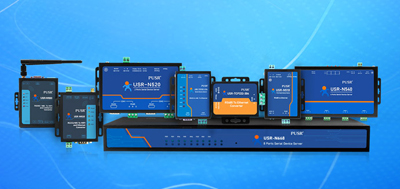
During the implementation of the solution, the AI visual industrial PC from USR can be deployed to further enhance the edge-side capability. This product is built on the RK3576/3588 platform with the Ubuntu system, featuring a maximum computing power of 46TOPS. It is embedded with the self-developed WukongEdge engine, supports 32 camera accesses and local deployment of more than 200 AI algorithms. It can directly complete real-time analysis of inspection footage and automatic identification of hidden anomalies at the power grid site, without transmitting a large volume of video data back to the cloud. This not only reduces the transmission bandwidth pressure, but also further guarantees the local security of power data, providing efficient and stable edge computing support for the implementation of 5G scenarios in smart grids.