April 10, 2026
Abnormal Port Indicators on Industrial Switches: Quick Guide for Power Voltage & Link Status
Abnormal Port Indicators on Industrial Switches: Quick Diagnostic Guide for Power Supply Voltage and Link Status
In an intelligent workshop of a steel enterprise, Engineer Li stared at red alarms flashing on the monitoring screen—the third port indicator of the core industrial switch kept blinking orange, with "Link Down" alerts in system logs. This is not an isolated case. In key sectors like energy, transportation, and manufacturing, abnormal port indicators on industrial switches have become "hidden killers" causing system breakdowns. While equipment operates stably in -40°C extreme cold, a simple port indicator anomaly can halt production lines, reflecting a deep contradiction between industrial network operators' pursuit of stability and real-world technical bottlenecks.
1. The Overlooked "Light Language": The Hidden Code of Port Indicators
1.1 Industrial Design Logic of Indicators
Port indicators on industrial switches are not mere decorative elements but visual interfaces carrying critical status information. Take the USR-ISG series as an example. Its indicator system uses three-level status coding:
Steady green: Physical link established, normal data transmission.
Blinking green: Data being sent/received (frequency proportional to traffic).
Blinking orange: CRC errors or collision frames (high-frequency blinking indicates severe faults).
Off: Physical link disconnected or port disabled by administrator. A case at an auto factory is illustrative: The port indicator of an industrial switch showed orange blinking, which maintenance staff mistakenly took as normal communication. Only when PLCs on the production line frequently disconnected did they find the root cause was duplex mode mismatch. This misconception extended troubleshooting time by 47 minutes, causing direct losses exceeding 120,000 yuan.
1.2 Special Challenges in Industrial Environments
In substations with electromagnetic interference up to 60V/m, indicators on ordinary switches may generate false alarms. The USR-ISG series addresses this through three innovations:
Hardware-level anti-interference: Magnetic isolation technology separates the indicator drive circuit from the main control chip.
Intelligent filtering algorithm: 10ms-level debouncing processing for indicator status signals.
Dual-color LED design: Color combinations convey richer status information (e.g., orange-green alternating blinking indicates loop detection). A power company's field test showed that under the same electromagnetic environment, the USR-ISG's false alarm rate dropped by 82% compared to traditional devices, with fault location efficiency tripling.
2. Abnormal Power Supply Voltage: The Hidden Energy Crisis Behind Indicators
2.1 The "Triple Dilemma" of Industrial Power Supply
Industrial switches face more complex power supply challenges than commercial environments:
Voltage fluctuations: Start/stop of high-power equipment in factories causes 24V DC bus voltage transients ranging from 18-30V.
Power pollution: Harmonics from frequency converters distort voltage waveforms by over 15%.
Grounding faults: Ground loop interference may induce common-mode voltages up to 50V. A petrochemical enterprise's case is typical: Its switches frequently restarted during thunderstorms. Tests revealed the power module's overvoltage protection threshold was set too low (42V default), while actual transient overvoltages often reached 48V. After switching to the USR-ISG series, its 60V wide-voltage input design and three-stage surge protection (6kV/3kA) resolved the issue completely.
2.2 Indicator Signs of Power Supply Abnormalities
When power supply issues arise, port indicators exhibit characteristic behaviors:
Power Supply Issue Type
Indicator Behavior
Associated Fault
Low input voltage
All port indicators dim
Switch throttles performance
Reversed power connection
Power indicator off
Permanent power module damage
Poor grounding
Port indicators blink randomly
CRC error rate surges in data frames
PoE overload
Corresponding port indicator blinks orange rapidly
PD device repeatedly restarts
In a smart park project, maintenance staff quickly located a short-circuit fault in a camera by observing the orange rapid blinking of the USR-ISG switch's PoE port indicator, preventing the entire switch from shutting down due to overload protection.
3. Abnormal Link Status: The Reasoning Chain from Indicators to Network Topology
3.1 Rapid Location of Physical Layer Faults
When port indicators show abnormalities, follow this "four-step troubleshooting method":
Check physical connections: Re-plug network cables and observe if indicators recover.
Auto factory case: Replacing a crystal head resolved a contact issue in just 3 minutes.
Verify opposite-end devices: Test with known-good devices.
A metro project quickly confirmed a switch port fault (not a camera issue) through cross-testing.
Check port configurations: Log in to the management interface to confirm speed/duplex mode settings.
An energy enterprise's forced gigabit full-duplex setting caused incompatibility with opposite-end devices.
Analyze error statistics: Use the display interface command to view CRC error counts.
A chemical project found a port generating 120,000 CRC errors per hour, ultimately tracing it to poor cable quality.
3.2 Indicator Characteristics of Layer 2 Loops
In industrial networks, layer 2 loops are a common cause of abnormal port indicators. When loops occur, indicators exhibit characteristic behaviors:
Single port blinks wildly: This port is involved in the loop, with input/output bandwidth utilization consistently exceeding 90%.
Multiple ports blink synchronously: The loop involves multiple switch ports, with MAC address tables fluctuating violently.
System-wide lag: Core switch CPU usage spikes above 80%, with slow management interface responses. A smart city project used the USR-ISG switch's loop detection function (based on STP status monitoring) to locate a temporary network cable misconnected by construction workers within 15 seconds, preventing a network-wide outage.
4. USR-ISG Series: The Intelligent Partner for Industrial-Grade Diagnostics
The USR-ISG series industrial switches demonstrate unique technical advantages in addressing port indicator anomalies:
4.1 Intelligent Diagnostic Toolset
LED status coding: Uses RGB tri-color LEDs to convey 12 types of status information through color combinations.
Local log storage: Built-in 512KB log buffer records the last 1,000 key events.
One-click diagnostic function: Triggers a comprehensive self-check via a physical button, with results quickly fed back through indicators.
4.2 Industrial-Grade Protection Design
Power system: Supports 9.6-60V wide-voltage input, with reverse connection protection, overvoltage protection, and surge protection.
Environmental adaptability: Operates from -40°C to 85°C, with an IP40 protection rating.
Electromagnetic compatibility: Certified to IEC 61000-4-2/4/5/6 standards, with 8kV electrostatic discharge resistance.
4.3 Typical Application Scenarios
In a rail transit project, USR-ISG switches significantly improved maintenance efficiency through the following features:
Automatic loop blocking: Closes relevant ports within 300ms when loops are detected.
Intelligent PoE management: Monitors PD device power in real-time, automatically restarting and logging events during overloads.
Remote diagnostics: Supports viewing port status and error statistics via the USR Cloud platform. After implementation, average fault troubleshooting time dropped from 2.3 hours to 18 minutes, with annual maintenance costs reduced by 65%.
5. From Reactive Response to Proactive Prevention: The Evolution of Industrial Networks
As Industry 4.0 advances, the diagnostic capabilities of industrial switches are evolving toward intelligence:
5.1 Predictive Maintenance Technology
Machine learning algorithms analyzing historical port indicator status data can predict hardware failures in advance:
A pilot project at a steel enterprise showed this technology improved power module failure prediction accuracy to 92%.
Subtle changes in indicator blinking frequency can warn of optical module degradation 3-7 days in advance.
5.2 Digital Twin Applications
Digital mirror models of switches simulate the correlation between indicator status and network health in real-time:
In virtual commissioning at an auto factory, a digital twin system successfully predicted loop risks caused by port configuration errors.
Simulating indicator behaviors under different fault scenarios trains maintenance staff to identify issues quickly.
5.3 Self-Healing Network Architecture
Combining SDN technology enables dynamic network topology adjustments:
When a port indicator shows persistent abnormalities, traffic is automatically switched to backup paths.
Tests at an energy enterprise showed self-healing mechanisms reduced network interruptions from minutes to milliseconds.
6. Making Indicators the "Health Dashboard" of Industrial Networks
In the labs of Jinan USR IOT, next-generation USR-ISG switches are undergoing final testing: Their new AI diagnostic engine can analyze port indicator blinking patterns to automatically generate diagnostic reports containing fault types, impact scopes, and repair recommendations. This evolution marks a leap from "manual indicator interpretation" to "device autonomous diagnostics" in industrial network maintenance. When industrial switches can accurately diagnose network health based solely on indicator status—like doctors using stethoscopes—enterprises will gain the "stability moat" needed for digital transformation. This is not just an inevitable direction of technological evolution but a core demand for infrastructure in the Industrial Internet era: Let every blinking indicator become a firm promise of reliability.
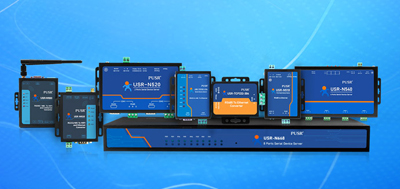
Industrial loT Gateways Ranked First in China by Online Sales for Seven Consecutive Years **Data from China's Industrial IoT Gateways Market Research in 2023 by Frost & Sullivan
We use cookies to ensure that we give you the best
experience on our website. If you continue to use this site we will assume that you are happy with it.