Analysis of Edge Computing Capabilities of Industrial 4G Modem: How to Achieve Local Data Preprocessing and Filtering?
In the era of the booming Industrial Internet of Things (IIoT), data has become the core element driving the intelligent upgrade of industrial production. However, data collection in industrial settings faces numerous challenges: the surge in the number of sensors leads to an explosive growth in data volume; limited network bandwidth and high transmission costs; cloud processing delays that affect real-time decision-making; and a large amount of invalid or erroneous information mixed in with raw data. These issues severely constrain the efficiency and reliability of IIoT systems. The industrial 4G modem, as the core hub connecting field devices to the cloud, plays a crucial role in local data preprocessing and filtering through its edge computing capabilities, becoming a key technology to solve industrial data challenges.
In modern industrial production, sensors have penetrated every aspect of the production process. Taking an automobile manufacturing production line as an example, a single production line may deploy more than 2,000 sensors to collect parameters such as temperature, pressure, vibration, and displacement in real time. These sensors continuously generate data at millisecond-level frequencies, leading to exponential growth in data volume. According to statistics, a medium-sized manufacturing enterprise can generate terabytes of industrial data per day, posing significant challenges to data transmission and storage capabilities.
Industrial sites are often located in remote areas or underground spaces, where network coverage is limited and bandwidth costs are high. Taking oil and gas pipeline monitoring scenarios as an example, sensors distributed along the pipeline need to transmit data back via satellite communication, with annual communication costs for a single device possibly exceeding 10,000 yuan. If all raw data is uploaded without processing, it will result in wasted bandwidth resources and soaring operational costs.
In traditional IIoT architectures, data needs to be uploaded to the cloud for processing and analysis. However, cloud processing inherently involves delays: network transmission time, fluctuations in cloud server load, and multi-level data processing procedures all contribute to response times for critical decisions that can be as long as seconds or even minutes. In scenarios sensitive to latency, such as equipment failure prediction and real-time adjustment of process parameters, the cloud processing model struggles to meet demand.
The complex environment of industrial sites makes sensors susceptible to electromagnetic interference, mechanical vibration, temperature fluctuations, and other factors, resulting in a large amount of abnormal values, null values, and duplicate values in the collected data. For example, a vibration sensor may still output non-zero signals when the equipment is shut down, and a temperature sensor may return extreme values when disconnected. Uploading such invalid data directly will interfere with the accuracy of cloud analysis models and even trigger false alarms.
As a bridge between field devices and the cloud, the industrial 4G modem effectively addresses the aforementioned pain points through local preprocessing and filtering of data at the source using its edge computing capabilities. Specifically, the core value of edge computing is reflected in the following five aspects:
Edge computing gateways can clean and aggregate raw data locally, uploading only valid information to the cloud. For example, in temperature monitoring scenarios, gateways can filter out abnormal values caused by sensor errors and upload only data within the normal range; in equipment status monitoring scenarios, gateways can calculate average operating parameters of equipment and upload alarm information only when parameters are abnormal. According to actual measurement data, after deploying edge computing gateways, a manufacturing enterprise reduced its data transmission volume by 80% and its annual communication costs by 60%.
Edge computing delegates data processing tasks to the field level, avoiding delays caused by network transmission and cloud processing. Taking equipment failure prediction as an example, edge computing gateways can analyze vibration sensor data in real time and immediately trigger local alarms or equipment linkage when abnormal frequencies are detected, with response times compressed to millisecond levels. After deploying edge computing gateways, an automobile manufacturing enterprise reduced its equipment failure response time from minutes to seconds and its downtime losses by 40%.
Edge computing gateways can significantly improve data quality through local data cleaning and anomaly detection. For example, gateways can use sliding window algorithms to dynamically adjust anomaly detection thresholds to adapt to data fluctuations under different operating conditions; they can filter out high-frequency interference signals through techniques such as mean filtering and moving averages to improve data smoothness. After deploying edge computing gateways, an energy enterprise increased the accuracy of its cloud analysis models by 25% and reduced its false alarm rate by 60%.
Edge computing gateways can desensitize sensitive data locally, uploading only feature values or statistical results to the cloud. For example, in medical IoT scenarios, gateways can locally encrypt and anonymize patient vital sign data to prevent raw data from being intercepted during transmission; in industrial control scenarios, gateways can restrict device access permissions through access control lists (ACLs) to prevent unauthorized devices from accessing the network. After deploying edge computing gateways, a financial institution reduced its data leakage incidents to zero and its compliance audit costs by 50%.
Industrial field devices use a variety of protocols, including dozens of industrial protocols such as Modbus, OPC UA, CAN bus, and Profinet, as well as cloud protocols such as MQTT and HTTP. Edge computing gateways can achieve seamless integration of heterogeneous devices through protocol conversion and adaptation functions. For example, gateways can convert BACnet protocol data from air conditioners into MQTT format for upload to the cloud platform while converting cloud control commands into CAN bus signals to drive actuators. This "protocol translation" capability enables enterprises to achieve digital transformation without replacing existing equipment, reducing transformation costs by 70%.
Edge computing gateways can automatically identify and filter out abnormal values, null values, and duplicate values in raw data through preset rules or machine learning models. For example:
Invalid Value Removal: For abnormal values caused by sensor disconnections or electromagnetic interference, gateways can identify and filter them out through threshold judgment, statistical testing, and other methods.
Noise Smoothing: Techniques such as mean filtering, median filtering, and Kalman filtering can effectively suppress high-frequency interference signals and improve data smoothness.
Duplicate Data Discard: For periodically collected static data (such as equipment model and location information), gateways can upload only the first data or change points to avoid information redundancy.
Edge computing gateways can aggregate raw data over a period of time and upload only statistical results to the cloud. Common aggregation methods include:
Time Window Aggregation: Calculate statistical quantities such as average values, maximum values, minimum values, and cumulative values at fixed time intervals (such as every minute). For example, data collected at a 1000Hz frequency by a vibration sensor can be aggregated into spectral feature packages every minute, reducing the data volume by more than 99%.
Spatial Aggregation: Perform centralized calculations on data from related devices or areas (such as total energy consumption of a production line or average temperature of a workshop) to reduce data transmission volume.
Data Compression: Using lossless or lossy compression algorithms (such as Delta encoding, floating-point precision adjustment, and Huffman coding) can further reduce the volume of data packets. Actual measurements of an industrial gateway show that Modbus raw data can be compressed by more than 70%.
Edge computing gateways support dynamic threshold adjustment and logical judgment based on business rules to achieve intelligent data filtering. For example:
Dynamic Threshold Triggering: Based on historical operating data and environmental parameters of equipment, gateways can dynamically adjust anomaly detection thresholds. In power monitoring scenarios, gateways can automatically adjust current overload thresholds according to load fluctuations to avoid false alarms.
Logical Judgment: Support complex "IF-THEN-ELSE" logic to determine equipment operating modes based on the combined status of multiple sensors. For example, when a temperature sensor detects high temperatures and a humidity sensor detects low humidity, the gateway can determine that the equipment is in an overheated and dry state and trigger local cooling commands.
Lightweight Computing: Execute expressions or preset formulas (such as preliminary calculation of equipment Overall Equipment Effectiveness (OEE) and estimation of energy efficiency) to convert raw data into business indicators and reduce cloud computing load.
As a "translator" for heterogeneous devices, edge computing gateways can achieve bidirectional conversion between various industrial protocols and cloud protocols and unify data formats. For example:
Protocol Parsing: Support parsing of more than 20 industrial protocols such as Modbus, OPC UA, CAN bus, and Profinet, converting device data from different protocols into an internal unified format.
Data Standardization: Map device data to standard formats such as JSON and XML while filtering out invalid or redundant fields. For example, convert the "pulse signal" of a robotic arm into an "action angle" to enable collaborative work between devices using different protocols.
Cloud Protocol Adaptation: Support cloud protocols such as MQTT, HTTP, and CoAP to ensure that data can be seamlessly received and processed by cloud platforms.
Some high-end edge computing gateways have integrated lightweight AI frameworks (such as TensorFlow Lite) to support local machine learning model inference. For example:
Failure Prediction: Real-time analysis of gearbox failure characteristics through vibration sensor data, with decision response times <50ms, more than 10 times faster than cloud analysis.
Defect Detection: In visual inspection scenarios, gateways can locally run object detection models such as YOLO to identify product surface defects in real time, avoiding the upload of a large number of normal images to the cloud.
Performance Degradation Modeling: Establish equipment performance degradation models to predict remaining useful life (RUL) based on historical data and support the formulation of predictive maintenance (PdM) strategies.
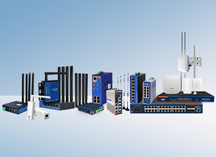
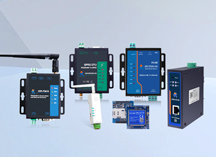
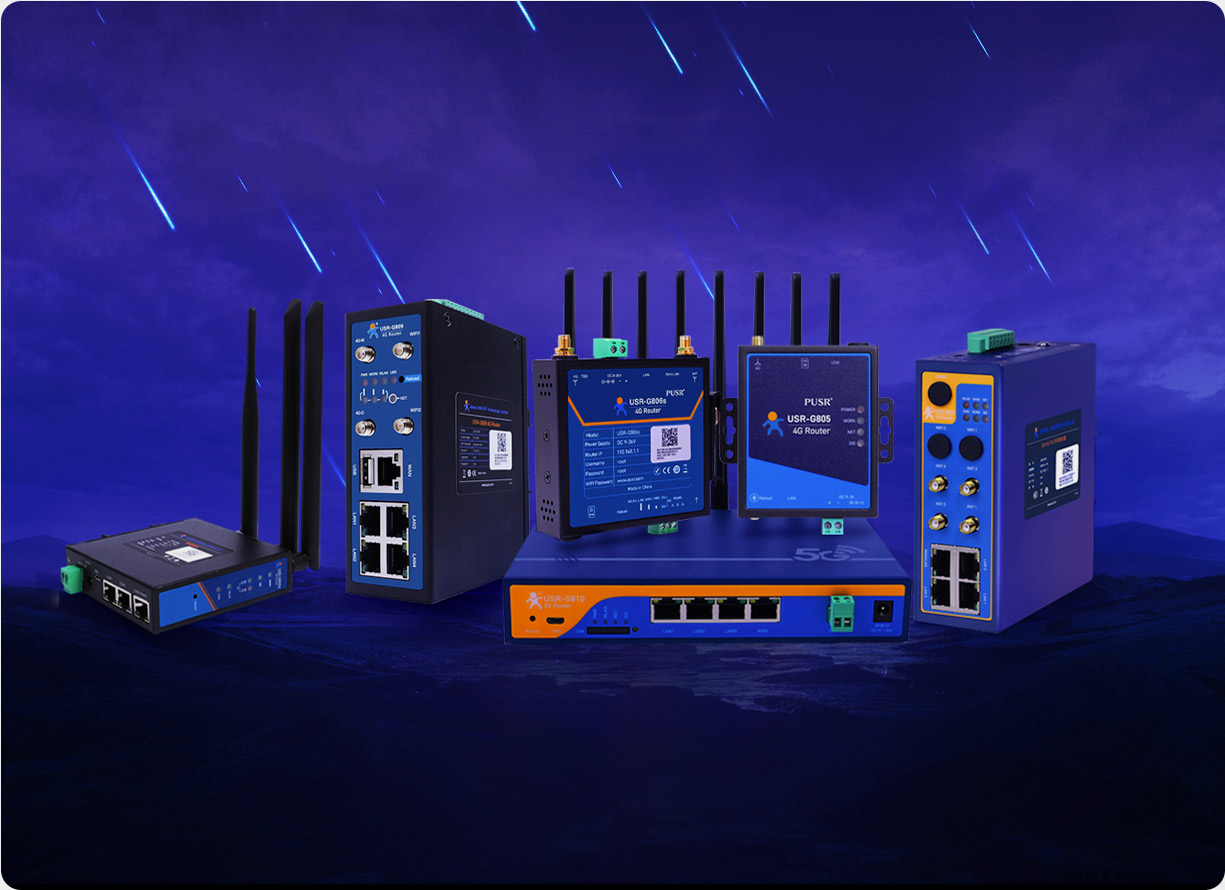
The USR-G786 is a 4G full Netcom industrial 4G modem launched by USR IOT, which integrates the aforementioned edge computing capabilities and can efficiently achieve local data preprocessing and filtering. Its core functions include:
Protocol Conversion: Supports RS232/485 to 4G conversion and is compatible with mainstream industrial protocols such as Modbus and MQTT, enabling seamless integration of heterogeneous devices.
Data Caching and Transparent Transmission: Each connection supports 1000-byte serial port data caching and supports 2-way Socket transparent transmission mode to ensure no data loss.
Edge Computing Capabilities: Built-in lightweight rule engine supports local processing functions such as data filtering, aggregation, and threshold alarms to reduce invalid data transmission.
High Reliability Design: Adopts technologies such as hardware watchdogs, EFT electrical fast transient pulse testing, and RS485 electrical isolation protection to ensure stable operation of the device in harsh industrial environments.
Remote Management: Supports functions such as remote upgrades, parameter configuration, and log collection to reduce operational and maintenance costs.
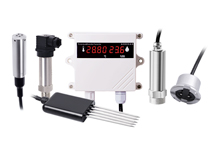
In an agricultural IoT project, the USR-G786 connected 500 soil temperature and humidity sensors, reducing data transmission volume by 65% through local data aggregation and anomaly detection while achieving minute-level data return through 4G networks to meet the needs of precision irrigation.