From -30°C Cold Storage to 50°C Sorting Centers: A Comprehensive Analysis of Wide-Temperature Protection and Anti-Condensation Design in Industrial LTE Routers
In the wave of intelligent manufacturing and smart logistics, industrial LTE routers serve as the "nerve center" connecting devices, systems, and data, with their stability directly impacting the efficiency and safety of the entire production process. Particularly in extreme temperature environments, such as -30°C cold storage and 50°C sorting centers, industrial LTE routers must not only withstand wide-temperature challenges but also overcome anti-condensation issues to ensure continuous and accurate data transmission. This article delves into the three major technical bottlenecks faced by industrial LTE routers in these extreme environments and explores how innovative designs can break through these limitations, providing customers with practical solutions.
In -30°C cold storage environments, ordinary electronic devices often struggle to function normally. Low temperatures can cause battery performance to plummet, LCD screens to respond sluggishly or even freeze, and condensation to form rapidly on device surfaces when moved out of the cold room, leading to circuit shorts. For cold chain systems that rely on industrial LTE routers for data collection, transmission, and monitoring, these "digital freezing" phenomena can be catastrophic. Router failures can paralyze cold chain management, compromise cargo safety, and result in incalculable economic losses.
Conversely, the high-temperature environment of sorting centers also poses a severe challenge to industrial LTE routers. At 50°C, internal components can overheat, leading to performance degradation or even damage. High temperatures also accelerate device aging, shortening their lifespan. For sorting systems that require 24/7 operation, router stability directly affects sorting efficiency and accuracy. Router failures due to high temperatures can disrupt the entire sorting process, delay order processing, and reduce customer satisfaction.
Whether in cold storage or sorting centers, devices frequently moving between extreme temperature environments face the challenge of drastic temperature changes. When devices transition from low to high temperatures, condensation can form rapidly on their surfaces. If this moisture penetrates the device, it can cause circuit shorts, component damage, and other severe consequences. Anti-condensation design is thus crucial for the stable operation of industrial LTE routers in extreme environments. However, traditional anti-condensation solutions often fall short of meeting practical needs.
For industrial LTE routers to operate stably within a wide temperature range of -30°C to 50°C, the first issue to address is the temperature resistance of components. Traditional commercial router components often cannot withstand such extreme temperature variations, leading to performance degradation or failure. Therefore, industrial LTE routers must adopt components with a broader temperature range, such as automotive-grade chips, to ensure stable performance in extreme temperatures.
In high-temperature environments, industrial LTE routers require effective heat dissipation designs to prevent overheating. Conversely, in low-temperature environments, insulation designs are needed to maintain internal device temperatures and prevent component performance degradation due to cold. However, heat dissipation and insulation often conflict, making it challenging to find a balance in industrial LTE router design.
Anti-condensation technology is another key to the stable operation of industrial LTE routers in extreme temperature environments. Traditional anti-condensation solutions often rely on increasing device sealing to prevent moisture penetration, but this approach has limited effectiveness and may impact heat dissipation. Therefore, innovative anti-condensation technologies, such as dynamic heating elements and special coatings, are needed to actively prevent condensation or accelerate moisture evaporation, ensuring device internal dryness.
To ensure the stable operation of industrial LTE routers in extreme temperatures, selecting components with a broader temperature range is crucial. For example, automotive-grade chips, which can operate stably within a wide temperature range of -40°C to 125°C, expand the temperature range by 40°C compared to commercial chips. Additionally, choosing passive components like capacitors and resistors that are resistant to high and low temperatures is also essential for router stability.
To meet the different needs of high and low-temperature environments, industrial LTE routers require intelligent heat dissipation and insulation designs. In high-temperature environments, techniques like fin heat dissipation and thermal grease filling can enhance heat conduction efficiency, preventing excessive internal device temperatures. In low-temperature environments, built-in heating elements or insulation materials can maintain internal device temperatures, preventing component performance degradation due to cold. Furthermore, temperature compensation algorithms can dynamically adjust CPU frequency to prevent high-temperature throttling or low-temperature startup failures.
To address anti-condensation challenges, industrial LTE routers need innovative anti-condensation technologies. For example, applying special coatings on device surfaces can reduce condensation, or incorporating dynamic heating elements that automatically activate upon detecting temperature changes can prevent condensation. Additionally, optimizing device structural design, such as adopting double-layer structures or adding insulation layers, can minimize the impact of drastic temperature changes on device internals.
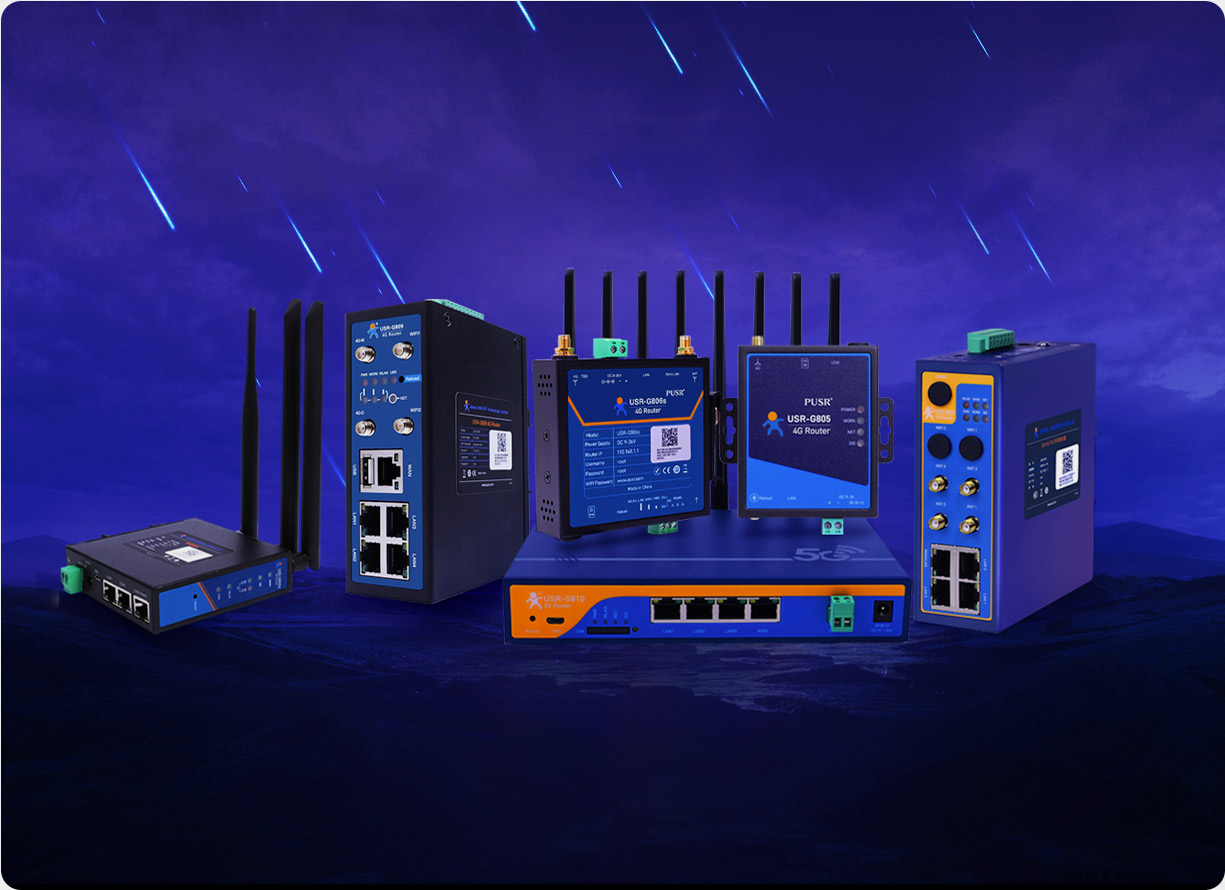
Among numerous industrial LTE routers, the USR-G809s stands out with its exceptional wide-temperature protection and anti-condensation design, making it an ideal choice for extreme environments. The USR-G809s employs automotive-grade chips and other components with a broader temperature range, ensuring stable operation within a wide temperature range of -40°C to 75°C. It also features an intelligent heat dissipation and insulation system that automatically adjusts heat dissipation or insulation modes based on ambient temperature, maintaining optimal internal device temperatures.
In terms of anti-condensation, the USR-G809s adopts innovative anti-condensation technologies, incorporating dynamic heating elements and special coatings to effectively prevent condensation and moisture penetration into device internals. Additionally, the USR-G809s supports multi-network redundancy backup and secure encrypted transmission, ensuring continuous and secure data transmission in extreme environments.
From -30°C cold storage to 50°C sorting centers, industrial LTE routers face unprecedented challenges. However, through innovative designs and technological breakthroughs, we can overcome these challenges and ensure the stable operation of industrial LTE routers in extreme environments. The USR-G809s, as a paragon of wide-temperature protection and anti-condensation design, provides valuable experience and insights. As intelligent manufacturing and smart logistics continue to evolve, industrial LTE routers will play a crucial role in more extreme environments. Let us work together to break limits and create a brighter future!