Automation Upgrade in Logistics Warehousing: The Pivotal Role and Practice of Edge Computing
In today's booming e-commerce industry, logistics warehousing, as a core link in the supply chain, is facing unprecedented challenges. The exponential growth in order volumes, stringent customer demands for delivery timeliness, and the continuous rise in labor costs collectively form the "three major mountains" that logistics enterprises must confront. While many enterprises have recognized the urgency of automation upgrades, they hesitate due to high technical complexity and unclear return on investment—this contradictory mindset of "wanting to change but not daring to take the plunge easily" is a true portrayal of the current logistics warehousing transformation.
In the warehouse of a large logistics enterprise, the shelf management system, intelligent sorting equipment, and AGV trolleys belong to different suppliers, with incompatible data interfaces. The shelf system cannot perceive the real-time demands of the sorting equipment, and AGV trolleys frequently experience "traffic jams" due to a lack of global path planning, ultimately resulting in an inventory turnover rate 30% lower than the industry average. This absurd scenario of "more devices than people, yet less flexible than people" is a typical manifestation of data silos.
In traditional architectures, sensor data needs to be uploaded to the cloud for processing before instructions are returned to local devices. A cold chain logistics enterprise once experienced a 15-minute delay in triggering a temperature anomaly alarm due to network latency, resulting in the scrapping of an entire batch of drugs worth millions. More commonly, path optimization algorithms cannot adjust transportation routes in real-time due to cloud computing delays, leading to a vehicle empty running rate as high as 25%.
The surveillance videos, inventory data, and customer information of an e-commerce warehouse were all stored in the cloud. In 2023, a system vulnerability of a supplier led to the leakage of 200,000 customer records, directly causing losses exceeding ten million yuan. More fatally, some enterprises even refuse to connect to intelligent systems due to concerns about data security, falling into a deadlock of "not upgrading means waiting to die, while upgrading means seeking death."
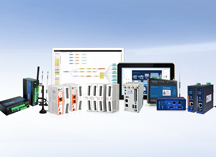
Edge computing sinks computing power to the network edge, enabling devices to make real-time decisions. In JD Logistics' automated warehouse, edge computing boxes achieve real-time inventory counting by fusing visual and RFID data, with an accuracy rate of 99.5%, improving efficiency by 80% compared to traditional manual counting. When the system detects that the shelf load exceeds the threshold, edge devices can trigger audible and visual alarms and automatically adjust AGV paths within 200ms, preventing equipment damage and cargo tipping.
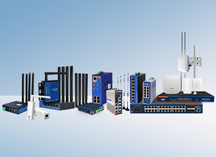
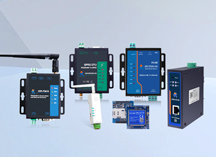
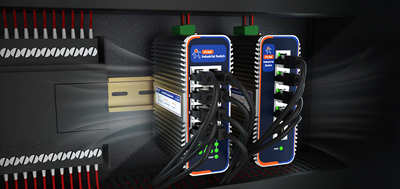
To address the issue of incompatible protocols among multi-brand devices, the Industrial gateway USR-M300 supports over 200 industrial protocols such as Modbus, OPC UA, and Profinet, and can simultaneously connect heterogeneous devices such as shelf systems, sorting equipment, and AGV trolleys. Its built-in protocol conversion engine can automatically parse the "languages" of different devices and upload data to the cloud in a standardized format, completely eliminating data silos. A clothing enterprise shortened the device networking time from 3 months to 2 weeks and reduced renovation costs by 60% by deploying USR-M300.
Edge computing adopts the principle of "data not leaving the domain," where sensitive data is desensitized locally before being uploaded to the cloud. A project at Sichuan University achieved cross-warehouse data sharing while protecting privacy through federated learning technology—violation data from different warehouses could jointly train models without revealing specific store information. A pharmaceutical enterprise integrated blockchain technology with edge computing to achieve full-process temperature control records for drugs from production to delivery, reducing the cargo damage rate from 3% to below 0.5%.
It is recommended that enterprises prioritize pilot projects for edge computing in the following scenarios:
The selection of edge computing devices should comprehensively consider factors such as computing power, power consumption, and scalability:
With the integration of technologies such as 5G and AI, edge computing is evolving from a "data processing tool" to a "warehouse intelligence hub":
The automation upgrade of logistics warehousing is essentially a balancing act between "efficiency and safety." The value of edge computing lies not in completely replacing the cloud but in enabling data to be processed "where it needs to be processed"—this "just right" intelligence is the key to solving the dilemmas of traditional warehousing. For enterprises still on the sidelines, perhaps they can start with a single USR-M300 edge gateway, verifying the technical value with minimal cost before gradually expanding the application scope. After all, in the tide of change, the most dangerous thing is not "making mistakes" but "missing out."