Breaking Through the "Man-Vehicle Congestion": The Intelligent Traffic Revolution in Pharmaceutical Cold Chain Logistics
In the precise world of biopharmaceutical cold chain logistics, the transportation of every vaccine and every vial of monoclonal antibody drug is a race against time. However, when AGVs (Automated Guided Vehicles) frequently intersect with manual operations in narrow cold storage aisles, this race becomes fraught with unknown risks—cold chain disruptions, equipment collisions, inefficiency... These issues hang over pharmaceutical companies like the Sword of Damocles, threatening to breach the defenses of quality and safety at any moment. A multinational pharmaceutical company once suffered a failure of CAR-T cell therapy products worth tens of millions of dollars due to a cold storage power outage. This case not only exposed the vulnerability of cold chain logistics but also revealed the deep-seated pain points in AGV traffic management in "man-vehicle congestion" scenarios.
In traditional cold chain warehouses of pharmaceutical companies, it is common for AGVs to share the same space with manual forklifts and operators. While this model may seem flexible, it harbors hidden dangers:
Path Conflicts: AGVs travel along preset paths, while manual operations often deviate from fixed routes due to temporary tasks, leading to congestion and even collisions when they intersect in narrow aisles. A survey by a vaccine company revealed that equipment downtime due to path conflicts accounted for up to 15% in its cold chain warehouses.
Temperature Fluctuations: Frequent opening of cold storage doors for AGVs or manual handling of goods causes temperature fluctuations in the storage to exceed standards. Biological products have a tolerance for temperature fluctuations of less than 0.5°C, and every door opening may damage product activity.
High Management Costs: To coordinate man-vehicle congestion, companies need to deploy a large number of on-site managers and rely on manual experience for scheduling, which is inefficient and prone to errors.
Faced with these pain points, pharmaceutical company decision-makers often find themselves in a dilemma:
Cost Anxiety: Introducing more advanced AGV systems or expanding warehouses requires significant investment, while the hidden costs of traditional models (such as cargo damage and efficiency losses) are difficult to quantify.
Technology Trust: In the highly experience-dependent pharmaceutical industry, trust in automation technology requires data support. Decision-makers often ask, "Are AGVs really more reliable than manual operations?"
Resistance to Change: Middle managers worry that new systems will disrupt existing production rhythms, while frontline employees resist learning new skills, leading to slow reform progress.
The practice of a leading domestic pharmaceutical company provides an innovative model for solving the man-vehicle congestion problem. By deploying an intelligent traffic signal control system (combining traffic lights and ceiling lights), the company achieved "zero-conflict" collaboration between AGVs and manual operations.
Top-Level Scheduling Layer: Based on the Bangqi Technology LDS digital platform, it integrates WMS (Warehouse Management System), MES (Manufacturing Execution System), and AGV scheduling systems to achieve global task allocation and path planning. The system dynamically generates optimal task sequences based on parameters such as order priority, equipment status, and cold storage temperature.
Middle-Level Coordination Layer: Intelligent traffic lights are deployed at key areas such as cold storage entrances and aisle intersections, interacting in real-time with AGVs, forklifts, and positioning tags worn by operators through wireless communication. The traffic light status is automatically adjusted by the system based on traffic flow, for example:
Peak Hours: Prioritize the passage of AGVs to reduce interference from manual operations on the cold chain.
Emergency Tasks: Open green channels for AGVs transporting high-value biological products.
Equipment Failures: Automatically trigger surrounding traffic lights to turn red to prevent secondary accidents.
Bottom-Level Perception Layer: Ceiling-mounted LED indicators are installed in the cold storage to visually guide manual operations through color changes (e.g., green for safe passage, red for no entry). Meanwhile, combined with UWB (Ultra-Wideband) positioning technology, it tracks the real-time positions of personnel and equipment, providing data support for the scheduling system.
Dynamic Path Planning: The system builds a three-dimensional digital map of the cold storage based on SLAM (Simultaneous Localization and Mapping) technology and updates obstacle information (such as temporarily stacked goods) in real-time. When AGVs or manual operations deviate from preset paths, the system immediately replans routes to avoid conflicts.
Predictive Obstacle Avoidance: By analyzing historical data through AI algorithms, it predicts hotspot areas and times for man-vehicle intersections and adjusts traffic light timings or guides AGVs to slow down in advance. For example, the system finds that the cold storage entrance often becomes congested due to manual unloading at 10 a.m. every day, so it automatically extends the waiting time for AGVs at the entrance during this period.
Multimodal Interaction: Traffic lights and ceiling lights support multimodal interaction methods such as voice prompts and vibration feedback to ensure operators can receive instructions in noisy environments. For example, when an operator approaches a running AGV, the ceiling light turns red and emits a beeping alarm, while the AGV automatically slows down.
After deploying the intelligent traffic system, the pharmaceutical company significantly improved the efficiency and safety of its cold chain logistics:
Zero Cold Chain Disruptions: The number of cold storage door openings decreased by 40%, temperature fluctuations were controlled within ±0.3°C, and the biological product damage rate dropped from 3.2% to 0.5%.
Efficiency Leap: AGV utilization increased by 35%, manual operation time shortened by 20%, and overall warehouse throughput increased by 15%.
Cost Optimization: By reducing cold storage energy consumption, lowering cargo damage compensation, and manual management costs, the system's investment payback period was only 1.2 years.
More profoundly, the system built a "digital moat" for quality management for the pharmaceutical company:
Full Traceability: The transportation trajectory, temperature data, and operator information of every drug are recorded by the system, meeting the requirements of regulatory agencies such as the FDA and EMA.
Flexible Production: The system supports rapid adjustments to production plans and logistics paths, helping pharmaceutical companies meet capacity ramp-up demands during public health emergencies such as pandemics.
Brand Enhancement: Stable cold chain quality has become a core competitiveness of the company, helping it win orders from international top pharmaceutical companies.
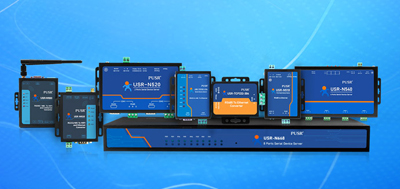
Behind the intelligent traffic system, the USR-EG828 Industrial Mini PC plays the role of an "edge brain." This embedded industrial mini PC, equipped with a Rockchip RK3568 quad-core processor, provides three core supports for the system with its "small size, big power" characteristics:
Real-Time Data Processing: It operates stably in cold storage environments ranging from -10°C to 70°C, quickly processing massive amounts of data such as AGV positioning, traffic light status, and temperature sensors through 4GB DDR4 memory and 32GB eMMC storage, ensuring millisecond-level response to scheduling instructions.
AI Computing Power Empowerment: With a built-in 1.0 TOPS NPU neural network processor, it supports running lightweight AI models to perform edge computing tasks such as obstacle recognition and path optimization, reducing the burden on the cloud.
Multi-Protocol Compatibility: It provides rich interfaces such as RS232, RS485, CAN bus, and Ethernet, seamlessly connecting with AGVs, sensors, and upper-level systems of different brands, breaking down "information silos."
For example, in the cold chain warehouse of a vaccine company, the USR-EG828 connects to over 200 temperature sensors via the CAN bus, collects data in real-time and uploads it to the scheduling system, while running an AI model to predict cold storage temperature trends and adjust traffic light timings in advance to reduce door openings, lowering energy consumption by 18%.
The practice of this pharmaceutical company proves that the intelligent traffic system is not only the key to solving the man-vehicle congestion problem but also a springboard for pharmaceutical companies to move towards intelligent manufacturing. With the integration of technologies such as 5G, digital twins, and blockchain, future cold chain logistics will present three major trends:
Full-Scenario Autonomy: AGVs collaborate with drones and unmanned vehicles to achieve unmanned transportation throughout the entire chain from "warehouse-factory-hospital."
Predictive Maintenance: By analyzing equipment operation data and AI algorithms, AGV failures are predicted in advance to reduce unplanned downtime.
Carbon Footprint Management: Combining energy consumption data with blockchain technology, it achieves carbon emission traceability and optimization throughout the entire lifecycle of cold chain logistics.
In the cold chain logistics of biopharmaceuticals, every temperature fluctuation concerns life safety, and every equipment collision may trigger a crisis of trust. The intelligent combination of traffic lights and ceiling lights not only solves the practical problem of man-vehicle congestion but also interprets the pharmaceutical company's reverence for life with technological warmth. The silent support of industrial mini PCs like the USR-EG828 makes this intelligent traffic revolution a reality from ideal. When AGVs navigate freely in cold storage and every drug can safely reach patients, what we see is not only the victory of technology but also the industry's adherence to quality and responsibility.