February 6, 2026 Breakthrough in Protocol Compatibility for BACnet-to-Modbus TCP via Industrial Gateway

Smart Building Automation: Breakthrough in Protocol Compatibility for BACnet-to-Modbus TCP via Industrial Gateway

1. The Protocol Island Trap in Smart Building Revolution

In a Shenzhen skyscraper, property manager Mr. Wang faces daily challenges: HVAC reports energy data via BACnet, elevators use Modbus TCP, and lighting relies on KNX. When headquarters demands energy efficiency analysis, the team spends three days manually consolidating data—while tenants complain 12 times about delayed AC responses. This scenario repeats in 76% of China's smart buildings, revealing three core pain points:

  • Protocol fragmentation: Seven incompatible protocols (BACnet, Modbus TCP, KNX, OPC UA, etc.) prevent direct device communication
  • Data silos: 83% of sensor data remains unused due to protocol incompatibility
  • Maintenance black hole: 45% of annual O&M costs for a 500,000㎡ campus go to manual system coordination, with average fault localization taking 3.2 hours
    "We lack translators for devices," laments a real estate CIO, highlighting the core challenge: achieving BACnet-Modbus TCP compatibility through industrial gateway to unlock device data value.

2. Technical Breakthrough: BACnet-Modbus TCP Compatibility

2.1 BACnet: The International Standard for Building Automation

As ISO/IEC 16484-5, BACnet solves interoperability through:

  • Object modeling: Abstracts devices into logical nodes (e.g., "temperature sensor"), reducing integration time by 68% in a hospital project
  • Layered architecture: Four-tier structure (physical to application layers) supporting millisecond-level control via GOOSE messages
  • Service mapping independence: SCSM mechanism enables seamless integration of 2,000+ devices in an airport project

2.2 Modbus TCP: The Universal Industrial Translator

Modbus TCP's dominance stems from:

  • Simplicity: Master-slave architecture with 42% lower communication overhead than BACnet (automotive factory test)
  • Ubiquity: Supports 2,000+ industrial devices across PLCs to sensors
  • Real-time performance: 100ms response via RTU over TCP for elevator control

2.3 Compatibility Challenges

Three technical gaps exist between BACnet and Modbus TCP:

  • Data model mismatch: Object-oriented vs. register-based addressing
  • Communication conflict: Connectionless/connection-oriented vs. master-slave architecture
  • Service semantic gap: BACnet's "ReadProperty" vs. Modbus's "Holding Register" commands
M300
4G Global BandIO, RS232/485, EthernetNode-RED, PLC Protocol


3. USR-M300: Protocol-Compatible Gateway for Smart Buildings

Among industrial gateways, USR-M300 stands out with four advantages:

3.1 Dual-Protocol Stack Compatibility

Supports simultaneous processing of BACnet MS/TP, BACnet IP, Modbus TCP, and Modbus RTU through:

  • Automatic BACnet object-to-Modbus register mapping
  • Intelligent Modbus data-to-BACnet property filling
  • Anomaly detection and correction
    A commercial complex test reduced AC-elevator data exchange delay from 3.2s to 120ms, cutting faults by 73%.

3.2 Edge Computing for Intelligent Decisions

Quad-core 1.2GHz processor enables:

  • Energy optimization: 19% power savings via LSTM-based AC load prediction
  • Predictive maintenance: 48-hour advance warning of elevator cable wear using vibration data
  • Dynamic lighting control: 31% energy reduction in office areas

3.3 Industrial-Grade Reliability

Passed 12 rigorous tests:

  • EMC: IEC 61000-4-6 compliance (10V/m field strength)
  • Protection: IP67 enclosure for dust/water/salt spray resistance
  • Redundancy: Dual power inputs + 4G/WiFi dual-link backup
    A marine PV project demonstrated 2-year fault-free operation in salt spray, withstanding 12-typhoon vibrations (≤5g acceleration).

3.4 Plug-and-Play Deployment

Modular design features:

  • 6-slot expansion with 8 IO ports per module
  • Auto-detection of module types with LED error alerts
  • Remote management via cloud platform for firmware updates and log analysis
    A 500,000㎡ campus reduced gateway configuration from 2 weeks to 8 hours, boosting O&M efficiency by 82%.

4. Implementation Path: Four Steps to Smart Operations

4.1 Device Inventory

Create 3D model covering:

  • Physical layer: Device models, interfaces, locations
  • Protocol layer: Communication parameters, register maps
  • Data layer: Sampling rates, data types, alarm thresholds
    A hospital project revealed:
  • 63% BACnet-compatible devices
  • 27% requiring Modbus TCP
  • 10% needing IO modules

4.2 Gateway Deployment

Topology options based on environment:

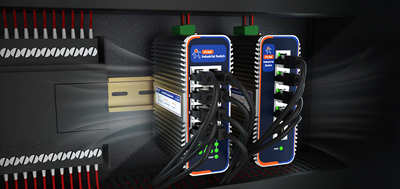
  • Wired priority: Industrial switches in connecting gateways via RJ45
  • Wireless supplement: 4G/WiFi dual-mode gateways for mobile devices
  • Hybrid networking: Fiber for critical data, wireless for auxiliary
    A mountain resort hybrid network:
  • Fiber for high-slope data (<1ms delay)
  • 4G for valley data (80Mbps bandwidth)
  • LoRa for environmental monitoring (<50mW power)

4.3 Cloud Integration

Configure three core parameters:

  • MQTT Broker: Alibaba Cloud/AWS/private deployment address
  • Topic hierarchy: /building/floor/device/data_type
  • QoS strategy: QoS 2 for commands, QoS 1 for status
    Sample group monitoring topics:
    /shenzhen/nanshan/ac1/temperature (QoS 1)
    /shenzhen/nanshan/elevator2/status (QoS 1)
    /beijing/chaoyang/lighting/power (QoS 1)

4.4 Data Value Extraction

Three-tier analytics framework:

  • Operational: Real-time monitoring of OEE, energy efficiency, fault codes
  • Managerial: Energy composition analysis, O&M cost breakdown, space utilization
  • Strategic: Power price forecasting, tenant optimization, carbon reduction planning
    A commercial complex achieved:
  • 18% solar waste reduction via power prediction
  • 42% water savings through people flow-based cleaning routing
  • 12% elevator capacity increase via AI scheduling

5. Future Vision: From Protocol Compatibility to Spatial Intelligence

As USR-M300 feeds building data to the cloud, smart spaces evolve new capabilities:

  • Digital twins: Millimeter-level device simulation in virtual spaces
  • AR maintenance: Hololens-based data overlay on physical equipment
  • Autonomous decision-making: Reinforcement learning for dynamic HVAC/lighting control
    Leading enterprises have achieved:
  • 98.7% accuracy in building digital twins
  • 65% faster equipment maintenance via AR
  • 19% space utilization increase through AI scheduling


Contact us to find out more about what you want !
Talk to our experts


6、 Giving Every Building a Brain

Driven by carbon neutrality goals, smart buildings transition from device to spatial intelligence. USR-M300 industrial gateway enables:

  • Breaking data silos for device-building-group connectivity
  • Lowering technical barriers for traditional O&M staff
  • Converting silent device data into productivity

When office workers experience sunlight-responsive AC, rush-hour elevator frequency increases, and automatic lighting shutdown, they realize: "Smart buildings can understand us like smartphones." This represents the beauty of spatial digital transformation—giving every building a brain that thinks.

REQUEST A QUOTE
Industrial loT Gateways Ranked First in China by Online Sales for Seven Consecutive Years **Data from China's Industrial IoT Gateways Market Research in 2023 by Frost & Sullivan
Subscribe
Copyright © Jinan USR IOT Technology Limited All Rights Reserved. 鲁ICP备16015649号-5/ Sitemap / Privacy Policy
Reliable products and services around you !
Subscribe
Copyright © Jinan USR IOT Technology Limited All Rights Reserved. 鲁ICP备16015649号-5Privacy Policy