Cellular Router: Unlocking the New Code for Collaborative Control of Cross-Factory Automation Equipment
In the wave of Industry 4.0, the collaborative control of automation equipment has become the key to enhancing production efficiency, reducing costs, and strengthening enterprise competitiveness. However, when enterprises attempt to transcend geographical boundaries and achieve collaborative control of automation equipment across factories, they often face numerous challenges such as network latency, data security, and protocol incompatibility. These challenges not only deter enterprises but also trap many that have already embarked on this path. This article will delve into how cellular router, serving as the "nerve center," can address the challenges of collaborative control of cross-factory automation equipment and assist enterprises in achieving a leap in digital transformation.
In collaborative control of automation equipment across factories, network latency and stability are primary challenges. Network environments vary significantly between different factories; some may be located in remote areas with poor network coverage, while others may face issues such as network congestion and signal interference. These problems result in severe communication delays between devices and even communication interruptions, significantly impacting the efficiency and accuracy of collaborative control.
Customer Psychology: Enterprises are well aware of the importance of network latency and stability for collaborative control but often feel at a loss when faced with complex network environments. They worry that investing substantial resources may still fail to achieve the desired results.
Collaborative control of automation equipment across factories involves the transmission and sharing of a large amount of sensitive data, such as production parameters, equipment status, and process flows. Once this data is leaked or tampered with, it can cause significant losses to enterprises. However, traditional network communication methods often lack sufficient security protection mechanisms, making it difficult to meet enterprises' high requirements for data security and privacy protection.
Customer Psychology: While pursuing the efficiency of collaborative control, enterprises are filled with concerns about data security and privacy protection. They fear legal disputes and reputational damage caused by data leaks and even more fear losing customer trust and support as a result.
Automation equipment in different factories may adopt different communication protocols and interface standards, making direct communication and collaborative control between devices difficult. Additionally, with continuous technological advancements, new devices keep emerging while old devices remain in use, exacerbating the issue of device heterogeneity.
Customer Psychology: Enterprises often feel helpless when faced with device heterogeneity and protocol incompatibility. They worry about the substantial costs associated with device upgrades or replacements and even more fear the impact on production schedules and product quality.
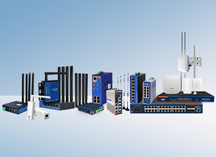
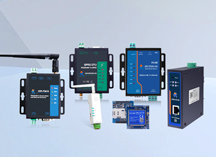
As a bridge connecting the physical and digital worlds, cellular routers possess hardware characteristics that adapt to complex industrial environments, strong network access capabilities, rich interface and protocol support, and comprehensive security protection mechanisms. These advantages make cellular routers the key to addressing the challenges of collaborative control of cross-factory automation equipment.
Adapting to Complex Industrial Environments: Cellular routers feature rugged casing designs, wide operating temperature ranges, and good resistance to electromagnetic interference, ensuring stable operation under harsh factory production conditions.
Multiple Network Access Methods: Supporting 4G/5G, wired Ethernet, Wi-Fi, and other network access methods, cellular routers break free from geographical limitations and enable device networking.
Rich Interface and Protocol Support: Providing Ethernet ports, serial ports (RS232/RS485), and other interfaces, cellular routers support various industrial protocols such as Modbus, Profinet, and OPC UA, enabling seamless integration between devices.
Comprehensive Security Protection Mechanisms: Integrating firewalls, VPNs, data encryption, and other security protection mechanisms, cellular routers ensure the security and integrity of data transmission.
Through cellular routers, enterprises can achieve real-time monitoring and remote control of automation equipment across factories. Technicians can remotely configure, diagnose, and maintain devices via cloud platforms or mobile terminals without being on-site, significantly reducing operational and maintenance costs and improving response speeds.
Case Study: A global automobile manufacturing enterprise with multiple production bases achieved real-time monitoring and remote control of production lines across its bases by deploying cellular routers. When a production line encountered a fault, technicians could immediately debug and repair it remotely, avoiding significant losses caused by downtime.
Cellular routers can aggregate data from different factories and devices, enabling standardized data transmission and collaborative analysis. Through big data analysis techniques, enterprises can identify bottlenecks and issues in the production process, optimize production flows, improve product quality, and reduce costs.
Case Study: An electronics manufacturing enterprise deployed cellular routers across multiple factories to achieve real-time collection and transmission of sensor data on production lines. By collaboratively analyzing this data, the enterprise identified multiple potential issues in the production process and promptly optimized and improved them, significantly enhancing production efficiency and product quality.
Faced with device heterogeneity and protocol incompatibility, cellular routers convert the communication protocols used by different devices into a unified IP protocol through built-in protocol conversion functions, enabling seamless integration and interconnection between devices.
Case Study: A chemical enterprise introduced multiple new automation equipment during a production line upgrade. However, the communication protocols between these new devices and existing equipment were incompatible, preventing direct collaborative control. By deploying cellular routers, the enterprise achieved protocol conversion and interconnection between old and new devices, successfully resolving this challenge.
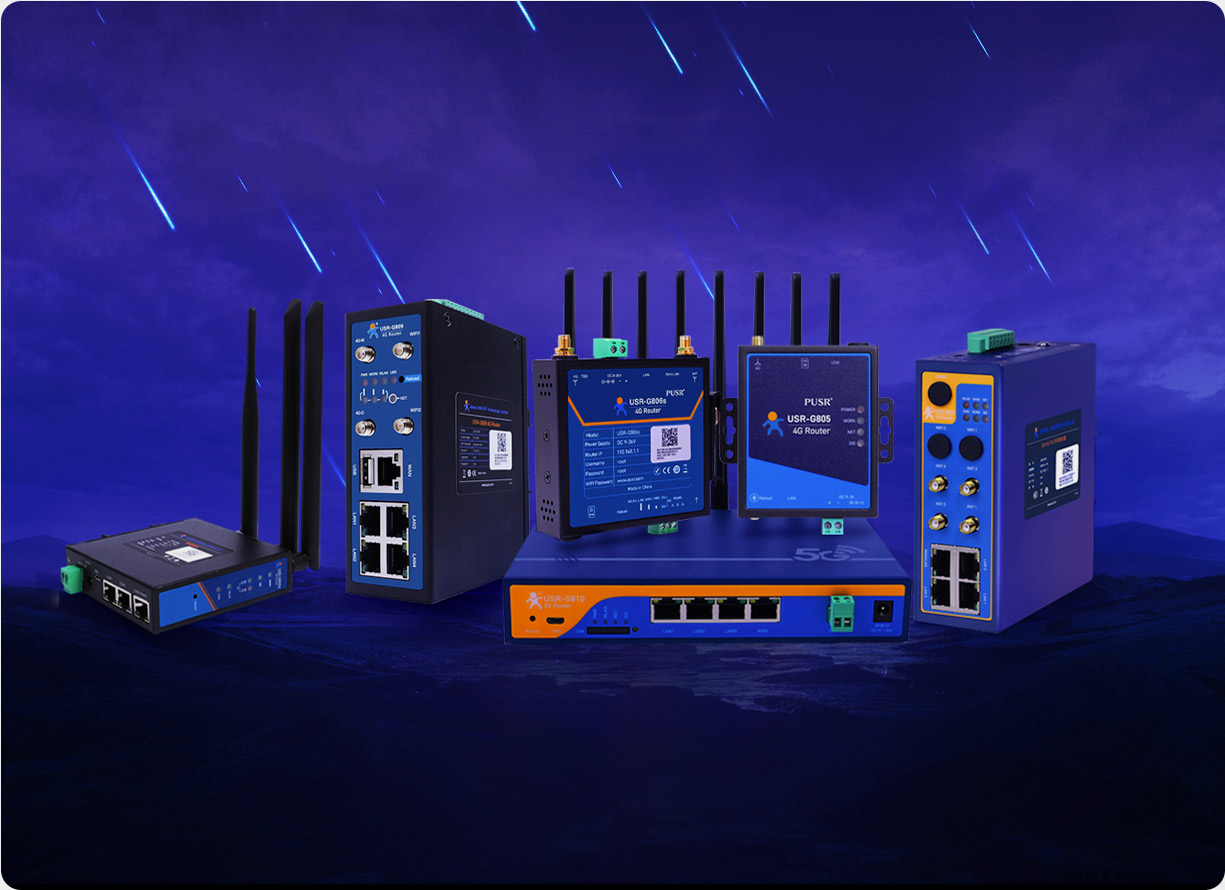
Among numerous cellular router products, the USR-G809s stands out with its exceptional performance and rich features, making it the ideal choice for collaborative control of cross-factory automation equipment.
The USR-G809s supports multiple network access methods such as 4G/5G, wired Ethernet, and Wi-Fi, ensuring stable and reliable device networking under different network environments. Additionally, its dual-SIM dual-standby function further enhances the redundancy and reliability of network connections.
The USR-G809s provides Ethernet ports, serial ports (RS232/RS485), and other interfaces, supporting various industrial protocols such as Modbus, Profinet, and OPC UA. Furthermore, it supports VLAN division and multiple VPN protocols, meeting enterprises' high requirements for network isolation and secure transmission.
The USR-G809s integrates firewalls, VPNs, data encryption, and other security protection mechanisms to ensure the security and integrity of data transmission. Additionally, it supports CA certificate two-way authentication and dynamic IP camouflage functions, further enhancing network security.
The USR-G809s supports remote configuration and management via Web interfaces, someone cloud platforms, or SNMP protocols. Enterprises can monitor device status, traffic usage, and other information in real-time via cloud platforms and perform remote firmware upgrades and fault diagnoses, significantly reducing operational and maintenance costs and time costs.
Before implementing cross-factory automation equipment collaborative control projects, enterprises should first conduct requirement analysis to clarify the objectives and scope of collaborative control. Subsequently, based on the requirement analysis results, they should engage in system planning, including network architecture design, device selection and configuration, and security strategy formulation.
Given the broad scope and high technological complexity of cross-factory collaborative control projects, enterprises should adopt a gradual progression strategy for implementation. They can initially select some factories or production lines for pilot applications, accumulate experience, and then gradually expand to other factories and production lines.
During implementation, enterprises should enhance training and technical support for technicians. Through training and technical support, they can improve technicians' proficiency and application capabilities in cellular routers and collaborative control technologies, ensuring the smooth implementation and long-term stable operation of projects.
As technology continues to advance and enterprise requirements change, enterprises should continuously optimize and upgrade cross-factory automation equipment collaborative control systems. By introducing new technologies, devices, and functions, they can continuously enhance system performance and stability, meeting enterprises' growing collaborative control needs.
Collaborative control of cross-factory automation equipment is an important trend and inevitable choice in the Industry 4.0 era. However, achieving this goal is no easy feat, requiring enterprises to overcome numerous challenges such as network latency, data security, and protocol incompatibility. As a bridge connecting the physical and digital worlds, cellular routers possess advantages such as adapting to complex industrial environments, strong network access capabilities, rich interface and protocol support, and comprehensive security protection mechanisms, providing strong support for addressing cross-factory collaborative control challenges. The USR-G809s cellular router, with its exceptional performance and rich features, is the ideal choice for cross-factory collaborative control. In the future, as technology continues to advance and application scenarios expand, cellular routers will play an even more crucial role in cross-factory automation equipment collaborative control, assisting enterprises in achieving a leap in digital transformation.