December 18, 2025
Cellular Routers w/ ATEX Cert. Solve Comm. Challenges in High-Risk Scenarios
Safety Monitoring in a Chemical Industrial Park: The Practical Application of Cellular Routers with ATEX Explosion-Proof Certification to Solve Communication Challenges in High-Risk Scenarios
1. The "Life-and-Death Proposition" of Safety Monitoring in Chemical Industrial Parks: When Data Transmission Encounters Explosive Environments
In the central control room of a chemical industrial park in Jiangsu, the monitoring screen displays data from over 2,000 sensors—concentrations of combustible gases, equipment temperatures, pipeline pressures... These data points refresh every second, supporting the safe production of 12 chemical enterprises within the park. However, an incident in March 2024 still haunts park managers: due to the lack of explosion-proof certification for wireless communication equipment in a tank storage area, a static spark ignited leaked toluene vapor, causing a local explosion and direct economic losses exceeding 20 million yuan.
This is not an isolated case. According to statistics from the Ministry of Emergency Management, 70% of explosion accidents in China's chemical industry are related to explosion-proof defects in communication equipment. In high-risk areas such as Zone 0 (where explosive gases are continuously present) or Zone 20 (where combustible dust is continuously present), traditional cellular router become "time bombs" due to the following pain points:
Lack of explosion-proof certification: Ordinary devices without international certifications such as ATEX and IECEx cannot operate safely in explosive environments.
Failure of multi-network collaboration: Wired networks are easily eroded by corrosive gases, while 4G/Wi-Fi signals form blind spots in metal tank areas.
High operational and maintenance costs: Manual inspection costs due to equipment failures account for more than 35% of the park's annual operational and maintenance expenses.
Data security risks: Unencrypted communication protocols are vulnerable to hacker attacks, triggering chain production accidents.
"What we need is not just a router but a solution that can penetrate explosive environments and safeguard our data lifeline," lamented the CIO of a chemical group, expressing the core demand of the industry.
2. ATEX Explosion-Proof Certification: The "Safety Moat" for Cellular Router
2.1 The "Hardcore Standards" of ATEX Certification
ATEX (Atmosphères Explosibles) is a mandatory directive issued by the European Union for explosion-proof equipment. Its core logic is to manage risks through a dual-dimensional approach of "zone classification + equipment categorization":
Zone classification: Explosive environments are divided into gas zones (Zone 0/1/2) and dust zones (Zone 20/21/22), with Zone 0/20 being the highest-risk areas.
Equipment categorization: Category 1 equipment is suitable for Zone 0/20 and must pass rigorous testing by institutions such as TüV and SGS, with a failure rate below 0.001%. Category 2/3 equipment corresponds to medium- and low-risk areas, respectively.
Taking the tank storage area of a chemical industrial park as an example:
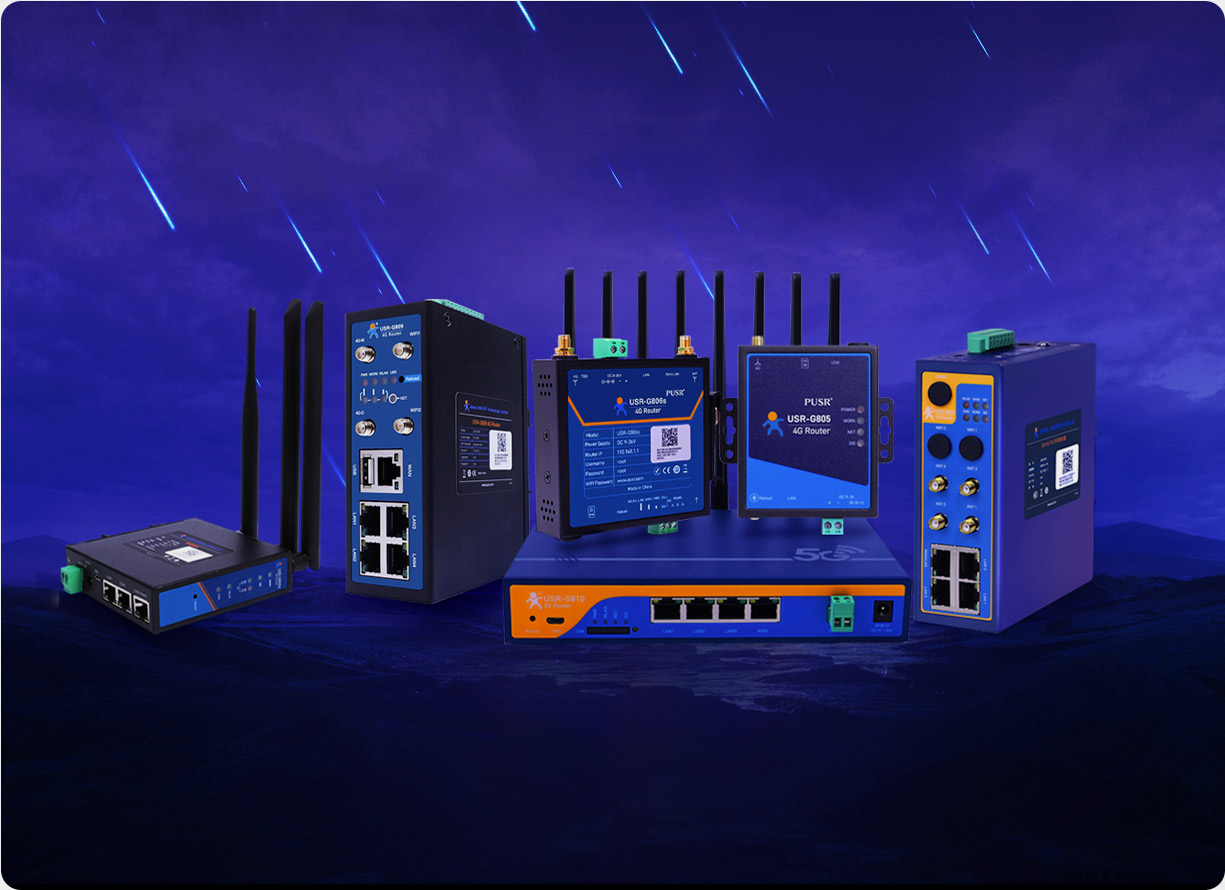
Inside the tanks (Zone 0): Category 1 equipment, such as the ATEX-certified USR-G809s cellular router, must be used.
Around the tank area (Zone 1): Category 2 equipment can be used but must be equipped with redundant communication modules.
Office areas (Zone 2): Ordinary equipment is allowed but must be physically isolated from high-risk areas.
2.2 The "Four Major Technical Barriers" of Explosion-Proof Design
Cellular router that pass ATEX certification must overcome the following technical bottlenecks:
Intrinsic safety circuits: Adopt energy-limiting designs to ensure that the energy generated during a circuit short is below the minimum ignition energy of combustible gases (e.g., 0.28 mJ for methane).
Explosion-proof enclosures: Made of stainless steel or aluminum alloy casting, with a pressure resistance of 1.5 times the maximum explosion pressure (e.g., 0.8 MPa for hydrogen explosions).
Static electricity control: Surface resistance ≤ 1 × 10⁹ Ω and grounding resistance ≤ 1 Ω to prevent static accumulation.
Temperature control: The device surface temperature must be lower than the auto-ignition temperature of the surrounding gases (e.g., 430°C for toluene).
Defects exposed during testing of a certain brand of cellular router underscore the importance of certification:
Failed the pulse group immunity test (IEC 61000-4-4), frequently restarting under electromagnetic interference.
Excessive gaps at enclosure seams (> 0.1 mm), unable to block the propagation of explosion flames.
Non-explosion-proof battery design, overheating and triggering secondary explosions.
3. Practical Case Study: The "Triple Breakthroughs" of USR-G809s in a Chemical Industrial Park
3.1 Scene Pain Points: The "Signal Island" in the Tank Storage Area
A tank storage area in a chemical industrial park has a diameter of 80 meters and a height of 20 meters, with a Zone 0 environment inside. Traditional solutions using wired fiber-optic communication face two major issues:
High construction costs: Laying fiber-optic cables requires excavation, with costs exceeding 500,000 yuan for a single tank area.
Maintenance difficulties: Fiber-optic cables are easily eroded by corrosive gases, with an annual failure rate of 15%.
As a Category 1 device with ATEX certification, the USR-G809s achieves breakthroughs in the following dimensions:
Explosion-proof performance:
Adopts an explosion-proof design (Ex db IIC T4 Gb), capable of withstanding explosion impacts from IIC-class gases such as hydrogen and methane.
Surface treated to resist corrosive substances like hydrochloric acid and sodium hydroxide, with a lifespan of over 10 years.
Communication redundancy:
Supports multi-network backup with 4G/Wi-Fi/wired connections, automatically switching to a backup link within 0.5 seconds if the primary link fails.
Equipped with dual antennas (main + auxiliary), improving signal penetration by 30% and maintaining a reception sensitivity of -90 dBm inside metal tanks.
Intelligent operational and maintenance:
Built-in cloud management platform for remote monitoring of device status and firmware upgrades, reducing manual inspection frequency.
Supports SMS/email alerts to automatically trigger emergency plans when temperature or humidity limits are exceeded.
3.3 Practical Data: Dual Optimization of Efficiency and Costs
After deploying the USR-G809s, the park achieved significant results:
Construction period: Reduced from 30 days with traditional solutions to 7 days, saving 60% in costs.
Failure rate: Decreased from 15 annual incidents to 2, reducing maintenance costs by 80%.
Data transmission latency: Reduced from 500 ms to 50 ms, meeting the real-time control requirements of DCS systems.
"The USR-G809s not only solved our communication problems but also restructured our safety management system," commented the park's safety director. "Now, we can view the explosion-proof certification status of each device in real-time through the cloud platform, truly achieving 'traceable safety.'"
4. Selection Guide: How to Choose an ATEX Cellular Router for Chemical Industrial Parks
4.1 Core Parameter Comparison Table
Parameter
USR-G809s
Ordinary Cellular Router
ATEX Certification Level
Category 1 (Ex db IIC T4 Gb)
No certification
Protection Level
IP65 (dustproof and waterproof)
IP30 (dustproof only)
Operating Temperature Range
-40°C to +70°C
-20°C to +60°C
Multi-network Switching Time
≤ 0.5 seconds
≥ 2 seconds
Mean Time Between Failures (MTBF)
≥ 100,000 hours
≤ 30,000 hours
4.2 The "Five-Step Method" for Selection
Clarify zone classification: Determine the Zone level of the equipment usage area according to GB 50058 "Design Code for Electrical Installations in Explosive Atmospheres."
Verify certification certificates: Require suppliers to provide ATEX certificates issued by institutions such as TüV or SGS and verify the consistency between the device model and the certificate.
Test communication performance: Test indicators such as signal strength and switching speed in a simulated environment to ensure they meet real-time control requirements.
Evaluate operational and maintenance capabilities: Examine the functions of the supplier's cloud management platform, such as remote firmware upgrades and fault warnings.
Calculate the total lifecycle cost: Consider equipment prices, construction costs, and maintenance fees to select the most cost-effective solution.
5. Future Outlook: The "Intelligent Revolution" of Explosion-Proof Communication
With the integration of 5G and AI technologies, ATEX cellular routers are evolving from "functional devices" to "intelligent terminals":
5G + edge computing: Achieve millisecond-level latency, supporting advanced applications such as AR remote operational and maintenance and AI visual inspection.
Digital twin: Build virtual models using device data to predict fault risks and intervene in advance.
Blockchain traceability: Record the full lifecycle data of devices to ensure the authenticity and traceability of explosion-proof certifications.
"In the future chemical industrial parks, every device will be a node in the safety ecosystem," predicted an industry expert. "ATEX certification will become a 'standard feature' for cellular routers, and intelligence will redefine the value boundaries of explosion-proof communication."
6. Safety Is the "1" in the Chemical Industry; Everything Else Is "0"
In the chemical industry, a single communication failure can trigger a chain explosion, and a single explosion-proof defect can devastate an entire production line. The practical case of the USR-G809s with ATEX certification proves that only by embedding safety genes into every line of code and every component of device design can we truly safeguard the "lifeline" of chemical industrial parks.
If you are troubled by communication safety in your chemical industrial park, consider the USR-G809s—it is not just a router but a battle-tested explosion-proof communication solution. Click the button to communicate one-on-one with PUSR's experts and obtain a customized solution that ensures both safety and efficiency.
Industrial loT Gateways Ranked First in China by Online Sales for Seven Consecutive Years **Data from China's Industrial IoT Gateways Market Research in 2023 by Frost & Sullivan
We use cookies to ensure that we give you the best experience on our website. If you continue to use this site we will assume that you are happy with it.