Comparison Between Active and Passive Backplanes of Industrial PC: In-Depth Analysis of Expansion Capabilities and Selection Guide
In critical fields such as intelligent manufacturing, rail transit, and energy management, the expansion capability of industrial PC directly determines the flexibility and upgrade potential of systems. As the core component connecting the motherboard and expansion cards, the backplane's design architecture (active/passive) directly impacts the equipment's expansion boundaries, signal stability, and maintenance costs. This article will conduct an in-depth analysis of the differences in expansion capabilities between active and passive backplanes from three major dimensions: technical principles, application scenarios, and cost-effectiveness, and provide customized selection suggestions for enterprises. If you wish to obtain a more precise backplane selection solution, please feel free to submit an inquiry for consultation. Our expert team will tailor a solution for you.
Passive backplanes connect the motherboard and expansion cards through physical slots (such as PCIe and PCI). Their core function is to provide electrical pathways and mechanical support, without containing any active signal processing chips. This design offers three major advantages:
High Compatibility: Supporting standard PCIe protocols, they can seamlessly accommodate various industrial acquisition cards, communication cards, GPU cards, and other expansion modules. For example, the Dongtian Technology DT-610X-BQ470MA industrial computer host, through its passive backplane design, provides 2 PCIeX16 slots and 3 PCIeX4 slots, enabling simultaneous access to machine vision cards, motion control cards, and multi-port communication cards to meet complex production line control requirements.
Low Power Consumption and Stability: The passive design reduces signal conversion links, lowering power consumption and failure rates. A rail transit project adopted an industrial PC with a passive backplane architecture, which operated continuously for 3 years without failure in extreme temperatures ranging from -40°C to 85°C, verifying its environmental adaptability.
Cost Controllability: Passive backplanes have a simple structure, with manufacturing costs approximately 30% lower than those of active backplanes, making them suitable for cost-sensitive mid-to-low-end application scenarios.
Active backplanes incorporate signal repeater chips, power management modules, and redundant control circuits, enabling them to actively optimize signal quality, distribute power, and achieve link redundancy. Their core value lies in:
Long-Distance Transmission and Signal Integrity: In large industrial sites (such as steel mills and wind farms), the distance between expansion cards and the motherboard may exceed 1 meter. Active backplanes use signal amplification and shaping technologies to ensure that high-speed signals such as PCIe 3.0/4.0 are transmitted without attenuation. An energy enterprise adopted an industrial PC with an active backplane, extending the distance between the data acquisition card and the motherboard to 2 meters while maintaining 99.9% signal integrity.
Power Redundancy and Hot-Swapping Support: Active backplanes can integrate dual power input modules to achieve power redundancy; they also support hot-swapping of expansion cards, allowing for the replacement of faulty modules without downtime. A semiconductor factory, through an active backplane architecture, reduced equipment maintenance time from 2 hours per instance to 10 minutes per instance, increasing production line utilization by 15%.
Intelligent Management and Fault Prediction: Some high-end active backplanes are equipped with built-in sensors and microcontrollers that can monitor parameters such as slot temperature and voltage fluctuations in real-time and upload them to the operation and maintenance platform via the SNMP protocol. An automobile manufacturing enterprise utilized this function to predict the risk of poor contact in expansion cards 30 days in advance, avoiding a production line shutdown incident.
Passive Backplanes: The number of slots is limited by the motherboard chipset, with mainstream industrial PC supporting 4-8 PCIe slots (e.g., the DT-610X-BQ470MA provides 5 PCIe slots). For more expansion, cascading backplanes or external expansion boxes are required, which increase costs and latency.
Active Backplanes: By integrating PCIe Switch chips, they can break through the limitations of the motherboard chipset and achieve expansion with 16 or even more slots. A rail transit project adopted an industrial PC with an active backplane, with a single device supporting 24 PCIe slots to meet the requirements for multi-channel 4K video acquisition and real-time analysis.
Passive Backplanes: In short-distance (<0.5 meters) transmission, signal attenuation is negligible; however, beyond 1 meter, the bit error rate of PCIe 3.0 signals may rise to 0.1%, leading to data retransmission or system stuttering.
Active Backplanes: Through signal repeating technology, they can extend the transmission distance of PCIe 3.0 signals to 3 meters, with the bit error rate controlled below 0.001%, ensuring the reliability of high-speed data transmission.
Passive Backplanes: Power is uniformly distributed by the motherboard, with the maximum power per slot typically not exceeding 75W, making it difficult to support high-power GPU cards or multi-port communication cards.
Active Backplanes: They can integrate independent power modules to provide up to 300W of power per slot, supporting the parallel operation of multiple high-power expansion cards. In an AI inference scenario, an industrial PC with an active backplane simultaneously drove 4 GPU cards, increasing inference speed by 4 times compared to a passive backplane.
Passive Backplanes: Expansion card failures require downtime for replacement, and manual recording of slot positions and equipment information is necessary, resulting in low operation and maintenance efficiency.
Active Backplanes: Supporting hot-swapping and intelligent management, operation and maintenance personnel can view slot status in real-time through a mobile app, reducing the time for replacing faulty cards from 30 minutes to 5 minutes. A logistics enterprise adopted this technology, reducing annual operation and maintenance costs by 60%.
Applicable Scenarios: Small-to-medium-sized production line control, standalone equipment monitoring, data acquisition, and other scenarios with relatively few expansion requirements (≤4 expansion cards) and mild environments.
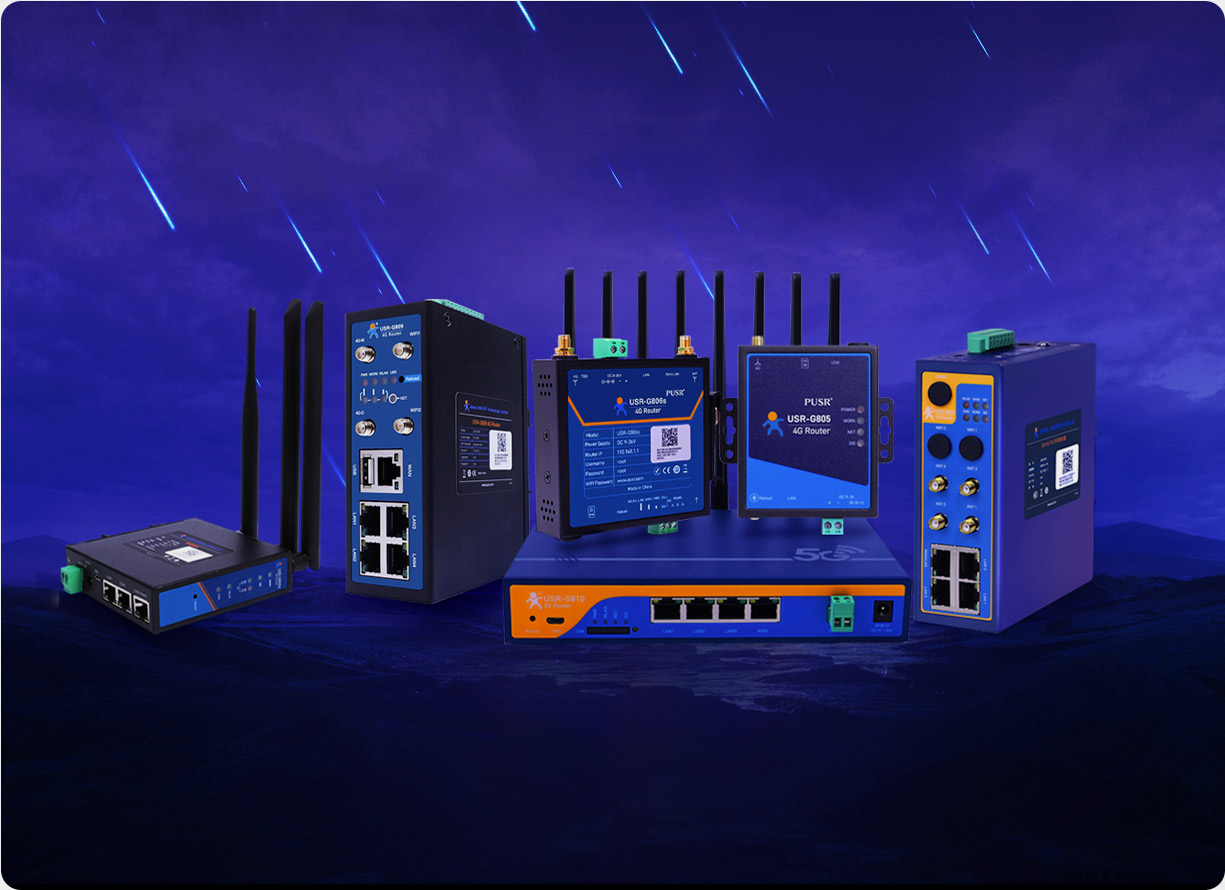
Recommended Product: The USR-EG628 expandable IoT controller, although adopting an integrated design, is optimized through ARM architecture and Linux system, supporting expansion of 2-way 485/1-way 232/1-way CAN interfaces to meet basic industrial communication requirements. Its advantages lie in its compact size (118×87×60mm), support for 4G/5G/Wi-Fi multi-network backup, making it suitable for distributed edge computing scenarios.
Applicable Scenarios: Large-scale production line joint control, multi-channel video acquisition, AI inference, high-performance computing, and other scenarios requiring the expansion of ≥8 high-power cards or transmission distances >1 meter.
Recommended Solution: Customized industrial PC with active backplanes, such as rack-mounted servers based on Intel Xeon scalable processors, supporting 16 PCIe 4.0 slots and dual power redundancy, capable of simultaneously running 8 GPU cards and 4 10 Gigabit network cards to meet the high-density computing requirements of intelligent manufacturing and smart cities.
Applicable Scenarios: Complex scenarios with both lightweight expansion requirements (such as sensor access) and heavy-duty expansion requirements (such as machine vision).
Recommended Strategy: Adopt a distributed architecture of "core control unit (active backplane) + edge computing nodes (passive backplane)." For example, in a smart factory, an industrial PC with an active backplane is deployed in the central control room for production line joint control and AI inference, while USR-EG628 and other passive backplane devices are deployed at the workshop level for local data acquisition and protocol conversion, ensuring high system availability through multi-level redundancy design.
Passive Backplanes: Equipment costs are 20%-30% lower than those of active backplanes, suitable for projects with limited budgets.
Active Backplanes: Although equipment costs are higher, they can recover investments within 3-5 years by reducing downtime, extending equipment lifespan, and lowering operation and maintenance costs. A case study of an energy enterprise showed that after adopting an active backplane, the annual total cost of ownership (TCO) was reduced by 18% compared to a passive backplane.
Passive Backplanes: Expansion requires replacing the entire backplane or motherboard, with high upgrade costs and significant compatibility risks.
Active Backplanes: Supporting online expansion and modular upgrades, they only require the addition of slot modules to enhance expansion capabilities, reducing upgrade costs by more than 50%.
Passive Backplanes: Hidden costs such as system stuttering caused by signal attenuation and equipment damage caused by insufficient power are often underestimated.
Active Backplanes: Through intelligent management and redundancy design, they convert hidden costs into predictable operation and maintenance expenses, enhancing investment certainty.
In the wave of Industry 4.0 and edge computing, expansion capability has become the core competitiveness of industrial PC. Whether you are pursuing cost-effective lightweight applications or need a "one-machine solution" for heavy-duty expansion scenarios, our expert team can provide a full range of solutions from backplane selection to system integration according to your specific needs.
Contact us immediately, and you will receive:
Free access to the "Industrial PC Backplane Selection Guide" (including the latest 2025 market data and case library);
30-minute one-on-one technical consultation to deeply analyze your application scenario requirements;
Priority access to demonstrations of the expansion capabilities of star products such as the USR-EG628;
Customized quotation solutions and project implementation roadmaps.
Let technology no longer be a bottleneck for business growth but an engine driving efficiency improvement! Submit an inquiry to embark on your smart industrial journey.