Remote Meter Reading System in an Oil Field: In-Depth Cost Analysis and Solutions for Breaking the Cost Deadlock of LoRaWAN Networking via Industrial 4G Router
In the wave of digital transformation in oil fields, remote meter reading systems have become a core tool for enhancing management efficiency and reducing operational costs. However, traditional solutions often lead oil field enterprises into a dilemma of "wanting to use but daring not to, using but finding it hard to optimize" due to issues such as high deployment costs, complex operations and maintenance, and data silos. This article takes an actual oil field case as a blueprint to deeply analyze the cost advantages of LoRaWAN networking in remote meter reading and reveals how the integration of industrial 4G router and edge computing technologies can achieve full lifecycle cost optimization, providing oil field enterprises with implementable solutions.
An oil field once attempted to implement remote meter reading using GPRS/4G modules, but each electricity meter required a separate communication module, with a single-point cost exceeding 800 yuan. To cover 5,000 metering points across the entire oil field, the hardware investment alone would reach 4 million yuan. Adding in data traffic fees, base station construction costs, and other expenses, the initial investment would exceed 6 million yuan. More severely, due to the vast distribution area and poor signal coverage in the oil field, additional signal enhancement equipment was required, further driving up costs.
Traditional meter reading relies on regular manual inspections. A case in an oil field shows that a single inspection requires an investment of 20 personnel and takes 3 days, with annual operations and maintenance costs exceeding 2 million yuan. Meanwhile, the error rate of manual meter reading is as high as 5%, leading to deviations in electricity metering, with monthly losses potentially reaching hundreds of thousands of yuan. Additionally, the delayed discovery of equipment failures (with an average repair time exceeding 12 hours) further exacerbates resource waste.
Traditional systems only achieve data collection and lack real-time analysis and decision support. A survey in an oil field found that due to the inability to promptly identify abnormal electricity usage (such as equipment idling or pipeline leaks), annual energy waste exceeded 15%. Moreover, the problem of data silos (such as the separation of the meter reading system from the production management system) resulted in data utilization rates of less than 30%, making it difficult to support refined operations.
LoRaWAN (Low-Power Wide-Area Network) has become an ideal choice for oil field scenarios with its three major characteristics of long coverage, low power consumption, and high capacity:
Taking a project with 5,000 metering points in an oil field as an example, a comparison of the total cost of ownership (TCO) between LoRaWAN and GPRS/4G solutions is as follows:
| Cost Item | LoRaWAN Solution | GPRS/4G Solution | Difference Analysis |
| Initial Hardware Cost | Gateway + Terminals (approximately 4 million yuan) | Modules + SIM Cards (approximately 6 million yuan) | LoRaWAN terminal costs are 40% lower, and gateway reuse rates are higher. |
| Operations and Maintenance Cost | Annual operations and maintenance fee of 500,000 yuan | Annual data traffic fee + labor cost of 2 million yuan | LoRaWAN data traffic fees are nearly zero, and manual inspections are reduced by 80%. |
| Expansion Cost | Supports smooth expansion | Requires additional modules and SIM cards | LoRaWAN expansion costs are reduced by 70%. |
| 5-Year TCO | 6.5 million yuan | 12 million yuan | LoRaWAN has significant cost advantages. |
After deploying a LoRaWAN meter reading system, an oil field achieved the following breakthroughs:
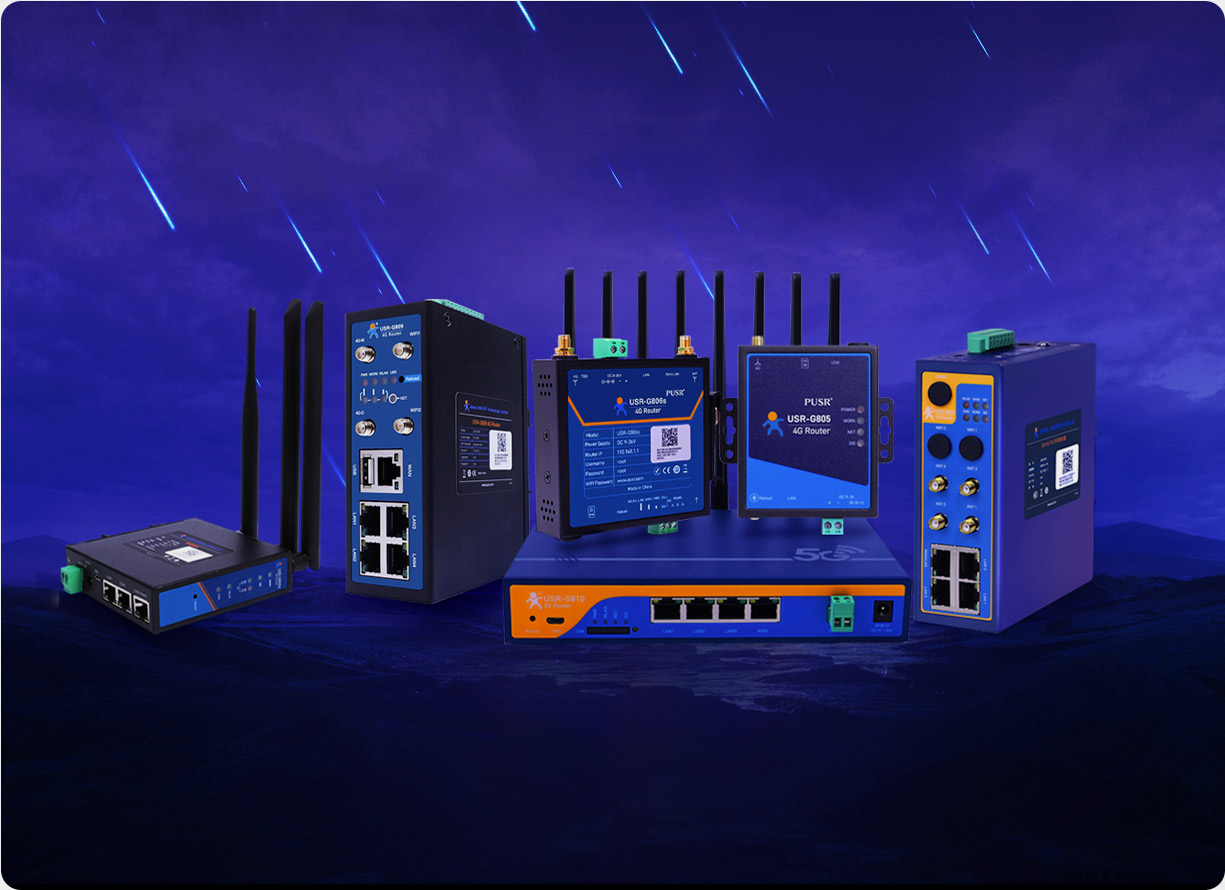
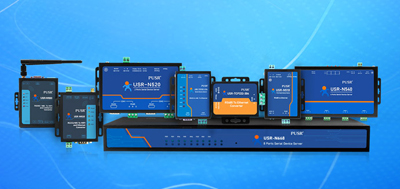
In LoRaWAN networking, industrial 4G routers play a core role in data aggregation, edge computing, and secure transmission. USR-G806w, as a router specifically designed for industrial scenarios, further optimizes costs through the following characteristics:
In the future, LoRaWAN can be deployed in combination with 5G RedCap (a lightweight 5G technology). In core areas, 5G RedCap can support high-bandwidth requirements such as high-definition video surveillance and AGV scheduling, while in edge areas, LoRaWAN can cover low-power equipment, achieving a balance between cost and performance.
By analyzing historical electricity usage data through machine learning, events such as equipment failures and electricity usage peaks can be predicted, and sampling frequencies and transmission strategies can be dynamically adjusted. For example, increasing data collection frequency when equipment health deteriorates and reducing transmission during low electricity usage periods can further reduce operational costs.
Deeply integrating the meter reading system with production management systems (MES), equipment management systems (EAM), etc., can achieve a closed loop of "meter reading - analysis - decision-making - execution." For example, optimizing equipment start-stop strategies based on electricity usage data to reduce idling energy consumption and dynamically adjusting production plans based on output data to improve overall operational efficiency.
In the journey of digital transformation in oil fields, remote meter reading systems have upgraded from an "optional configuration" to a "core infrastructure." LoRaWAN networking, with its cost advantages and technical characteristics, provides oil field enterprises with a solution that is "affordable to build, easy to use, and manageable." As a key node in the networking, the USR-G806w industrial 4G router further amplifies the value of LoRaWAN through its multi-network integration, edge computing, and high-reliability design characteristics.
At this moment, do you want to bid farewell to the era of "high costs and low efficiency" for your oil field meter reading system?
The USR-G806w industrial 4G router has proven its value in multiple oil fields across the country, from the northwest deserts to the coastal beaches. We offer customized solutions and 7×24-hour technical support. Click the button to have a one-on-one conversation with PUSR's experts, obtain an exclusive industry white paper, and get a free product trial. Let LoRaWAN + industrial 4G router become your "cost optimization engine" for digital transformation in the oil field!