What Happened to the O&M Supervisor Who Cut the Cloud
6 AM. Old Chen didn't check his phone.
That would have been unimaginable before.
Old Chen manages distributed energy sites across Jiangxi and Hunan provinces — over 120 sites total. Solar panels on rooftops, energy storage in basements, wind turbines on mountaintops. Before, the first thing he did every morning at 6 AM was grab his phone — check for overnight alerts.
Because he knew: midnight is when accidents are most likely to happen. Sudden temperature drops, load spikes, grid fluctuations — these things don't pick a time. And his system? Alerts had to go to the cloud platform first, the cloud platform had to analyze, then push the notification. The whole loop: fast, three minutes; slow, ten-plus minutes.
Ten-plus minutes. Enough time for a battery to go into thermal runaway.
So Old Chen developed a habit: phone never turned off at night, placed right next to his pillow, volume maxed out. Being jolted awake by alerts at midnight was normal. One night it buzzed seven times — he woke up seven times. The next morning at the meeting, his boss said he looked like a ghost.
But now it's different.
Now at 6 AM, he gets up, drinks tea first, then checks his phone. Not because he's not afraid of accidents anymore — it's because whatever needed to alarm last night already alarmed. Whatever shouldn't alarm, never will.
He cut the cloud.
Not literally. He took the decision-making power away from the cloud and put it back locally — at every single site.
This one change rewrote his entire O&M logic.
Old Chen thought about this question for two years.
Two years ago, when he first took over these 120 sites, he used the standard setup: one 5G cellular router per site, all data sent to the cloud. Cloud platform handles analysis, alerts, decisions.
Sounds reasonable. Centralized data management, unified big-screen display, looks good for the client.
But after six months, problems started.
Problem one: the cloud is too slow.
Not the network — the chain is too long. Data leaves the site, passes through the 5g cellular router, crosses the public internet, reaches the cloud platform, gets parsed, judged, then the alert is pushed. Any node along that chain nods off for a second, and the alert is late.
What Old Chen feared most was "midnight alerts." Because at night, the cloud platform's compute resources were maxed out by daytime data. Queuing was the norm. Sometimes the alert reached his phone 40 minutes later.
Forty minutes. The battery was already on fire.
Problem two: the cloud is too expensive.
120 sites, every site spitting out data every second. Solar current and voltage, storage temperature and SOC, turbine vibration and yaw — all uploaded to the cloud. Data fees alone were thousands per month. Over a year, the comms bill alone could buy another 20 5g cellular routers.
When Old Chen reported the budget to finance, they looked at him like he was wasting money.
Problem three — and the most fatal: the cloud is too "dumb."
What the cloud platform can actually do is very limited. It can tell you "temperature exceeded threshold" — but it doesn't know your storage station's batteries are three years old and the threshold should be 2°C higher. It can tell you "power generation dropped" — but it doesn't know your rooftop station just got half-covered in bird droppings.
The cloud sees data. It doesn't see the scene.
Old Chen said something I think is dead-on:
"The cloud can tell you something went wrong, but it doesn't know what to do about it. The one who really knows what to do is the person standing on site."
But that person can't stand on site 24 hours a day.
So he needed something that could stand on site for him — and make the judgment for him.
That something is edge computing.
Mention edge computing, and most people react: "Isn't that just local storage? Data stays in the 5g cellular router, doesn't go to the cloud."
Wrong.
Local storage is "writing it down." Edge computing is "figuring it out."
What's the difference?
Local storage: Temperature 85°C → record → upload → cloud sees it → cloud judges → push alert.
Edge computing: Temperature 85°C → local judgment "exceeds threshold" → trigger alert immediately → record simultaneously → upload simultaneously.
One is "passing a message." The other is "making the call."
The core of edge computing isn't "data doesn't go to the cloud." It's "decisions don't wait for the cloud."
Data still goes to the cloud if it should. But the judgment? That doesn't need to wait for the cloud. The 5g cellular router can do it itself.
What does this mean for distributed energy?
It means your 120 sites — each one has a "mini brain." It doesn't need to report to HQ. It doesn't need cloud approval. It judges for itself: Is this data normal? Should I alert? Should I shed load?
It's not executing orders. It's making decisions.
Old Chen isn't a tech guy — he's O&M. So his upgrade approach was brutally simple: don't change the architecture, just swap the 5g cellular routers.
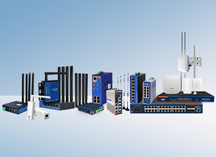
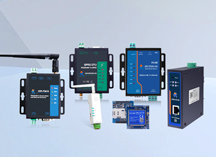
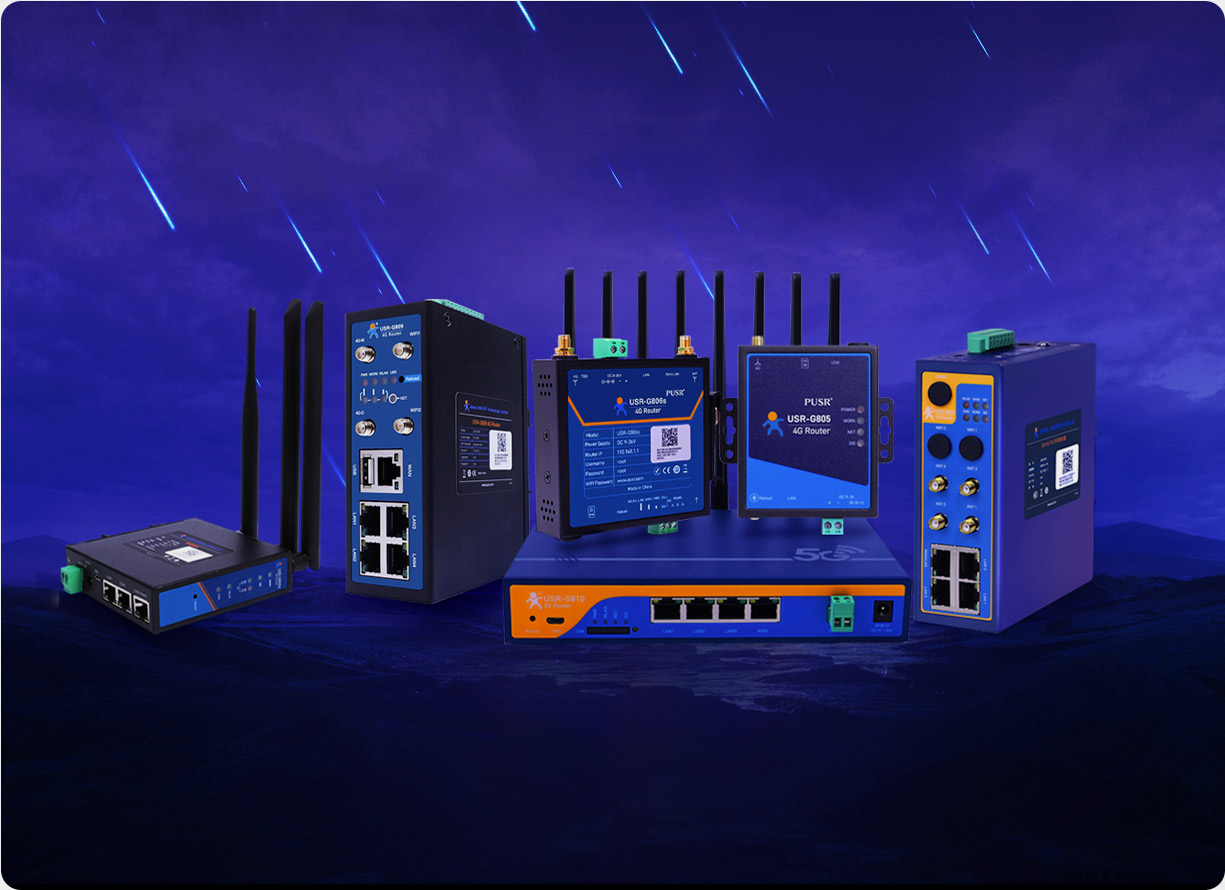
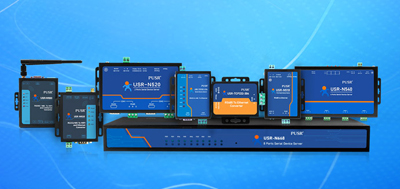
He replaced all the standard 4G 5g cellular routers with ones that have edge computing capability. The specific model was USR-G816 — but he said he didn't pick it for the brand. He picked it for three capabilities:
First: Can it run rules locally?
He set different rules for each site. Rooftop solar rule: if power generation drops over 20% suddenly, alert immediately — no waiting for the cloud. Basement storage rule: if temperature exceeds 55°C, shed load first, then alert — no waiting for human approval. Mountaintop turbine rule: if vibration exceeds threshold three times in a row, auto-shutdown — no waiting for inspection.
All these rules run locally on the 5g cellular router. No cloud upload, no queuing, no waiting for approval.
Second: Can it learn on its own?
This was what Old Chen cared about most. He said: "I can't set perfect rules for every site. But I want the 5g cellular router to learn by itself."
The USR-G816 supports local data analysis and auto-adjusts thresholds based on historical data. For example: summer temperatures are high, so the storage alert threshold auto-increases slightly. Winter temperatures are low, threshold auto-decreases. No need for Old Chen to tune each site one by one.
"I set it once, it optimizes itself. That's what I call smart." — Old Chen.
Third: Can it survive when the network goes down?
This one is life-or-death.
Old Chen said what he feared most wasn't equipment failure — it was "after the network drops, you can't do anything." With standard 5g cellular routers, once the public network cut, all data was lost, all alerts stopped, the whole site went blind.
Not anymore. The USR-G816 has local storage. When the public network drops, data saves locally first, then auto-uploads when the network recovers. And edge rules don't depend on the cloud — even offline, it still judges, still alerts, still sheds load.
"The network can drop. The brain can't." — Old Chen.
Before:
6 AM — grab phone, check alerts.
9 AM — call the site, ask if the data looks right.
2 PM — check the cloud platform, see which site dropped offline again.
10 PM — still replying to messages, because the client asked why today's generation was low.
Now:
6 AM — drink tea, check phone. Alerts from last night were already handled. No alerts means no problems.
9 AM — open the cloud management backend. All 120 sites online, all normal. No need to call one by one.
2 PM — handle two real alerts: one rooftop station covered in bird droppings, one basement storage with high temperature. Both judged by edge computing locally — not pushed by the cloud.
10 PM — shut down, go to sleep.
He went from a "fire-fighting captain" to a "normal person."
He told me something I've never forgotten:
"I used to think O&M was just putting out fires nonstop. Now I know — good O&M is making sure the fire never starts."
This is the question most people ask.
Answer: what should go up, still goes up.
Edge computing isn't "no cloud." It's "don't wait for the cloud."
Daily data, statistical reports, generation curves — these still go to the cloud. The client wants a big screen? The big screen still pulls from the cloud platform.
But alerts and decisions? They don't wait anymore.
It's like installing a smoke detector at home. When it goes off, you don't need to call the fire department first to ask "is my house on fire?" The detector judges for itself. It alarms for itself.
Edge computing is the smoke detector at every site.
It doesn't replace the cloud. It stops the cloud from doing what it does poorly.
Not every site needs it. Old Chen didn't do a one-size-fits-all cut.
His criteria were simple:
| Scenario | Need Edge Computing? | Why |
|---|---|---|
| Rooftop Solar | Yes | High data volume, cloud can't keep up, severe packet loss |
| Basement Storage | Must-have | Safety-critical, alert delay = accident |
| Mountaintop Turbines | Must-have | Unstable network, outages are normal, can't wait for cloud |
| Small Residential Storage | No need | Low data volume, cloud is sufficient, no need for extra cost |
See? It's not the more expensive the better. It's the more dangerous the scenario, the more it needs it.
The term "edge computing" has been hyped for years. But in distributed energy, it's finally found real ground to stand on.
Because distributed energy is defined by three traits: scattered, remote, dangerous.
Scattered — 120 sites across two provinces. You can't send someone to every site.
Remote — turbines on mountaintops, storage in basements. You can't be on site in real time.
Dangerous — battery thermal runaway, transformer overload. These things don't wait.
These three traits mean one thing: you can't hand all decisions to the cloud. Because the cloud is too far, too slow, and too disconnected from the scene.
You need every site to have its own brain.
That's what the 5g cellular router does. It's not an "internet tool." It's the on-site commander at every station.
After Old Chen cut the cloud, he slept the most peacefully he had in two years.
Not because accidents stopped. Because when accidents happen, someone knows immediately and acts immediately. That someone isn't him — it's the 5g cellular router.
If you're also managing dozens or hundreds of sites, take a look at the USR-G816. Edge computing, local rules, offline autonomy, industrial wide-temperature — covers the hard scenarios in distributed energy. It's not irreplaceable, but under these requirements, the number of options that do edge computing properly is small — and it's one of them.
Of course, it ultimately depends on your own scenario. If the specs match, go for it. If they don't, keep looking.
Don't let your sites wait for the cloud to make decisions. Because by the time it finishes deciding, the site might already be gone.