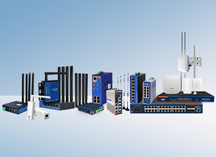
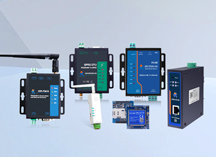
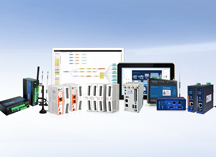
A production line usually carries several devices that speak different languages: temperature controllers over Modbus RTU, drives and servos on RS485 or CAN, older test instruments with nothing but an RS232 port, and a final appearance check still done by human eye. Each device runs fine on its own; none of them talk to each other. What is missing is not compute but the machine in the middle — an embedded industrial pc. It has two gaps to close: pulling every protocol into one table, and replacing human inspection with cameras.
Start by counting physical interfaces. RS485 is a differential bus — several devices on one pair of wires, separated by station ID. RS232 is point to point, one device per port. CAN shows up mostly in motion control. If the port count runs short, add a serial device server.
Then decide who parses the protocol layer. Instruments usually speak Modbus RTU. Each PLC brand carries its own protocol. Power and building systems add IEC 104, DLT645 and BACnet. Put the parsing on the industrial computer and let the host software read only results.
No coding is needed when the box ships with local SCADA and Node-RED: fill in station ID, register address and data type to build the tag table, then drag and drop the collection and reporting flow together.
Keep a backup path out. Ethernet, Wi-Fi and 4G/5G cover for each other; when the platform is unreachable, data lands locally first and uploads after recovery.
Cameras arrive over network ports, so count ports first. Each camera takes a gigabit port, and ports still have to be left for PLC and host traffic — port count becomes the bottleneck earlier than the CPU model does.
Run inference locally. A model with an NPU executes quantized inspection models on the box itself; capture, inference and verdict all finish on one device. Video never travels to a server, so network jitter never touches cycle time.
The verdict has to become an action: write back to PLC registers, trigger a DO for reject or line stop, and store the NG image with its timestamp.
Evidence gets used more often than alarms. At shift end, pull NG counts, defect ratios and the matching images to locate which machine and which shift started drifting.
ARBOR builds around Jetson AGX Orin, GMSL cameras and Hailo or MemryX accelerators, with compute as the spine. Sintrones leads with 14th-gen Core processors plus discrete graphics and up to eight gigabit ports with PoE, aimed at SLAM and lidar fusion. In the TSL checklist, only wide input voltage, wide temperature and isolated I/O relate to the production line.
Those directions answer "how fast does it compute." Most stations first need answers to "can the data be read at all" and "does the verdict turn into an action." An old instrument with only RS232 will not start talking because a stronger GPU was installed, and the meters hanging on an RS485 loop will not queue up and report on their own. Interfaces and protocols come first.
Inventory interfaces and protocols; build the tag table; define decision rules and write-back actions; archive and review by shift.
Getting the data read first— USR-EG628: RK3562J quad-core A53 at 2.0 GHz, 2x RS485 + 1x RS232 + 1x CAN + 2x Ethernet + 2x USB, Ubuntu with WukongEdge, Node-RED preinstalled, multi-link backup across 4G/5G, Ethernet and Wi-Fi, and support for video AI models.
Running visual inspection— USR-EG928A: RK3588J octa-core with 6 TOPS NPU, 8 GB memory, 128 GB eMMC plus TF card slot, up to 32 IP cameras, gigabit Ethernet with Wi-Fi 6 and a 5G/4G expansion slot, serial ports and DI/DO, Ubuntu 22.04 with local SCADA, fanless aluminium chassis, -25 to 75 °C.
Legacy software that only runs on Windows— USR-EC500: i5-7200U, 8 GB expandable to 32 GB, 128 GB SSD plus mSATA, 8 serial ports (4 RS232/RS485 plus 4 RS232), 5 Intel gigabit ports, DC 12-36 V, -20 to 60 °C, all-aluminium fanless chassis, Windows 10/11.
The value lands at both ends: below, getting devices on different protocols into one table; above, turning inspection verdicts into actions and keeping the evidence. Working backwards from those two ends narrows the choice fast — when selecting an embedded industrial pc, align interfaces and protocols before anything else.
1. Are fanless computers any good?
In dust, oil mist and vibration they hold up better, and there is no fan to clean or replace. The trade-off is limited heat dissipation in a given volume, so very high compute platforms still need more surface area.
2. What is the best industrial computer?
There is no universal best, only one that matches the site: enough interface channels for the existing equipment, protocols it can parse, a host system compatible with legacy software, and enough compute for the decision at hand.
3. Which fanless laptop is best?
Fanless laptops are mostly commercial thin-and-light models with nothing but USB and video outputs, and voltage and temperature ratings set for indoor conditions — not usable inside cabinets or on vehicles. Industrial sites use box PCs or panel PCs instead.
4. What is the difference between an industrial computer and a regular PC?
Industrial models keep production-line interfaces such as serial ports, CAN and DI/DO, plus wide input voltage with reverse-polarity protection, wide temperature range, fanless design, dual watchdog and EMC protection. Regular PCs are built around USB and video ports.
5. Do fanless embedded computers support edge AI applications?
Yes, depending on the compute tier. Models with an NPU run quantized inspection models locally, with capture through verdict completed on the device. Where more compute is needed, x86 models with discrete graphics are an option.
6. What is the lead time for fanless computers?
Standard models follow stock and order scheduling; custom configurations take longer. For project procurement, put the supply cycle into the RFQ and confirm which models in the same family are interchangeable.
7. How to pick the right fanless industrial PC model for a project?
Inventory interfaces and protocols; confirm the host system, since Windows-specific software means x86; size compute against camera count and frame rate; then check power input, temperature range and mounting.
8. How does collected data reach an existing system?
Configure the reporting conditions on the device side and push ov