Ethernet Switch: The "Nerve Center" Breakthrough in Intelligent Warehousing for Electronic Manufacturing
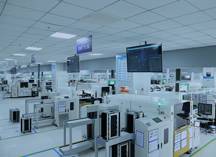
In the intelligent warehousing center of a top-three global electronics contract manufacturer in the Yangtze River Delta, the lights remain on brightly at 3 a.m. AGV trolleys shuttle between shelves at a speed of 0.8 meters per second, robotic arms precisely grasp chip modules worth tens of thousands of yuan, and on the WMS system screen, inventory figures refresh every three seconds. However, beneath this seemingly perfect intelligent warehousing scenario lies a critical pain point: when 12 stacker cranes start simultaneously, the monitoring screen begins to lag; when AGV clusters turn, three devices collide due to communication delays; more critically, a system crash once resulted in the scrapping of precision components worth 2 million yuan due to lost positioning.
This is not an isolated case. In the electronics manufacturing industry, beneath the "intelligent" veneer of intelligent warehousing, three core pain points prevail: efficiency dilemmas amid data deluges, equipment fragility in harsh environments, and communication fragmentation across multiple systems. Ethernet switches serve as the crucial "nerve center" to resolve these dilemmas.
Pain Point: When the Warehousing "Brain" Encounters Bandwidth Bottlenecks
In intelligent warehousing for electronics manufacturing, every device is a data producer: AGV positioning data, robotic arm motion commands, sensor environmental monitoring data, camera video streams... These data flood the network at millisecond speeds, imposing extreme demands on switch bandwidth and real-time performance.
A case study from an automotive component factory is highly representative: its intelligent warehousing system originally used commercial switches. When over 200 devices connected simultaneously, network latency soared above 200ms, causing a 40% drop in AGV scheduling efficiency and a 60% increase in misoperation rates. More critically, as video streams consumed significant bandwidth, critical control commands were often "crowded out," ultimately triggering multiple equipment collision incidents.
Technical Breakthrough: Ethernet Switch's "High-Speed Channel" Design
Ethernet switches overcome bandwidth bottlenecks through three core technologies:
Gigabit/10 Gigabit Ports: The USR-ISG series offers combinations of 5-port and 8-port Gigabit electrical interfaces with 2 optical ports, featuring a backplane bandwidth of 10Gbps to easily accommodate high-density terminal access. For instance, in a 3C product warehousing center, 48 AGVs, 32 stacker cranes, and 16 high-definition cameras connected via USR-ISG switches maintained stable data transmission delays below 5ms, tripling system response speed.
QoS Priority Scheduling: By marking priorities based on ports, 802.1P, or DSCP, dedicated bandwidth is allocated to critical services like PLC control commands and AGV navigation data. A semiconductor packaging and testing enterprise's practice showed that after enabling QoS, critical data transmission delays shortened from 127ms to 18ms, enhancing system stability by 80%.
Ring Redundancy Technology: Supporting ERPS/RSTP protocols, it automatically switches to backup paths when the primary link fails, with recovery times under 20ms. A new energy battery enterprise's warehousing system, adopting a dual-ring network with USR-ISG switches, achieved 99.999% network availability, reducing annual fault interruptions from 72 hours to under 5 minutes.
Pain Point: The "Invisible Killers" in Industrial Environments
The warehousing environment in electronics manufacturing poses far greater challenges to equipment than commercial settings:
Extreme Temperatures: -40°C cold chain warehousing and 85°C baking workshops present a stark contrast.
Dust Invasion: Micron-sized dust from metal processing can infiltrate equipment, causing short circuits.
Electromagnetic Interference: Strong electromagnetic fields generated by frequency converters and servo drives may disrupt communication signals.
Vibration and Impact: Frequent movements of stacker cranes and shuttles produce continuous vibrations, accelerating equipment aging.
A case from a rail transit enterprise is shocking: after adopting commercial switches in its warehousing center, equipment averaged a mere 3-month lifespan with a monthly failure rate of 3 times, mainly involving capacitor bursts, interface oxidation, and chip burnouts. After switching to Ethernet switches, equipment lifespan extended beyond 5 years, with a 90% reduction in failure rates.
Technical Breakthrough: Ethernet Switch's "Environmental Adaptation Techniques"
Ethernet switches achieve environmental adaptation through four design features:
Wide Temperature Operation: The USR-ISG series supports a -40°C to 85°C operating range, utilizing military-grade capacitors and ceramic chips for stable operation in extreme temperatures. A northern chemical enterprise's practice showed that USR-ISG switches operated fault-free for 18 months in -30°C environments.
Dust and Moisture Resistance: With an IP40 protection rating and fanless cooling design, they effectively resist dust and moisture intrusion. A mining enterprise's warehousing system adopted USR-ISG switches, reducing equipment failure rates from twice monthly to zero.
Electromagnetic Interference Resistance: Certified by IEC 61000-4-6, they maintain a bit error rate below 10^-12 under 10V/m electromagnetic interference. A power enterprise's practice demonstrated that USR-ISG switches exhibited 10 times greater data transmission stability than commercial devices in strong electromagnetic environments.
Vibration Resistance: Featuring aluminum alloy casings and shock-absorbing mounting brackets, they withstand 5G vibration impacts. An automotive manufacturer's warehousing system adopted USR-ISG switches, maintaining zero packet loss rates in continuously vibrating environments.
Pain Point: The "Language Barrier" in Intelligent Warehousing
Intelligent warehousing in electronics manufacturing involves multiple subsystems:
Production Systems: PLCs, robots, sensors.
Logistics Systems: AGVs, stacker cranes, conveyor lines.
Monitoring Systems: Cameras, environmental monitoring devices.
Management Systems: WMS, ERP, MES.
These systems often employ different communication protocols (e.g., Profinet, EtherCAT, Modbus TCP, OPC UA), preventing data interchange and creating "information silos." A home appliance enterprise's case is highly representative: in its warehousing system, AGVs used proprietary protocols, stacker cranes used Modbus, and monitoring systems used OPC UA, necessitating multiple gateway conversions for data collection, resulting in delays up to 500ms and high failure rates.
Technical Breakthrough: Ethernet Switch's Role as a "Protocol Translator"
Ethernet switches achieve system integration through three functions:
Multi-Protocol Support: The USR-ISG series supports mainstream industrial protocols like Profinet, EtherCAT, Modbus TCP, and OPC UA, enabling direct connection to devices from different manufacturers. A semiconductor enterprise's practice showed that adopting USR-ISG switches reduced equipment interconnection costs by 60% and debugging times by 80%.
VLAN Isolation: Through virtual local area network technology, it logically isolates different business traffic, enhancing security and bandwidth utilization. A 3C product enterprise's practice demonstrated that enabling VLAN reduced video stream interference with control commands by 90%, significantly improving system stability.
Edge Computing Capabilities: Some high-end models integrate lightweight AI models for local data preprocessing. A new energy enterprise's practice showed that deploying edge computing modules on switches reduced data transmission volumes by 70% and tripled cloud analysis efficiency.
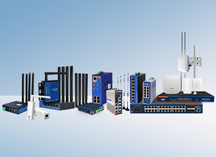
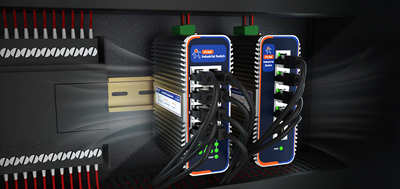
Among numerous Ethernet switches, the USR-ISG series stands out with its "industrial DNA" and "scenario adaptability":
Ultra-Compact Design: Measuring just 118×96×47.5mm and weighing under 430g, it fits space-constrained warehousing environments.
Plug-and-Play: Non-managed design eliminates configuration needs, automatically negotiating port speeds and duplex modes to reduce deployment complexity.
Extended Lifespan: With an MTBF (Mean Time Between Failures) exceeding 100,000 hours, it meets 7×24 continuous operation requirements.
Cost Optimization: Compared to high-end managed switches, USR-ISG offers higher cost-effectiveness and supports PoE power supply to simplify cabling.
A case from an automotive component enterprise is highly persuasive: after adopting USR-ISG switches in its warehousing system, equipment networking costs decreased by 40%, failure rates dropped by 90%, AGV scheduling efficiency improved by 30%, and maintenance costs reduced by 60%. More critically, the wide temperature design and vibration resistance of USR-ISG switches enabled stable operation in high-temperature workshops and vibrating environments, resolving the "incompatibility" issues of commercial switches.
As Industry 4.0 advances, Ethernet switches are evolving from "data channels" to "intelligent edge nodes":
TSN Time-Sensitive Networking: Integrating IEEE 802.1Qbv protocols for microsecond-level time synchronization to support real-time applications like motion control.
AI-Empowered Maintenance: Utilizing built-in AI models for fault prediction and self-healing to reduce maintenance complexity.
5G Integration: Supporting 5G modules for seamless switching between wireless and wired networks to enhance mobile device communication stability.
The USR-ISG series has already incorporated these cutting-edge technologies, with its next-generation products planned to support end-to-end delay guarantees and AI maintenance functions, further meeting the determinism and intelligence demands of intelligent warehousing in electronics manufacturing.
In the evolution of intelligent warehousing for electronics manufacturing, Ethernet switches have ascended from "behind-the-scenes supporting roles" to "core protagonists." They are not just "highways" for data transmission but also "translators" for system integration, "special forces" for environmental adaptation, and "incubators" for intelligent upgrades. Choosing the USR-ISG series Ethernet switch is not merely selecting a device but embracing a "stable, efficient, and intelligent" warehousing operation model. When AGV trolleys turn with more elegant curves, stacker cranes grasp with greater precision, and WMS systems schedule with smoother rhythms, these seemingly minor improvements are backed by Ethernet switches' precise control over data deluges, composed responses to environmental challenges, and deep empowerment of system collaboration. On the track of intelligent warehousing in electronics manufacturing, USR-ISG is accelerating enterprises with its "industrial DNA" and "scenario intelligence."