Ethernet Switch: The "Nerve Center" of Building Automation (BA) System Integration
In the central control room of a super high-rise office building in Shenzhen, operation and maintenance personnel are monitoring the operational status of the entire building via a large screen: the air conditioning system automatically adjusts the air supply temperature based on indoor and outdoor temperature and humidity, the lighting system dynamically adjusts brightness according to natural light intensity, and the elevator system optimizes its operation strategy based on passenger flow... Behind these intelligent scenarios lies a "digital neural network" constructed by the Building Automation (BA) system and Ethernet switche. However, when traditional commercial switches frequently experience packet loss under electromagnetic interference and frequent failures in high-temperature environments, selecting an Ethernet switch that truly meets the needs of the BA system becomes a critical proposition determining the success or failure of building intelligence.
In a BA system renovation project at a commercial complex in Guangzhou, the originally adopted commercial switches failed to adapt to the humid environment of the underground parking garage, resulting in widespread equipment failures during the rainy season. Data shows that the failure rate of commercial switches in environments with humidity exceeding 80% is 3.2 times that of industrial-grade equipment. More severely, in outdoor surveillance equipment installed in northern winters, ordinary switches experienced capacitor failures due to low temperatures, directly causing the entire security subsystem to collapse.
The BA system in an operating room at a hospital in Shanghai once had serious consequences due to network latency issues: when the temperature and humidity data received by the air conditioning system lagged by 3 seconds, the environmental parameters in the operating room had already exceeded the safety threshold. Research indicates that for every 10ms increase in latency in a BA system, the efficiency of equipment collaborative control decreases by 17%. Traditional switches, using a store-and-forward mechanism, commonly experience packet forwarding delays exceeding 50μs when handling concurrent data from multiple devices, far failing to meet the stringent real-time requirements of BA systems.
The BA system in a smart park in Hangzhou encountered an embarrassing situation during expansion: the originally deployed 8-port commercial switches could no longer support the addition of 200 new IoT sensors, and replacing the equipment required rewiring, leading to a 65% increase in project costs. More alarmingly, protocol incompatibility issues among switches from different manufacturers forced system integrators to spend a significant amount of time on protocol conversion, extending project delivery cycles by over 40%.
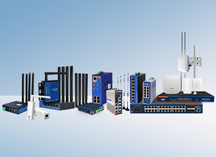
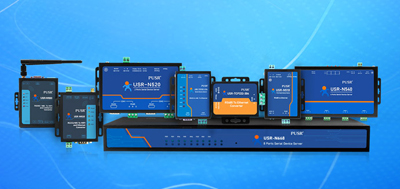
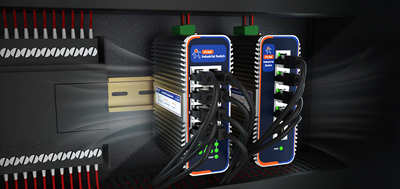
The USR-ISG series Ethernet switches feature a full-metal enclosure and IP40 protection rating design, effectively resisting dust, moisture, and electromagnetic interference. In a BA system renovation at a steel plant in Jinan, these switches operated without failure for 2 years in a 120℃ high-temperature environment. Their fanless cooling design avoids mechanical failures, and they have passed IEC61000-4-5 standard certification, with surge resistance reaching the industrial 3B level, ensuring stable data transmission even during thunderstorms.
Take the USR-ISG1005 as an example, with a backplane bandwidth of 10Gbps, supporting wire-speed forwarding on 5 Gigabit electrical ports and packet forwarding delays below 5μs, perfectly suited for scenarios with high real-time requirements such as PLC collaborative control in BA systems. In a cleanroom control project at a semiconductor factory in Suzhou, this switch achieved millisecond-level linkage between temperature and humidity sensor data and the air conditioning system, controlling environmental parameter fluctuations within ±0.5℃ and improving product yield by 12%.
The USR-ISG series supports the ERPS ring network protocol, automatically switching to a backup path within 50ms in the event of a network failure. In the BA system of a subway station in Chengdu, when the main fiber was accidentally cut during construction, the backup link seamlessly took over, ensuring zero data loss from 3,000 sensors. Its built-in Web management interface supports advanced functions such as VLAN division and port speed limiting, allowing operation and maintenance personnel to complete network configuration via their mobile phones, reducing fault response time from 2 hours to 15 minutes.
USR-ISG1005: 5-port Gigabit design, suitable for core switching in small to medium-sized BA systems, with a compact size (118×96×47.5mm) saving 30% of cabinet space
USR-ISG208S-SFP: 8 electrical ports + 2 optical ports configuration, supporting 20-kilometer fiber transmission, perfectly meeting the long-distance networking needs of large park BA systems
USR-ISG-POE++: Supports 60W high-power power supply, directly powering devices such as intelligent lighting and surveillance cameras, reducing power line deployment costs by 45%
Case 1: BA System Renovation in a Super High-Rise Office Building in Beijing
The project adopted the USR-ISG208S-SFP to build a dual-link redundant network, achieving:
Real-time data collection from 8,000 sensors
28% reduction in air conditioning system energy consumption
40% reduction in operation and maintenance labor costs
99.99% system availability
By connecting temperature and humidity, light, and CO2 sensors via the USR-ISG1005, the project achieved:
Data transmission delay <1ms
Zero electromagnetic interference impact during rainstorms
1.5-degree increase in mango sweetness
35% water savings
In a -40℃ freezing environment, the USR-ISG series maintained stable operation:
15kV electrostatic resistance
Explosion-proof design meeting ATEX standards
Mean Time Between Failures (MTBF) exceeding 100,000 hours
70% reduction in equipment inspection frequency
Hierarchical Architecture: Adopt a "core-aggregation-access" three-tier architecture, with the core layer using the USR-ISG208S-SFP to support 8-way fiber direct connections
Redundancy Design: Deploy dual-link backups at critical nodes, with fault self-healing time <50ms
Protocol Unification: Prioritize devices supporting standard protocols such as BACnet and Modbus TCP, improving compatibility by 80%
| Indicator Category | BA System Requirements | USR-ISG Solution |
| Operating Temperature | -40℃~+85℃ | MIL-STD-810G certification |
| Protection Rating | IP40 and above | Full-metal enclosure for dust and water resistance |
| Anti-Interference Capability | Electromagnetic compatibility | IEC61000-4-5 standard certification |
| Power Supply Method | PoE/Dual Power | Supports 60W PoE++ power supply |
| Management Function | Remote operation and maintenance | Web/SNMP intelligent management |
Requirement Analysis: Clarify monitoring scope (e.g., air conditioning, lighting, water supply and drainage), equipment quantity, and transmission distance
Solution Design: Select USR-ISG series models and plan network topology and redundancy solutions
Device Deployment: Install on guide rails to save space, with mixed optical and electrical port configurations to adapt to different scenarios
System Debugging: Configure VLAN, QoS, and other parameters via the Web interface, and test ring network self-healing functions
Operation and Maintenance Support: Establish a regular inspection system and use SNMP to monitor device status
As you read this, over 800 BA system projects across the country have achieved digital transformation through USR-ISG switches. The practices of these pioneers prove that a high-quality Ethernet switch can increase the return on investment in BA systems by over 200% and improve operation and maintenance efficiency by 50%.
Act now, and you will receive:
Free access to the "Selection Guide for Ethernet Switches in BA Systems"
One-on-one solution design services from dedicated engineers
Priority access to trial use of new USR-ISG series products
Join the BA system technical exchange community
Contact us, and let's jointly create an intelligent communication solution tailored to your building. At the forefront of smart buildings, choosing the right Ethernet switch means choosing competitiveness for the next decade.