From "5G + Internet of Vehicles": The "Last Mile" for the Commercialization of Autonomous Driving
In today's era of rapid technological development, autonomous driving is no longer a far-fetched sci-fi concept. Instead, it is gradually moving from the laboratory to reality, becoming the core driving force for the transformation of the automotive industry. However, the path to the commercialization of autonomous driving is not smooth sailing. Despite continuous technological breakthroughs, there are still numerous challenges to be overcome before it can achieve truly large-scale popularity. At this critical juncture, "5G + Internet of Vehicles" acts like a key, striving to open up the "last mile" for the commercialization of autonomous driving, addressing deep-seated pain points for customers and bringing them a brand-new travel experience.
The core goal of autonomous driving is to achieve safer travel than human driving. However, as long as vehicles are controlled by machines, there is a risk of system failures, algorithmic misjudgments, or failures in handling extreme scenarios. Currently, autonomous driving technology is in a stage of rapid development, and there are many ambiguous areas in the division of liability for different levels of autonomous driving functions. Take Level 3 autonomous driving as an example. It allows vehicles to take over driving tasks in specific scenarios but requires the driver to be ready to take over at any time. If an accident occurs during system control, the automaker is responsible for product liability. However, if the system has issued a takeover warning and the driver fails to respond, the liability may shift to the vehicle owner. In real-world scenarios, the driver may fail to take over in a timely manner due to distraction, or the system warning time may be too short, making it difficult to assign liability. For instance, a Level 3 model from a certain automaker misjudged a stationary vehicle ahead as being at a "safe distance" on the highway due to sensor misinterpretation and did not trigger a takeover warning, resulting in a rear-end collision. Both the automaker and the vehicle owner believed the other party should be held responsible, and the case became a protracted legal battle. This ambiguity in defining safety liability significantly reduces customer acceptance of autonomous driving and becomes a major obstacle to its commercialization.
Although mainstream autonomous driving technologies can handle most urban road scenarios, there are still obvious shortcomings in their adaptability to complex environments. Extreme weather conditions are important factors that affect the perception capabilities of autonomous driving. Heavy rain, snowstorms, and thick fog can interfere with the perception abilities of cameras and LiDAR. Cameras are prone to overexposure or underexposure under strong light or backlighting conditions, while the point clouds from LiDAR can be disturbed by "noise" in rain and snow, leading to misjudgments of obstacle positions or missed detections. For example, an autonomous driving model triggered emergency braking during heavy rain, mistaking the reflected light from water on the road for a "vehicle ahead," causing a chain rear-end collision. Another model failed to identify a stationary broken-down vehicle ahead in a snowstorm because the LiDAR point clouds were covered by snowflakes and crashed directly into it. In addition, the unpredictable behavior of non-standard traffic participants also poses challenges for autonomous driving. Human drivers' behavior is random, such as sudden lane changes, illegal parking, and pedestrians running red lights. Autonomous driving systems rely on "historical data + rule models" to predict behavior and have difficulty coping with "unseen" abnormal behaviors. For example, an autonomous driving truck encountered an illegally driving against the traffic flow tricycle on a rural road. Since the system had not encountered such a scenario in its training data, it failed to avoid it in a timely manner, resulting in a collision. The dynamic changes in road construction and temporary signage also test the adaptability of autonomous driving. Urban roads often undergo temporary detours, the placement of traffic cones, or adjustments to lane markings due to construction. However, the updates of high-precision maps are lagging, causing the system to still follow the old maps, conflicting with the actual road conditions. For example, an autonomous driving taxi encountered a closed lane for construction during the morning rush hour. Since it had not received a map update, it continued to follow the original route, was forced to cross a solid line to change lanes, and was penalized by traffic police.
The commercialization of autonomous driving requires achieving "technology costs lower than labor costs," but currently, the high hardware and operational costs make this goal difficult to achieve. LiDAR is the "eye" of autonomous driving, providing high-precision three-dimensional environmental perception, but its cost accounts for more than 40% of the vehicle's hardware. Although domestic LiDAR companies have reduced the cost from tens of thousands of yuan in 2020 to 5,000 - 10,000 yuan through "chipization + scale," it is still expensive compared to the cost of a few hundred yuan for cameras. For example, a Level 3 model from a certain automaker was priced 80,000 yuan higher than a comparable gasoline-powered vehicle due to the installation of three LiDAR units. Consumers were more inclined to choose a "low-price + basic assisted driving" configuration, resulting in low sales of high-end autonomous driving models. In addition to hardware costs, operational costs such as data annotation, simulation testing, and safety officers (for Level 3) cannot be ignored. An autonomous driving company needed to annotate 1 billion frames of image data to cover 1,000 long-tail scenarios, with costs exceeding 100 million yuan. At the same time, Level 3 autonomous driving requires the presence of a safety officer, and labor costs account for more than 30% of operational expenses. In terms of profit models, user acceptance of the "safety premium" is limited. The selling point of autonomous driving is "safer travel," but users are unwilling to pay for "potential safety." For example, a ride-hailing platform's autonomous driving service charged 0.5 yuan more per kilometer than ordinary express cars (claiming to "cover the costs of safety officers and insurance"), but it only accounted for 5% of the platform's orders. Most users believed that "traditional driving is already safe enough, and there is no need to spend extra money."
5G + Internet of Vehicles provides autonomous driving vehicles with high-precision positioning and real-time communication capabilities, helping to clarify safety liability. Through the 5G network, vehicles can communicate in real-time with cloud servers, other vehicles, and infrastructure, obtaining accurate road information and the status of surrounding vehicles. In the event of an accident, this data can serve as important evidence to help determine accident liability. For example, when an autonomous driving vehicle collides with another vehicle, data such as the vehicle's driving trajectory, speed, and braking situation recorded through the 5G network can clearly reconstruct the accident process and determine whether it was a system failure, driver misoperation, or the responsibility of the other vehicle. At the same time, the V2X (Vehicle-to-Everything) technology in the Internet of Vehicles enables information exchange between vehicles and infrastructure. For example, through 5G signals, vehicles can receive instructions from a series of traffic light facilities along the route, guiding the speed at which traffic lights are passed, making the flow of green-light traffic smoother, and reasonably controlling driving speed to optimize energy consumption. This not only improves traffic efficiency but also reduces the risk of accidents caused by uncoordinated traffic signals, further clarifying safety liability.
5G + Internet of Vehicles can compensate for the perception shortcomings of autonomous driving vehicles' own sensors and improve their adaptability to complex scenarios. Roadside equipment in the Internet of Vehicles, such as cameras, radar, and intelligent traffic signals, can transmit the collected information to vehicles in real-time through the 5G network, providing vehicles with beyond-line-of-sight perception capabilities. For example, in heavy rain, a vehicle's own cameras and LiDAR may be disturbed, but roadside cameras can clearly capture the road conditions and transmit image information to the vehicle through the 5G network, helping the vehicle identify obstacles and road markings. In addition, the Internet of Vehicles can also enable collaborative decision-making among vehicles. When multiple autonomous driving vehicles are traveling on the road, they can share information such as driving speed, destination, and road conditions through the 5G network, thereby coordinating driving routes and speeds to avoid collisions and congestion. For example, in vehicle platooning scenarios, by automatically controlling the vehicle formation, driving speed, the distance between vehicles, and the consistency of collaborative driving, driving efficiency can be improved, driving safety can be ensured, and transportation costs and risks can be reduced.
5G + Internet of Vehicles provides new ideas for reducing the hardware costs of autonomous driving. In a 5G environment, autonomous driving vehicles can be equipped with a low-cost domain controller specifically designed to handle emergency situations, and move large-scale data processing and computing to the cloud. During autonomous driving, the vehicle can apply for computing resources from the cloud and release these resources back to the cloud when the autonomous driving mode is turned off or the vehicle is parked. This model not only reduces the hardware costs of autonomous driving vehicles but also significantly improves the utilization rate of cloud resources. For example, traditional autonomous driving vehicles need to be equipped with high-performance domain controllers to process large amounts of sensor data, which is costly. After adopting the 5G + Internet of Vehicles model, vehicles only need to be equipped with a low-cost domain controller to handle emergency situations, and most data processing and computing can be completed in the cloud, thus reducing vehicle hardware costs. At the same time, by optimizing profit models, user acceptance of autonomous driving services can be improved. For example, automakers can cooperate with insurance companies to provide users with more favorable insurance premiums based on the safety records and driving data of autonomous driving vehicles; or cooperate with travel platforms to launch shared autonomous driving services, reducing operational costs through economies of scale and improving profitability.
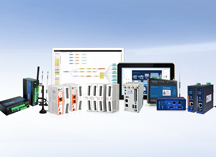
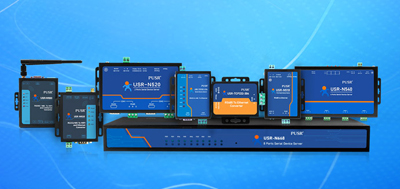
In the wave of development of "5G + Internet of Vehicles," the industrial computer USR-EG628 serves as a powerful "intelligent control hub," providing strong support for the commercialization of autonomous driving. Based on the ARM architecture, it runs on the Linux Ubuntu system and is equipped with the WukongEdge edge intelligence platform. It integrates data acquisition, protocol conversion, PLC programming, local configuration, remote monitoring, and AI computing, making it an "Internet of Things control hub" with edge logic and cloud-edge collaboration capabilities.
USR-EG628 is equipped with an industrial-grade RK3562J chip, featuring a 4-core 64-bit Cortex-A53 architecture and 1 TOPS of AI computing power, supporting edge AI tasks such as image recognition and voice judgment. In autonomous driving scenarios, it can collect various sensor data from the vehicle in real-time, such as speed, acceleration, steering angle, and camera images, and perform preliminary analysis and processing through built-in AI algorithms to promptly detect potential safety hazards. For example, by analyzing camera images, it can identify obstacles, pedestrians, and other vehicles on the road and calculate their distances and relative speeds, providing a basis for decision-making by the autonomous driving system.
At the same time, USR-EG628 has a rich set of interfaces, including RS485/232, CAN, LAN, USB, HDMI, and SIM card slots, allowing for quick connection to various sensors, instruments, and actuators for efficient. It can connect to the vehicle's CAN bus to obtain vehicle driving status information and access the 5G network through the SIM card slot to transmit data to the cloud server in real-time. In addition, it supports multiple communication methods, such as 4G/5G/Wi-Fi/Ethernet, and has primary and backup network switching functions to ensure stable data transmission.
In terms of security and reliability, USR-EG628 adopts an industrial-grade design, featuring three-level surge protection, three-level electrostatic protection, and a system watchdog mechanism, enabling continuous and stable operation under complex working conditions such as lightning strikes, power outages, interference, and high temperatures. It also integrates network management capabilities such as VPN, firewall, routing, and security isolation, combined with WukongEdge network management, making data visible, devices easy to control, and ensuring secure online access. In the process of the commercialization of autonomous driving, the security of data and the stable operation of equipment are crucial. The characteristics of USR-EG628 provide reliable guarantees for the autonomous driving system.
"5G + Internet of Vehicles" brings new opportunities and hopes for the commercialization of autonomous driving. It acts as a bridge connecting technological breakthroughs with commercial applications, opening up the "last mile" for the commercialization of autonomous driving. With the continuous popularization of 5G technology and the gradual improvement of the Internet of Vehicles ecosystem, autonomous driving will gradually enter people's lives and change our way of travel.
In the future, we can imagine such a scenario: In the morning, you sit in an autonomous driving vehicle without the need for manual operation. The vehicle communicates in real-time with surrounding infrastructure and other vehicles through the 5G network, automatically planning the best driving route and avoiding congested road sections. During the journey, the Internet of Vehicles system provides you with real-time traffic information, weather conditions, and recommendations for nearby attractions, making your trip more convenient and comfortable. Upon arrival at your destination, the vehicle automatically finds a parking space and completes parking without your intervention.
At the same time, "5G + Internet of Vehicles" will also promote the development of intelligent transportation and smart cities. Through the Internet of Vehicles system, cities can achieve real-time monitoring and optimized scheduling of traffic flow, improving road traffic efficiency, reducing energy consumption, and environmental pollution. Intelligent traffic signals can automatically adjust signal durations based on the real-time driving conditions of vehicles, achieving green wave passage and making urban traffic smoother.
"5G + Internet of Vehicles" is the key to the commercialization of autonomous driving. It addresses deep-seated pain points for customers such as defining safety liability, adapting to complex scenarios, and balancing costs and profitability. The industrial computer USR-EG628, as an important support for "5G + Internet of Vehicles," provides powerful control and computing capabilities for the autonomous driving system. Let us look forward to "5G + Internet of Vehicles" leading autonomous driving towards a better future and opening a new era of intelligent travel.