Guide to QoS Policy Configuration for Industrial Router: How to Prioritize and Safeguard Critical Business Traffic?
In the era of the Industrial Internet, one of the core challenges faced by enterprises is ensuring the prioritized transmission of critical business traffic in complex network environments. Whether it's millisecond-level responses to PLC control commands or real-time backhaul of remote monitoring data, any delay or packet loss can lead to production halts, equipment damage, or even safety accidents. The QoS (Quality of Service) strategy of industrial router is a key technology to address this pain point. This article will delve into the underlying principles and configuration methods of QoS, providing enterprises with practical solutions through real-world case studies.
In industrial control scenarios, different types of traffic exhibit vastly different tolerances for latency:
PLC Control Commands: In scenarios such as robotic arm synchronization control and welding spot positioning, latency exceeding 1 millisecond can lead to product defects.
Remote Operation and Maintenance Data: In scenarios like equipment status monitoring and fault warnings, latency exceeding 10 milliseconds may miss the optimal intervention window.
Video Surveillance Streams: In scenarios such as personnel behavior recognition and safety inspections, latency exceeding 50 milliseconds can affect real-time judgment.
The traditional "best-effort" network transmission model cannot meet the low-latency and high-reliability requirements of industrial scenarios. For example, a automotive parts manufacturer once experienced welding spot misalignment in robotic arms due to 4G network latency fluctuations (30-50 milliseconds), resulting in a defect rate as high as 5%.
In industrial networks, non-critical business traffic (such as file downloads and backup data) can consume significant bandwidth, squeezing out critical business traffic. For example:
Multi-device Collaboration Scenarios: If the communication latency between AGV carts and robotic arms exceeds 10 milliseconds, their actions will be out of sync, leading to material handling failures.
Distributed Control Systems: If cloud-based command delivery is delayed, distributed PLC nodes may execute incorrect logic due to data inconsistency, causing a full production line shutdown.
Predictive Maintenance Scenarios: If vibration sensor data transmission is delayed, equipment fault warnings may miss the optimal intervention window, triggering unplanned downtime.
QoS strategies can effectively avoid such issues through mechanisms such as priority scheduling and bandwidth guarantees.
The first step in QoS is to identify critical business traffic through technical means and label it with priority tags:
Port Number Marking: For example, video conferencing commonly uses the SIP protocol (port 5060) and RTP protocol (dynamic port range), which can be marked as high priority.
DSCP Value Marking: The DSCP field in the IP header can be marked by terminals or gateways (e.g., EF—Expedited Forwarding), enabling devices to classify traffic accordingly.
Protocol Type Identification: Identifying UDP streams (commonly used for audio and video transmission) and combining them with other features to determine if they are real-time communications.
Deep Packet Inspection (DPI): Classifying specific application traffic (such as Zoom and Teams) through behavioral characteristics, even if encrypted.
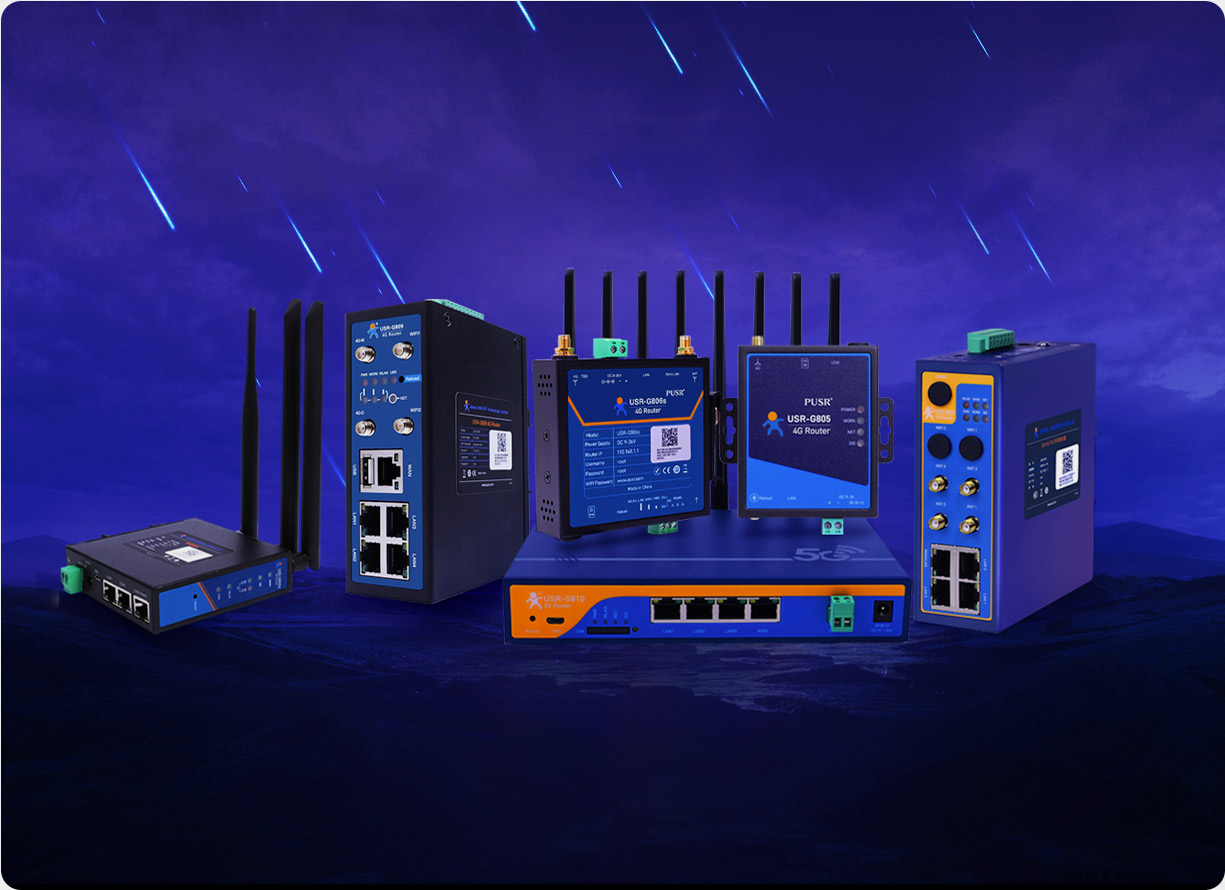
For example, the USR-G809s industrial router supports multi-dimensional traffic classification based on DSCP, 802.1p, port numbers, etc., enabling precise identification of industrial traffic such as PLC control commands and Modbus TCP/IP protocols.
Classified traffic is sent to queues with different priorities, and devices schedule and forward traffic according to policies:
High-Priority Queues: Real-time traffic such as PLC control commands enters low-latency queues and is prioritized for transmission, with minimal queuing.
Weighted Fair Queuing (WFQ) or CBQ: While ensuring high-priority traffic, reasonable bandwidth proportions are allocated to other traffic.
Dequeuing Mechanisms: PQ (Priority Queuing) or WRR (Weighted Round Robin) are used to ensure timely transmission of critical packets and reduce jitter.
A chemical enterprise reduced communication latency from 30 milliseconds to 8 milliseconds and shortened warning response time by 73% by marking reactor temperature and pressure sensor data as the highest priority using the priority queuing function of the USR-G809s.
When the network approaches saturation, QoS prevents critical applications from being affected through various mechanisms:
Speed Limiting Non-Critical Traffic: Setting maximum bandwidth for applications such as file downloads and backups to avoid occupying links.
Packet Dropping Strategies: Prioritizing the dropping of low-priority packets (such as FTP) during congestion while retaining video stream data packets.
Traffic Shaping: Smoothing out burst traffic to avoid packet loss caused by instantaneous peaks.
For example, a photovoltaic power plant allocated independent bandwidth for inverter monitoring data using the bandwidth guarantee function of the USR-G809s, ensuring real-time upload of power generation efficiency data even during busy network periods and increasing annual power generation by 3%.
The USR-G809s adopts a high-performance quad-core processor (such as a Qualcomm solution), with computing power increased by 3 times compared to traditional routers and data packet processing latency reduced to less than 0.5 milliseconds. Its industrial-grade design (wide temperature range of -35℃ to 75℃, dustproof and waterproof, and anti-electromagnetic interference) can adapt to harsh production environments, ensuring stable operation of QoS strategies.
The USR-G809s provides a graphical configuration interface and supports the following core functions:
Intelligent Bandwidth Allocation: Setting minimum/maximum bandwidth simultaneously, such as allocating "minimum 10Mbps, maximum 20Mbps" bandwidth for PLC control commands to ensure basic needs are met even during busy network periods.
Application Priority Scheduling: Supporting priority setting based on dimensions such as IP addresses, port numbers, and protocol types, such as marking the Modbus TCP/IP protocol as the highest priority.
Multi-WAN Port Load Balancing: Supporting dual-SIM dual-standby and dual-fiber access, dynamically allocating traffic through QoS strategies to avoid single-link congestion.
VPN Encrypted Tunnels: Supporting protocols such as IPsec VPN and Open VPN, ensuring full encryption of data transmission and avoiding additional delays introduced by security checks.
Pain Point: A automotive parts manufacturer's robotic arms experienced welding spot misalignment due to 4G network latency fluctuations, resulting in a defect rate as high as 5%.
Solution: After deploying the USR-G809s, PLC control commands were marked as the highest priority through QoS strategies, stabilizing communication latency at less than 2 milliseconds, improving welding accuracy to 0.02 millimeters, and reducing the defect rate to 0.3%.
Value: Saving over 2 million yuan in rework costs annually and increasing production efficiency by 15%.
Pain Point: A chemical enterprise's reactor temperature and pressure sensor data were uploaded to the cloud via 4G networks, with latency causing delayed warnings and a minor explosion accident.
Solution: Adopting the edge computing function of the USR-G809s, localized warning logic was deployed within the factory, reducing sensor data transmission latency from 30 milliseconds to 8 milliseconds.
Value: Achieving "zero safety accidents" for two consecutive years and reducing safety operation and maintenance costs by 40%.
Identify Critical Business: List all businesses that require prioritized protection (such as PLC control, remote operation and maintenance, and video surveillance).
Assess Bandwidth Requirements: Calculate the peak bandwidth for each business (such as approximately 2Mbps per device for PLC control commands).
Draw Network Topology: Mark the locations and connection methods of routers, switches, PLCs, and other devices.
Based on Port Numbers: For example, mark the port for PLC control commands (such as port 502 for Modbus TCP) as high priority.
Based on DSCP Values: Mark critical business traffic (such as EF=46).
Based on Protocol Types: Identify UDP streams and determine if they are real-time communications based on port ranges.
Create Priority Queues: Allocate independent queues for high-priority traffic (such as PQ queues).
Configure Bandwidth Limits: Set maximum bandwidth for non-critical businesses (such as limiting file downloads to 5Mbps).
Enable Traffic Shaping: Smooth out burst traffic to avoid packet loss caused by instantaneous peaks.
Simulate Congestion Scenarios: Generate high-concurrency traffic using stress testing tools to verify the effectiveness of QoS strategies.
Monitor Key Metrics: Real-time monitoring of metrics such as latency, packet loss rate, and bandwidth utilization.
Dynamically Adjust Strategies: Optimize QoS rules based on actual operating data (such as adjusting priority weights).
In the wave of Industry 4.0, QoS strategies have become a key technology for enterprises to break through network bottlenecks and achieve intelligent manufacturing. Through mechanisms such as traffic classification, priority scheduling, and bandwidth guarantees, QoS ensures that critical business traffic such as PLC control commands and remote operation and maintenance data receive prioritized transmission, thereby avoiding risks such as production halts and equipment damage. The USR-G809s industrial router, with its high-performance hardware and full-scenario QoS configuration capabilities, has become the preferred solution for many enterprises.