June 27, 2026
High-Reliability Smart City Heterogeneous Scenario Networking Solution
At the current stage when smart city construction is shifting from "focusing on hardware deployment" to "prioritizing operational effectiveness", the industry is generally faced with four core pain points: difficulties in cross-domain collaboration of heterogeneous networks, insufficient networking reliability in extreme environments, poor long-term operation and maintenance sustainability, and unbalanced cross-scenario resource allocation.
Many projects blindly purchase consumer-grade networking equipment in the early stage, which leads to frequent disconnections after completion, unbreakable data silos, and persistently high operation and maintenance costs, eventually falling into the dilemma of "affordable to build but unaffordable to maintain".
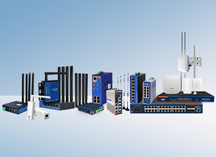
For practitioners in the smart city industry, the core logic of selection should not be "piling up parameters". Instead, it is necessary to take the industrial PC as the core hub, match industrial-grade networking products adapted to different scenarios as needed, and build a full-link high-reliability networking system of "terminal-edge-cloud" to fundamentally avoid various hidden dangers in the later stage of the project.
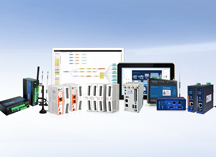
Core Hub: Industrial PC, the "Nerve Center" that Facilitates Heterogeneous Network Collaboration The essence of the difficulty in cross-domain collaboration of heterogeneous networks lies in the lack of a local computing hub with strong protocol compatibility, which makes it impossible to complete unified preprocessing of multi-source data on the edge side. As the core of the entire networking system, the industrial PC is the preferred device to solve this pain point.
Different from ordinary commercial servers, the industrial PC is specially designed for the complex deployment environments of smart cities. It adopts a fanless all-metal sealed body, with a wide temperature range adapting to operating environments from -20°C to 60°C, and can be directly deployed in scenarios without constant temperature conditions, such as smart street pole cabinets, underground utility tunnels, and suburban monitoring stations.
In actual selection, priority is given to industrial PCs equipped with x86 or ARM multi-core architectures and reserved with multiple network ports and expansion interfaces. They can simultaneously access 5G/4G industrial routers, industrial switches, and edge sensing terminals. The built-in containerized operating environment can be pre-installed with multi-protocol conversion components. Without additional procurement of multiple protocol conversion devices, it can complete the unified parsing of dozens of heterogeneous protocols such as Modbus, MQTT, and OPC UA locally, and directly clean multi-source data into standard formats before uploading them to the city's unified management platform.
In a smart transportation project of a new first-tier city, by deploying industrial PCs at the edge nodes of each region, the data from cameras and geomagnetic sensors originally scattered in three departments including traffic police, urban management, and transportation bureaus are preprocessed locally. The cross-department data collaboration latency is reduced from 3 seconds to 200 milliseconds, completely solving the long-standing problem of heterogeneous network data interconnection.
At the same time, the industrial PC supports local offline operation mode. When the cloud link is temporarily interrupted, it can still independently complete core services such as regional traffic signal scheduling and abnormal event warning, avoiding the risk of business shutdown caused by relying on cloud instructions in the past, and improving the robustness of the entire network from the architectural level.
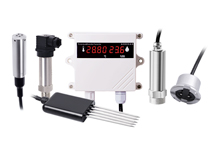
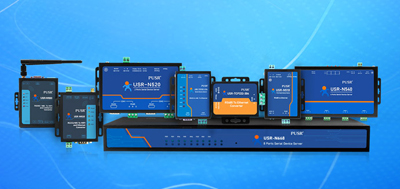
Scenario-based Product Matching to Targetedly Solve the Remaining Three Networking Pain Points To address the pain point of insufficient networking reliability in extreme environments, industrial-grade networking terminals need to be matched at scattered outdoor points. In signal-weak areas such as urban edge hydrological monitoring stations, mountain meteorological collection points, and remote bus stop signs, industrial routers with dual SIM card redundant design are selected, paired with weak network optimization algorithms. They can still ensure stable transmission of key data in harsh network environments with a 30% packet loss rate. The all-metal enclosure with a protection level above IP30 can resist lightning, surges, and extreme temperature differences, enabling long-term stable operation without additional installation of protective cabinets.
In the smart street pole coverage scenarios in core urban business districts, dual-band industrial APs are deployed. Adopting 2R2T MIMO technology and enhanced roaming algorithms, their coverage distance can reach 200 meters, and they can simultaneously support the access requirements of surrounding cameras, environmental sensors, and public WiFi terminals. When AGV inspection robots and mobile collection devices move within the area, millisecond-level seamless roaming can be achieved to avoid data transmission interruptions.
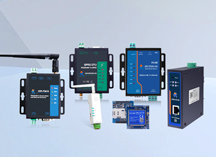
To solve the pain point of poor long-term operation and maintenance networking sustainability, fully isolated industrial serial-to-Ethernet converters are selected in the transformation scenarios of old urban areas with dense serial port devices. Each serial port of this type of equipment is equipped with an independent photoelectric isolation chip. A short-circuit fault in a single serial port will not affect the communication of other ports of the entire device, completely solving the problem that traditional shared-bus isolation devices will cause the whole machine to crash due to a single-point fault.
At the same time, it supports SSHv2 encrypted operation and maintenance and OTA remote firmware upgrade. Operation and maintenance personnel can complete the firmware iteration of hundreds of devices in batches without going to the site, reducing the fault response time from the hour level to the minute level, and cutting operation and maintenance costs by more than 90%.
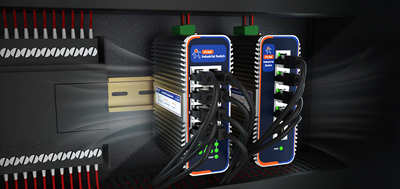
In wired networking scenarios such as urban underground utility tunnels and large smart parks, industrial switches supporting the TP-RING ring network protocol are matched, with a fault self-healing time of less than 20 milliseconds. When a certain link is accidentally interrupted, it can automatically switch to the backup link to ensure uninterrupted data from gas and water level sensors in the tunnel. There is no need to frequently replace equipment throughout the life cycle, which greatly reduces the manpower and capital investment for long-term operation and maintenance.
To address the pain point of unbalanced cross-scenario networking resource allocation, industrial modems with integrated edge computing capabilities are selected at multi-service integrated points such as smart street poles and community comprehensive stations. They can collect various types of data from lighting controls, charging piles, video surveillance, and environmental sensors in real time, complete data priority classification locally, prioritize the transmission of high-priority data such as security alarms and equipment faults, and postpone the transmission of low-priority data such as environmental monitoring, preventing non-critical data from occupying the bandwidth resources of core services.
Meanwhile, the built-in disconnection and retransmission mechanism automatically caches data locally when the network is interrupted, and automatically retransmits the data after the network is restored, completely eliminating the problem of data loss and realizing the dynamic and reasonable allocation of cross-scenario network resources.
Core Principles for the Implementation of the Networking Solution When implementing the entire solution, it is necessary to follow the principle of "edge priority, deployment as needed". Taking the industrial PC as the core hub of regional networking, match corresponding industrial-grade networking products according to the actual needs of different scenarios to avoid meaningless equipment stacking. At the same time, all equipment uniformly complies with city-level networking technical standards and reserves standardized interfaces, ensuring that newly accessed sensing terminals can be quickly integrated into the existing network without generating new data silos.
This combined solution has been implemented on a large scale in dozens of smart city projects across China, operating stably 7×24 hours with zero major accidents, truly achieving the smart city networking construction goal of "well-built, affordable to maintain, and long-lasting in use".
Industrial loT Gateways Ranked First in China by Online Sales for Seven Consecutive Years **Data from China's Industrial IoT Gateways Market Research in 2023 by Frost & Sullivan
We use cookies to ensure that we give you the best experience on our website. If you continue to use this site we will assume that you are happy with it.