Cross-Border Chemical Enterprise Data Sync Delay? How "5G+MQTT" on a Serial to Ethernet Converter Achieves Global Real-Time Monitoring
March 17, 2026. 3:14 AM.
In Shanghai, the phone of Lao Chen, the China-region O&M director of a multinational chemical group, rang.
On the other end was Klaus, the safety officer at the German headquarters, his voice laced with suppressed fury: "The temperature data from Reactor #3 at the Shanghai plant — we received it four hours late. Four hours! If something had happened in those four hours, who's responsible?"
Lao Chen opened his mouth but couldn't speak.
Because Klaus was right.
The temperature sensor data from Reactor #3 had to first travel via RS485 serial port to the serial to ethernet converter in the server room, then upload through the corporate intranet to the headquarters SAP system. But this chain went through three cross-border routing hops. Data packets queued, buffered, and were verified at every node — by the time Klaus saw that number on his screen in Frankfurt, the reactor in Shanghai had been running steadily for four hours.
Nothing happened. But what if it had?
At 4 AM the same day, Lao Chen got another call. This time it was Xiao Li, the factory duty officer: "Boss Chen, the toxic gas alarm in Workshop #2 dropped offline again. The serial to ethernet converter shows 'connection timeout,' but I checked on-site — the device is fine, the network cable is fine."
Lao Chen hung up and sat in the dark, smoking half a pack of cigarettes.
He knew in his heart: this wasn't a problem with one device. It was a disease in the entire data chain.
Serial collection was fine. Network transmission was the problem. Protocol conversion was the problem. Cross-border synchronization was an even bigger problem.
And all three problems stacked together — that was the real cause of data sync delay for multinational chemical enterprises.
When people hear "data delay," the first reaction is "not enough bandwidth."
So they add bandwidth, pull dedicated lines, deploy MPLS. Money well spent — but the results? A German auto parts manufacturer's case already gave the answer: before deploying SD-WAN + dedicated line, their average latency accessing the German SAP system was 300ms, with critical business response times up to 12 seconds. After deployment, latency dropped to 180ms, response time back under 3 seconds.
Faster. But not because of bandwidth — because the architecture changed.
The traditional cross-border data sync architecture looks like this:
Sensor → RS485 Serial → Serial to Ethernet Converter → Corporate Intranet → Cross-Border Dedicated Line → HQ Data Center → SAP System
This chain has three fatal bottlenecks:
Fixed-interval polling of 32 slaves — one full cycle takes 6.4 seconds. If a few slaves timeout and retry, add another few hundred milliseconds. By the time the data exits the serial port, nearly 10 seconds have passed.
The serial to ethernet converter converts RS485 to TCP/IP and packages it for upload. Traditional converters only do "transparent transmission" with no optimization. Massive amounts of redundant data are uploaded as-is, eating up half the bandwidth.
Data from China to Germany goes through 18 routing hops (before optimization). Each hop is a queue, a buffer, and a packet loss risk.
These three bottlenecks combined — that's the "four-hour delay" Lao Chen encountered. It's not that one segment is slow. It's that every segment is dragging its feet.
And the solution isn't throwing money at dedicated lines. It's changing the architecture.
It's 2026. The serial to ethernet converter is no longer the "network cable extender" you remember.
According to industry forecasts, the share of serial to ethernet converters supporting edge inference has surged from 23% to 58%. The core capability of third-generation serial to ethernet converters is no longer "transparent pass-through" — it's the trinity of "edge computing + 5G + MQTT."
These three words together are the key to solving cross-border data delay.
Traditional serial to ethernet converters rely on wired networks. But where are the sensors in a chemical plant? Next to reactors, inside pipe galleries, in open tank farms. Running network cables? High cost, difficult installation, even harder maintenance.
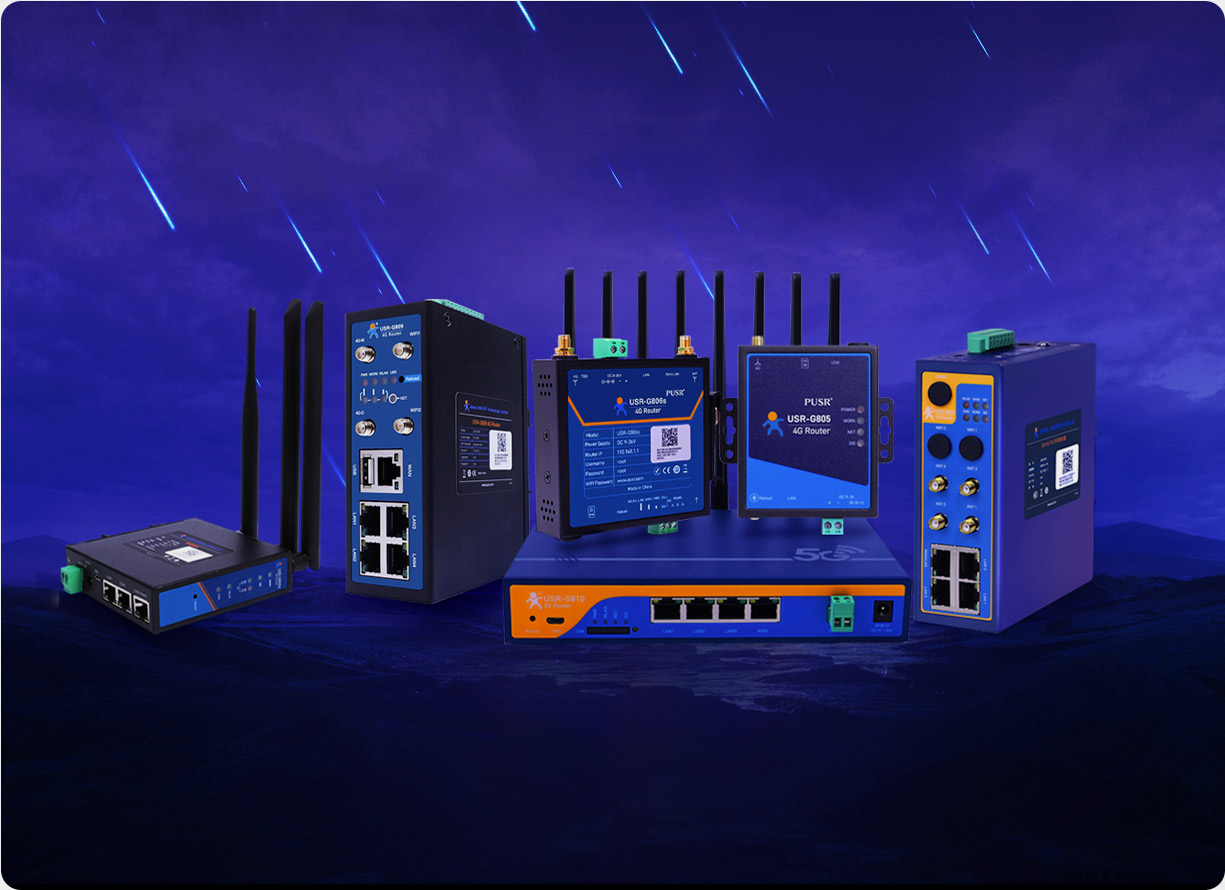
5G industrial routers eliminate this problem entirely. PUSR's USR-M3005G does exactly this — 5G/4G dual-mode, built-in eSIM with auto-switchover across the three major carriers, metal casing with IP30 protection, -40℃ to 70℃ wide temperature. In field tests at a Northwest chemical park, with the communication cabinet interior at 68℃, the device still ran at full speed.
More critically: 5G turns data from "wired queuing" to "wireless direct send." No need to go through the corporate intranet. No need to go through cross-border routing. Data goes from the edge directly to the cloud.
This is the real killer.
The MQTT protocol was born in 1999 for satellite monitoring of oil pipelines. Its core design philosophy in one sentence: reliably transmit data in environments with extremely limited bandwidth and extremely unstable networks.
How much lighter is it than HTTP? Example:
One temperature data point — via HTTP, the header plus all redundant fields might be 200 bytes. Via MQTT, the fixed header is only 2 bytes, plus topic name and payload — maybe just 20 bytes.
Data volume reduced by 10x. Transmission speed increased by 10x. Bandwidth usage cut by 90%.
Even smarter is MQTT's three-level QoS mechanism:
QoS 0 (At Most Once): Periodic ambient temperature collection. If it's lost, it's lost. There's a new one next second.
QoS 1 (At Least Once): Equipment status data. Guaranteed delivery at least once. May be duplicated — the receiver deduplicates.
QoS 2 (Exactly Once): Safety alarm data. Guaranteed delivery exactly once. Not one byte more, not one byte less.
You don't need QoS 2 for all data. That's too slow. You only need QoS 2 for the most critical 1%, and QoS 0 for the remaining 99%. Overall efficiency goes up.
There are two more mechanisms that traditional protocols can't even dream of:
Last Will: When a device disconnects abnormally, the Broker automatically publishes a preset "offline" message. Headquarters instantly knows which device has a problem — no need to wait for a timeout.
Retained Message: When a new subscriber connects, it instantly receives the latest status data. No need to wait for the next report — it knows the current state the moment it boots up.
These two mechanisms together solve the two most painful problems in cross-border monitoring: not knowing when a device drops offline, and delayed status synchronization.
Gartner's data is clear: by 2026, 58% of serial to ethernet converters will need to support edge inference.
What does that mean? Data doesn't all need to be sent to headquarters for analysis. At the edge, the serial to ethernet converter can make preliminary judgments on its own.
Example: Reactor temperature is 68℃ — hasn't hit the alarm threshold yet, but the rate of rise is abnormal. The edge side directly determines "overheating risk," triggers a local alarm, and simultaneously uploads the anomaly feature data to headquarters.
From "send all data and wait for headquarters to analyze" to "send key information and let headquarters confirm." Bandwidth usage cut in half again, response speed doubled again.
The performance comparison of edge-cloud collaborative architecture:
| Metric | Pure Cloud Architecture | Edge-Cloud Collaborative |
|---|---|---|
| Avg. Latency | 200ms | 30ms |
| Bandwidth Usage | High | Low |
| Reliability | Network-Dependent | Strong Local Autonomy |
30 milliseconds. Data from Shanghai to Frankfurt — before, it went through 18 routing hops, queuing, buffering. Now, at the edge, it's processed in 30ms, and only the result is sent up.
Theory covered. Let's talk practice.
At the end of 2025, a multinational chemical group had production bases in both China and Germany. The China plant had 1,200 RS485 sensors distributed across reactors, pipelines, tank farms, and waste gas treatment systems. The German headquarters needed to see all key data in real time.
Their new architecture:
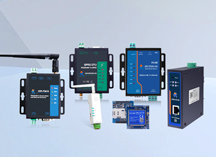
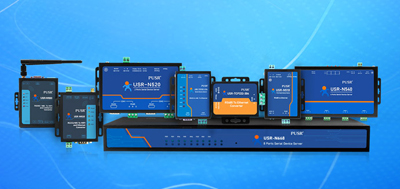
Field Layer: RS485 sensors → PUSR USR-TCP232-410s serial to ethernet converter. This device supports RS-232 and RS-485 simultaneously, Cortex-M7 solution, 400MHz main frequency. Crucially, it doesn't just do transparent pass-through — it supports Modbus multi-master polling, MQTT, and edge computing. Each serial port also supports two simultaneous Socket connections, with dual Sockets serving as mutual backups — if one goes down, the other takes over automatically.
Edge Layer: The USR-TCP232-410s sends data directly to the MQTT Broker via a 5G module. No corporate intranet. No cross-border dedicated line. At the edge, protocol conversion, data compression, and anomaly pre-screening are completed. Only alarm data and anomaly features are uploaded to headquarters. Routine data is stored locally and summarized on a schedule.
Cloud Layer: The MQTT Broker distributes data to headquarters' monitoring platform. When the German engineer opens his screen, he doesn't see data from four hours ago — he sees data from 30 seconds ago.
Security Layer: MQTT over TLS encryption, devices hold national cryptographic certificates, Broker-side mutual authentication (mTLS). Full-link traceability required by Classified Protection Level 3 — MQTT's retained messages and last will messages support this natively.
Data after three months of deployment:
| Metric | Before Retrofit | After Retrofit |
|---|---|---|
| Data Sync Delay | 4 hours | 30 seconds |
| Critical Alarm Response | Manual discovery, avg. 15 min | Auto-push, <10 sec |
| Device Offline Detection | Patrol-based, avg. 4 hours | Last Will, instant |
| Cross-Border Bandwidth Usage | 100Mbps dedicated line | 5G shared, 70% cost reduction |
| Annual Downtime Loss | ~3.8 million yuan | Near zero |
Lao Chen later said to me: "If I'd known MQTT was this good, I wouldn't have needed that half pack of cigarettes."
If you're also being tortured by cross-border data sync delay, I won't tell you to buy equipment right away. I'll tell you to think through three things first:
80% of sensor data is "normal." Temperature 25℃ — normal. Pressure 0.8MPa — normal. This data is transmitted every second — all of it is "nothing's wrong" information. Edge computing filters out this noise for you, transmitting only "something's wrong" and "something might go wrong" data.
It's 2026. If your serial to ethernet converter only does RS485-to-TCP/IP transparent pass-through, you didn't buy a serial to ethernet converter — you bought an expensive network cable. A serial to ethernet converter that supports MQTT, edge computing, and multi-Socket backup is what can actually bring your latency down.
Classified Protection Level 3, GDPR, national cryptographic algorithms — these aren't optional extras. They're the threshold. MQTT over TLS encryption, mutual authentication, full-link audit logs — these capabilities must be built into the device, not bolted on later.
PUSR's USR-TCP232-410s: Cortex-M7 solution, 400MHz main frequency, supports MQTT, SSL/TLS encryption, Modbus multi-master polling, edge computing, dual-Socket backup, -40℃ to 85℃ industrial-grade wide temperature. Not the most expensive — but it has everything that matters. In a chemical park project, data sync delay for 1,200 sensors was compressed from 4 hours to 30 seconds. Not the most expensive — but all three problems are solved.
You can use it as a ruler to measure the other options on your table. Fit or not — measure and you'll know.
The chemical industry has an old saying: "The reactor doesn't wait for you. Safety doesn't wait for you."
Data is the same. Temperature data from four hours ago — for a safety officer, the difference between that and an accident report four hours from now is just this: did you know in advance, or are you just confirming after the fact?
5G+MQTT isn't some black magic technology. It's a protocol designed for oil pipelines in 1999, finally finding hardware that matches it in 2026.
You don't need to do everything at once. But the first step must be in the right direction.
Change data from "find out four hours later" to "see within thirty seconds." That's not a technology upgrade. That's lifesaving.
And the starting point for all of this might just be that serial to ethernet converter in your server room that's still doing "transparent transmission."
It's time to replace it.