Smart Agricultural Irrigation System: How Can Industrial LTE Modem Support Stable Internet Connectivity for 500+ Soil Sensors?
In the wave of smart agriculture, precision irrigation has become a core means to enhance crop yield and conserve water resources. However, when deploying 500+ soil sensors in farmland, achieving real-time and stable transmission of massive amounts of data becomes a critical bottleneck restricting system efficiency. In traditional agriculture, data delays and losses caused by manual inspections and inefficient communication not only result in water waste but may also lead to crop yield reduction due to irrigation decision-making errors. Industrial LTE modem, with their high-speed, low-latency, and high-reliability characteristics, are emerging as the core tool to solve this problem. This article will provide an in-depth analysis from three dimensions—technical principles, practical scenarios, and selection strategies—on how industrial LTE modem can support stable internet connectivity for 500+ soil sensors, assisting agricultural enterprises in building "self-aware, self-decision-making" smart irrigation systems.
In traditional agricultural irrigation systems, soil sensor data is mostly transmitted back to the master station system through manual meter reading or low-speed communication modules (such as GPRS). Taking a large farm as an example, among its 500+ soil sensors, over 60% rely on manual inspections, with an average data transmission time of several hours. This means that when soil moisture falls below the threshold, the system may not promptly trigger irrigation instructions, leading to crop water shortage; conversely, irrigation may continue after heavy rain due to data delays, resulting in water waste.
The farmland environment is complex, with severe signal shielding (such as in mountainous areas and underground pipe galleries). Traditional communication modules frequently disconnect, with a data upload success rate of less than 70%. An agricultural cooperative once experienced weak signals, resulting in soil sensor data being uploaded only three times a day. With irrigation decisions lacking real-time data support, the annual crop loss due to improper irrigation exceeded 200,000 yuan.
There are various sensor brands in farmland (such as SDI-12 and RS485 interfaces) with inconsistent protocols (such as Modbus RTU and IEC 60870-5-101). The master station system requires custom development of compatible interfaces, extending project timelines by more than 30%. When an agricultural technology company upgraded its irrigation system, the development of protocol conversion modules alone cost over 500,000 yuan, and additional sensors required repeated development, keeping costs high.
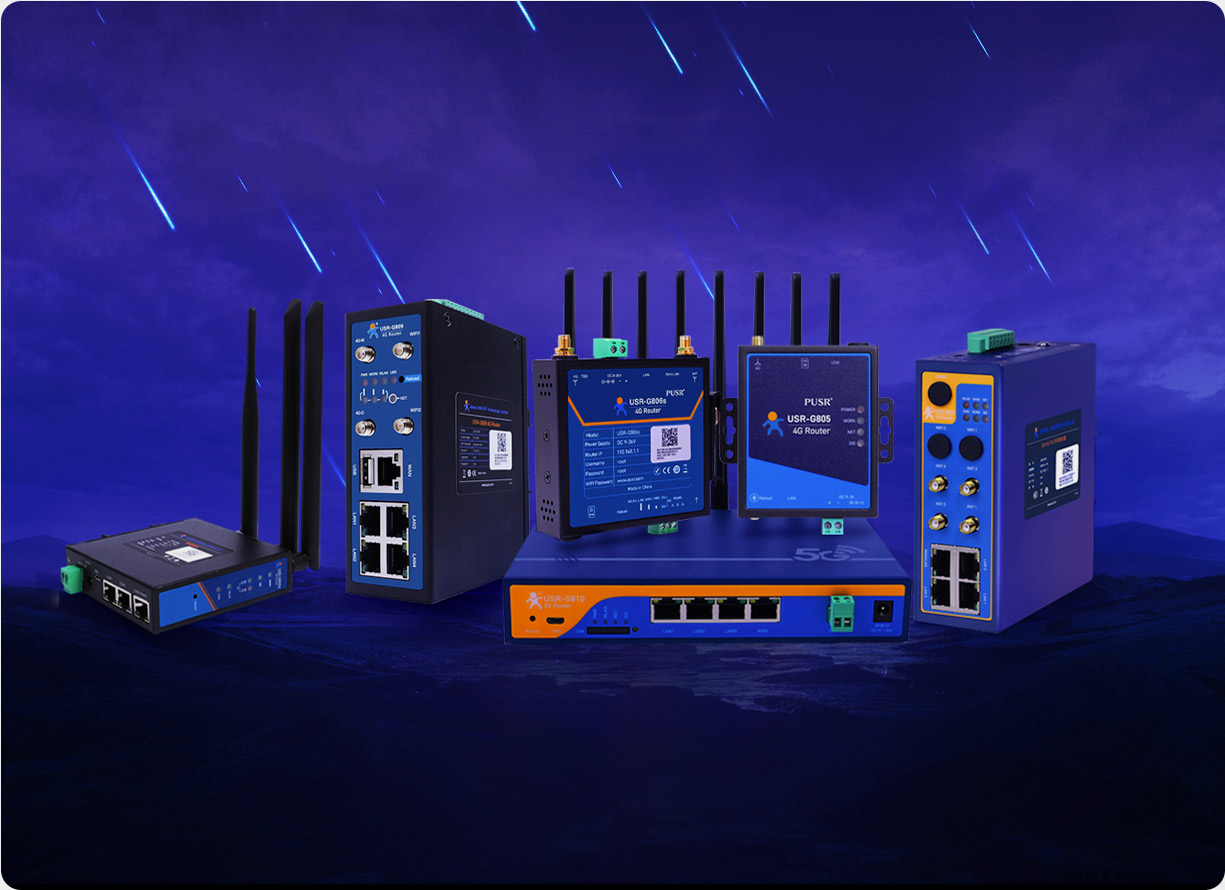
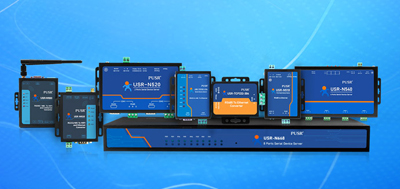
Industrial LTE modems achieve a transmission capacity of 10 Mbps downstream and 5 Mbps upstream by integrating 4G Cat-1 or 5G RedCap modules, meeting the real-time transmission requirements of high-frequency data (such as 10 KB per second) from 500+ soil sensors. Taking USR-G771 from USR IoT as an example, it supports network access via Cat-1 networks of the three major operators and is compatible with 2G networks of China Mobile and China Unicom, ensuring stable connections in remote areas.
Practical Case: In a project involving a 10,000-mu orchard, USR-G771 uploaded data from scattered soil sensors to the control center at a second-level frequency through a 4G Cat-1 network, increasing the data upload success rate to 99.9%. The response time for irrigation decisions was shortened to within 5 minutes, saving over 300,000 cubic meters of water annually.
Industrial LTE modems reduce invalid data transmission through built-in edge computing modules for localized data preprocessing. For example, USR-G771 supports Modbus polling collection functions, allowing users to pre-configure 500+ collection points. The industrial LTE modem automatically collects data according to rules and compresses it into JSON format, uploading only changed data to reduce cloud load while ensuring the real-time nature of critical information.
Technical Principles:
Protocol Conversion: Supports bidirectional conversion between Modbus RTU/TCP and cloud protocols such as MQTT and HTTP, eliminating protocol barriers between sensors and the master station.
Data Compression: Uses JSON packaging technology to compress the original data volume by over 60%, reducing transmission latency.
Breakpoint Resumption: Automatically caches data during network interruptions and prioritizes uploading cached data upon signal recovery to ensure data integrity.
Industrial LTE modems adopt industrial-grade design standards with the following characteristics:
Hardware Redundancy: Built-in independent hardware watchdogs support dual SIM card slots (such as USR-G771 supporting both external card and chip card dual-mode backup), automatically switching operators during network interruptions to ensure communication continuity.
Environmental Adaptability: Wide temperature design (-40°C to 85°C) and EMC Level 4 protection (resistant to 15 kV electrostatic interference) adapt to high-temperature, high-humidity, and electromagnetic complex environments in the wild.
Remote Operation and Maintenance: Supports FOTA (firmware remote upgrade) and cloud-based batch management, allowing operation and maintenance personnel to monitor equipment status in real-time through the USR Cloud platform, reducing on-site maintenance costs.
Practical Case: In a smart agriculture demonstration base, USR-G771 operated continuously for 6 months at -20°C with a 0% failure rate, ensuring continuous data transmission during network fluctuations through a "heartbeat packet + disconnection reconnection" mechanism.
In 10,000-mu farmland, 500+ soil sensors monitor parameters such as soil moisture, temperature, and EC value in different plots in real-time. Industrial LTE modems upload the data to the cloud platform, generating dynamic irrigation plans by combining meteorological data (such as rainfall and evaporation) with crop growth models. For example, the system can automatically adjust irrigation frequency and water volume according to the water requirements of corn at different growth stages, avoiding root rot caused by excessive irrigation.
Effect Verification: After deploying USR-G771, an agricultural group improved irrigation water use efficiency by 25%, increased corn yield per mu by 18%, and saved over 500,000 yuan in annual labor costs.
In greenhouses, industrial LTE modems connect soil sensors, air temperature and humidity sensors, and light sensors to achieve real-time monitoring and control of environmental parameters. For example, when soil moisture falls below the threshold, the system automatically initiates irrigation; when light intensity is insufficient, it automatically supplements light; when carbon dioxide concentration is too low, it activates oxygenation equipment. Through coordinated regulation of multiple parameters, it provides the best growth environment for crops.
Technical Advantages: USR-G771 supports dual-channel MQTT, allowing simultaneous access to public cloud platforms such as Alibaba Cloud and Huawei Cloud for data multi-center backup and remote monitoring.
In orchards, industrial LTE modems connect soil sensors and water and fertilizer integrators to precisely control fertilizer application and irrigation amounts based on soil nutrient content and crop fertilizer requirements. For example, the system can simultaneously inject nitrogen, phosphorus, and potassium fertilizers during irrigation, avoiding nutrient loss and soil pollution caused by traditional fertilization methods.
Practical Case: After implementing integrated water and fertilizer management through USR-G771, an apple planting base improved fertilizer utilization efficiency by 30%, reduced nitrate levels in groundwater by 25%, and significantly improved fruit quality.
| Indicator | USR-G771 Advantages | Industry Average Level |
| Communication Standard | 4G Cat-1 (supports 2G backup) | Most support only 4G or 2G single mode |
| Data Latency | Millisecond-level | Second-level |
| Interface Type | RS232/RS485 dual interfaces, supports isolated models | Most support only a single interface |
| Protection Level | IP30 or above, EMC Level 4 | Most are IP20, EMC Level 2 |
| Operation and Maintenance Convenience | Supports QR code configuration and cloud-based batch management | Requires professional software configuration |
| Cost-Effectiveness | Pre-loaded data, cloud access without development | Requires separate purchase of data cards and interface development |
High real-time scenarios (such as precision irrigation and demand response): Prioritize industrial LTE modems supporting 4G Cat-1/5G RedCap, such as USR-G771.
Complex environment scenarios (such as mountainous areas and greenhouses): Choose industrial LTE modems with high protection levels (IP65+) and wide temperature designs.
Low-cost deployment scenarios: Select industrial LTE modems with pre-loaded data and cloud access without development to reduce initial investment and operation and maintenance costs.
With the integration of 5G, edge computing, and AI technologies, industrial LTE modems are evolving from "transparent transmission" to "intelligent terminals":
5G Enables Low Latency: 5G RedCap reduces latency to within 50 ms, supporting highly sensitive scenarios such as real-time control of industrial robotic arms.
Edge Intelligence: Future industrial LTE modems may integrate AI chips for localized data analysis (such as abnormal soil moisture identification), reducing cloud computing load.
Cloud-Native Architecture: Industrial LTE modems will deeply collaborate with cloud platforms, supporting containerized application deployment. Users can "one-click deploy" algorithm models through the cloud to dynamically expand functions.
Industrial LTE modems have completely solved the delay, packet loss, and compatibility issues in data transmission from 500+ soil sensors through high-speed communication, edge computing, and high-reliability design, providing a "second-level response" technical foundation for smart agriculture. Represented by USR-G771, industrial LTE modems have become the preferred solution for agricultural enterprises' digital transformation with their full protocol coverage, dual-mode redundancy, and cloud access without development.