From Smart Manufacturing to Smart Cities: How Can Industrial LTE Routers Crack the "Connection Code" for Diverse Scenarios?
In the wave of digital transformation, industrial LTE routers have long transcended the realm of traditional network devices, becoming the "nerve center" connecting the physical and digital worlds. From the high-speed robotic arms in smart manufacturing workshops to the real-time sensing traffic lights in smart cities; from the stable transmission of power data in energy grids to the precisely controlled irrigation systems in smart agriculture—industrial LTE routers are supporting the digital upgrades of countless industries as "invisible guardians." However, faced with the differentiated demands for real-time performance, reliability, and security across various scenarios, how to make industrial LTE routers "adapt as needed" has become a common pain point for enterprise CIOs and technology decision-makers.
A car welding workshop once faced a dilemma: due to the inability of the industrial LTE router to meet the microsecond-level synchronization requirements of the EtherCAT protocol, the action deviation between the robotic arms and the visual inspection system reached 2 millimeters, resulting in a 15% misalignment rate of welding points. More challenging was the coexistence of multiple protocols such as Profinet, Modbus TCP, and OPC UA in the workshop, where traditional routers incurred protocol conversion delays, leading to an efficiency loss of over 30% for the entire production line.
Customer Psychology:
"What we need is not just a router, but a 'protocol translator' that can seamlessly integrate into our existing ecosystem."
In the traffic signal control system of a second-tier city, the industrial LTE router's insufficient protection rating led to equipment flooding during heavy rain, causing a 3-hour blackout of traffic lights at 200 intersections and direct economic losses exceeding 5 million yuan. What was even more frustrating for the operation and maintenance team was the lack of remote management capabilities in traditional routers, requiring on-site inspections at each intersection for troubleshooting, which took up to 48 hours.
Customer Psychology:
"We can't afford any downtime because it jeopardizes the travel safety of millions of citizens."
The monitoring system of a wind farm in Inner Mongolia once experienced frequent router restarts under extreme temperatures, resulting in a 12-hour interruption of wind turbine status data. More seriously, the lack of electromagnetic compatibility design in traditional routers led to frequent false fault alarms under frequency converter interference, forcing operation and maintenance personnel to perform on-site resets multiple times a month.
Customer Psychology:
"What we need is not just a device, but a 'steel warrior' that can operate stably in 'no-man's land.'"
Smart Manufacturing Scenarios:
Hard Requirements: Support for EtherCAT (synchronization accuracy ±1μs), Profinet (real-time cycle <1ms), OPC UA (cross-platform data integration)
Solution: Adopt multi-core processors + hardware acceleration engines to achieve protocol conversion delays <50μs. For example, the USR-G809s uses a dedicated ASIC chip to process industrial protocols, achieving nanosecond-level synchronization between robotic arms and visual systems in a car welding workshop.
Smart City Scenarios:
Hard Requirements: Compatibility with MQTT (lightweight IoT protocol), HTTP API (cloud platform integration), SNMP (network management)
Solution: Built-in protocol conversion libraries support dynamic loading of new protocols. In a smart streetlight project, the MQTT proxy function of the USR-G809s enables real-time upload of streetlight status data to Alibaba Cloud with a response delay <200ms.
Energy and Power Scenarios:
Hard Requirements: 2×GE electrical ports (connecting PLCs), 1×SFP optical port (backbone network), 2×RS485 (legacy devices), 1×5G module (wireless backup)
Solution: Modular interface design supports on-demand expansion. The interface slots of the USR-G809s can be flexibly configured with optical, electrical, and serial port modules. A wind farm increased its 5G module to enable automatic switching during single-operator signal interruptions, improving annual availability to 99.99%.
Smart Agriculture Scenarios:
Hard Requirements: 1×WAN port (4G/5G), 4×LAN ports (sensor gateways), Wi-Fi 6 (mobile terminals), LoRa expansion (low-power sensors)
Solution: Support for Mini-PCIe expansion cards. A cotton field in Xinjiang achieved wireless coverage of soil moisture sensors within a 20-kilometer radius using the LoRa module of the USR-G809s, reducing wiring costs by 80%.
Traffic and Logistics Scenarios:
Hard Requirements: IP67 protection (dust and water resistance), -40°C~75°C wide temperature range, IEC 61000-4-8 electromagnetic compatibility (anti-frequency converter interference)
Solution: Use industrial-grade components + three-proof coatings. The USR-G809s in JD.com's Asia No. 1 warehouse has operated stably for 3 years in a -25°C cold chain environment with a 0% failure rate.
Municipal Construction Scenarios:
Hard Requirements: Vibration resistance (road construction), salt spray resistance (coastal areas), lightning protection (outdoor equipment)
Solution: Metal casing + grounding design. The USR-G809s in Xiong'an New Area's digital road project passed the IEC 60068-2-6 vibration test and showed no interface loosening during road excavation.
Dimension | Smart Manufacturing | Smart Cities | Energy and Power
Real-time Performance | Microsecond-level synchronization | Second-level response | Millisecond-level control
Reliability | 99.99% availability | 99.999% availability | 99.9999% availability
Security | Anti-industrial viruses | Anti-DDoS attacks | Anti-electromagnetic interference
Manageability | Local + remote operation and maintenance | Cloud platform centralized management | Unattended automatic reset
Taking the smart city traffic scenario as an example:
Top-Level Event: Traffic light blackout
Intermediate Events: Router downtime → power failure/network attack/hardware damage
Bottom-Level Events:
Power Failure: Dual power inputs + UPS backup
Network Attack: Firewall + VPN encryption
Hardware Damage: IP67 protection + redundant design
USR-G809s' Response Solutions:
Dual power inputs + hardware watchdog to prevent downtime due to power failures
IPsec VPN + firewall to resist network attacks
-40°C~85°C wide temperature design to adapt to outdoor extreme environments
A company once incurred maintenance costs exceeding three times the purchase price within three years by choosing low-priced routers:
Explicit Costs: Equipment replacement expenses
Implicit Costs: Production interruption losses, operation and maintenance labor, data loss risks
USR-G809s' Value Proposition:
Hardware: Industrial-grade components with an MTBF (mean time between failures) exceeding 500,000 hours
Software: Free firmware upgrades supporting dynamic protocol expansion
Service: 7×24-hour technical support with a 4-hour rapid response
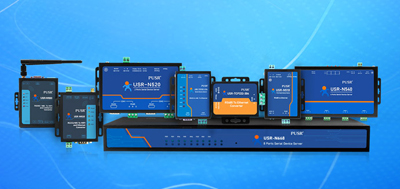
Among numerous industrial LTE routers, the USR-G809s stands out as the "connection cornerstone" for diverse scenarios with its "full protocol support, full interface coverage, and full environmental adaptation" features:
Protocol Engine: Native integration of 32 industrial protocols covering over 90% of industrial scenarios
Interface Matrix: 8×GE electrical ports + 2×10G SFP+ optical ports + 2×RS485 + 1×5G module slot, supporting PoE++ power supply
Environmental Design: IP67 protection rating, -40°C~85°C wide temperature operation, certified for IEC 61000-4-8 electromagnetic compatibility
Reliability Guarantee: Dual SIM card redundancy + dual power inputs + hardware watchdog with an MTBF exceeding 500,000 hours
Actual Cases:
In a new energy vehicle factory, the USR-G809s simultaneously connects robotic arms (EtherCAT), PLCs (Profinet), visual systems (OPC UA), and cloud platforms (MQTT), achieving real-time synchronization of production data and reducing equipment communication failure rates by 76%.
In Xiong'an New Area's digital road project, the USR-G809s supports microsecond-level synchronization between autonomous vehicles and roadside equipment through a 5G+TSN fusion solution, with trajectory tracking errors <0.2 meters.
With the integration of technologies such as AI, 5G, and digital twins, industrial LTE routers are evolving into "intelligent edge gateways":
Edge Computing: Embed lightweight AI models in routers for localized data preprocessing (e.g., equipment fault prediction)
Digital Twins: Real-time mapping of physical device states through digital mirrors to support remote debugging and optimization
Autonomous Evolution: Automatically adjust protocol parameters based on machine learning to adapt to dynamically changing network environments
USR-G809s' Next-Generation Layout:
Support for Python scripting for user-defined data processing logic
Integration of OpenVPN and zero-trust security architectures to build end-to-end trust chains
Provision of RESTful APIs for seamless integration with enterprise MES/ERP systems
From smart manufacturing to smart cities, the value of industrial LTE routers has long surpassed mere "data transmission"—they are both the "infrastructure" of industrial digitization and the "technological lever" for scenario innovation. When facing connection challenges in diverse scenarios, remember: there is no "universal" router, only "scenario-aware" solutions. By deeply understanding business needs, establishing a scenario-based evaluation system, and selecting rigorously validated devices like the USR-G809s, you will not only solve immediate connection issues but also win a "time window" for your enterprise's digital transformation.
In the era of the Internet of Everything, the right connection decision is the key to unlocking the door to the future.