"Data Traffic Jam" in the Welding Shop Causing Line Stops? How Can a Cellular IoT Gateway Break Production Bottlenecks with 1ms Response?
You've definitely been through that moment.
In the welding shop, dozens of robots are precisely welding along preset trajectories. Sparks flying, rhythm steady, everything looks perfectly orderly.
Then — it stops.
Not a mechanical failure. Not a material shortage. The system tells you: "Data timeout. Please check communication."
You stand beside the line, staring at that cold message on the screen, listening to the team leader's walkie-talkie behind you spitting out a string of questions. Every minute the line is down, you're running the numbers in your head: How many frames per minute does this line produce? Ten minutes down — can today's delivery plan still be met?
You know where the problem is.
Too much data. Too many sensors, too many robots, too many PLCs all uploading data at the same time. That invisible communication pipe is clogged.
But what you don't know is — this problem should have been solved three years ago. You've just been using the wrong method all along.
Outsiders look at a welding shop and see sparks, robots, and neat frames.
But what do you see?
You see the dozen-plus sensors hanging off every welding robot — current, voltage, temperature, displacement, pressure. You see the real-time status of every welding gun. You see the到位 signals from every station. You see the flow data from the gluing robots. You see the torque curves from the tightening guns.
A single welding line has at least 200 acquisition points. Generating tens of thousands of data records per second.
This data isn't for "looking at." It's for "deciding" — Has the robot drifted? Is the welding gun worn? Is the glue volume sufficient? Has the torque reached the standard?
Every decision must be made in milliseconds. Too late, and you have a bad weld. Later still, and the entire line stops to wait for you to troubleshoot.
The question is: Where is all this data going right now?
The answer: First up to the shop floor server, then forwarded to MES, then to the cloud. Wait for the cloud to compute, then the command travels all the way back.
How long does that round trip take?
50 milliseconds. 30 on a good day.
Sounds like nothing?
But what's your welding cycle time? A robot completing one weld point might take only 80 milliseconds.
That means — your communication delay is already almost catching up to your production rhythm.
It's like driving on a highway. There's a traffic jam ahead, but you don't know where — you have to wait for the navigation to tell you. By the time the navigation tells you, you're already stuck.
This is the "data traffic jam" in the welding shop. You can't see it, but it's stopping your line every single day.
I've seen too many factories' responses to this.
Data clogged? Add bandwidth. Communication slow? Replace the switch. Too many stops? Buy a more expensive server.
The logic is simple: the pipe is too narrow — get a bigger one.
But this logic completely falls apart in a welding shop.
Because the welding shop's problem isn't "the pipe isn't big enough." It's "the road is too long."
Think about it: A signal that a weld point has drifted — it leaves the robot controller, goes through the shop floor switch, the shop floor server, the MES system, the cloud platform, and then back. That loop crosses hundreds of meters of cable, dozens of network nodes, and multiple layers of protocol conversion.
Every node adds milliseconds of delay. Every protocol conversion adds another chance for error.
Adding bandwidth just puts more cars on the road. But the road is still the same road, the bottlenecks are still the same bottlenecks. The more cars, the worse the jam.
That's why so many factories spent a fortune upgrading their networks but saw no reduction in line stops — you solved the "volume" problem, but the real bottleneck is "speed."
There's a line in Nalarobot's selection guide that I think hits the nail on the head:
"Around 21% of all equipment failures come from unsuitable environmental conditions."
21% of failures come from environmental mismatch. But in welding shops, there's an even more hidden number — according to industry statistics, over 40% of unplanned line stops are rooted in communication delays causing control loop timeouts.
The equipment didn't break. The data was "late."
When I say "1ms response," you probably don't feel much.
Let me put it another way.
You blink once — that takes about 300 milliseconds.
1 millisecond is one three-hundredth of a blink.
In that one three-hundredth of a blink, a cellular IoT gateway can complete: collect sensor data → judge whether the weld is qualified → issue a correction command → robot executes the adjustment.
All done locally. No cloud. No MES. No waiting for any remote server to respond.
This is the most fundamental difference between edge computing and cloud computing —
Cloud computing is "send the data to the brain to think." Edge computing is "let the hands and feet react on their own."
When you touch something hot, you pull your hand back. You don't wait for your brain to think. That's the logic of edge computing.
Applied to the welding shop: welding gun temperature abnormal → immediately reduce current. Robot drift → immediately correct. Glue volume insufficient → immediately re-apply.
These actions don't need "report up and wait for approval." They need "instinctive reaction."
And the speed of instinctive reaction is 1 millisecond.
There's a passage in Corvalent's article that I've always remembered:
"Industrial PCs must withstand harsh environments… They are often integrated into larger systems, enhancing their functionality and flexibility."
A cellular IoT gateway is not a "faster computer." It's the "nerve ending" of your production line — giving every station its own judgment, instead of waiting for the central control room to give orders.
When your line no longer depends on a "central brain" to make every tiny decision, line stops stop being a probability problem. They become an engineering problem that can be eliminated.
By now, you're probably thinking: So I just put in a cellular IoT gateway, right?
Not that simple.
I've visited plenty of welding shops and seen too many cases where "edge computing was deployed but the problem wasn't solved." Where did it go wrong? Wrong selection.
The environment in a welding shop is not an office server room.
In summer, shop floor temperatures easily hit 45°C+. Welding sparks, metal dust, cooling water mist, continuous low-frequency vibration from the robots — all of this together, for a "precision electronic device," is hell.
Many cellular IoT gateways run blazing fast in the lab. The moment they hit the production line, within three months they start dropping packets, freezing, and losing communication.
You thought you installed an "accelerator." You actually installed a "time bomb."
Even more fatal is protocol compatibility. In a welding shop, you've got Fanuc robots, ABB controllers, Siemens PLCs, domestic servo drives — every brand speaks a different protocol. If your cellular IoT gateway only supports two or three protocols, you've only solved 30% of the problem. The other 70% of equipment is still "running naked."
There's a line in Eurocoin's article that says it plain:
"Choosing the right industrial PC hardware ensures smooth operation and prevents system bottlenecks."
Get it right — it's an accelerator. Get it wrong — it's a new bottleneck.
So the real selection logic isn't "which is fastest." It's —
Can it survive three years in your shop? Can it talk to all your equipment? Can it run at 45°C without throttling? Does it have enough compute power to run AI inference and real-time communication at the same time?
If it can't answer any one of these four questions, that cellular IoT gateway doesn't belong in your shop.
I know what you're thinking.
You're thinking: "I do have occasional line stops, but I can still handle it. Deploying an edge computing solution means more money, more retrofitting, more debugging — is it really worth it?"
I understand this thinking all too well.
Because line stops aren't as "visible" as a broken machine. It's a kind of "chronic blood loss" — 10 minutes down today, 5 minutes tomorrow, back to normal the day after. You get used to it. You think this is just the "normal state" of a welding shop.
But have you ever calculated how much capacity these "normal stops" have eaten up over a year?
I saw a client who deployed a cellular IoT gateway. The first year's data shocked even him: unplanned line stops dropped from 11 times a month to 2. That single item alone saved over 800,000 yuan in recovered production capacity per year.
The investment for that solution? Less than 150,000 yuan.
See, this isn't a "should I spend money" question. This is a "are you willing to stop the bleeding" question.
If you decide to do this, take an extra look during selection at solutions that have actually run on real shop floors.
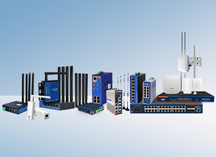
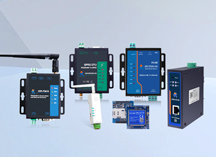
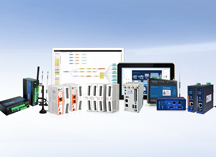
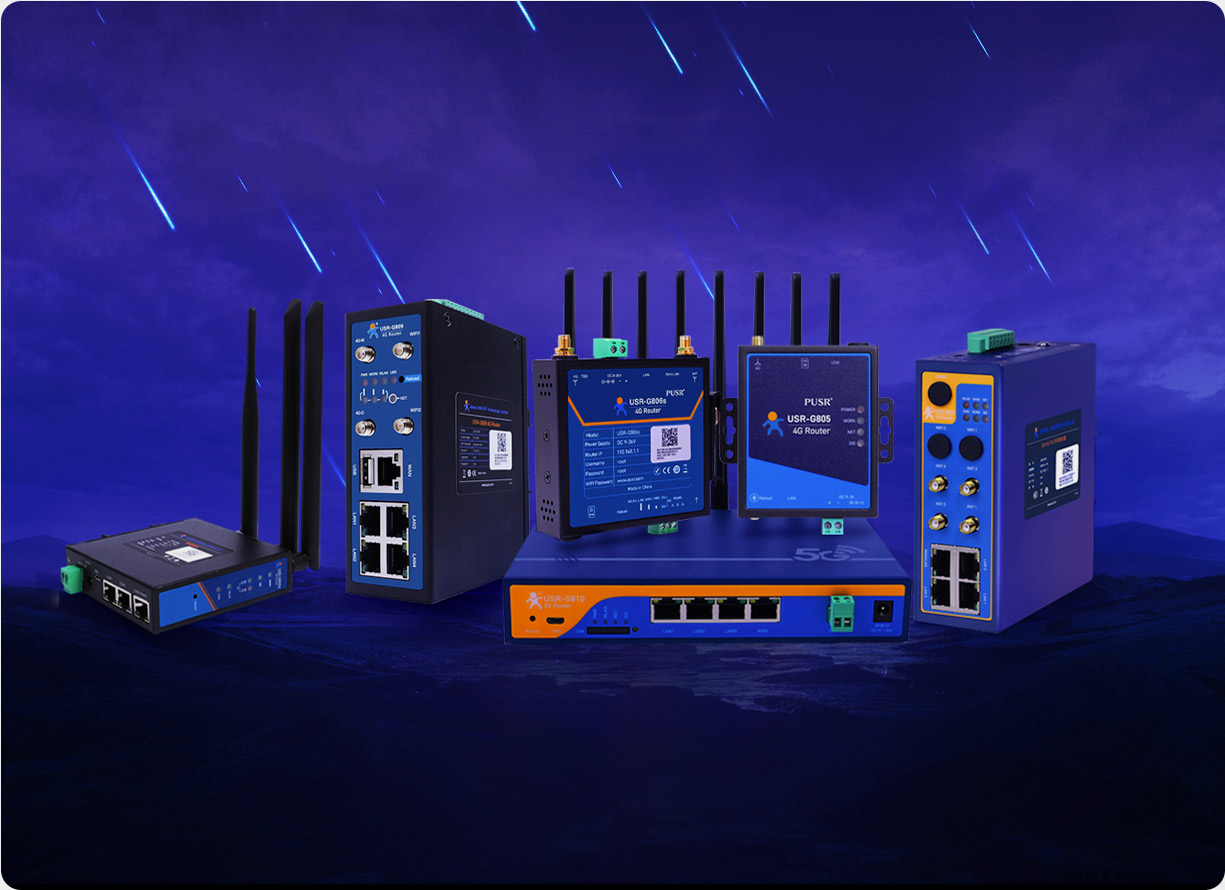
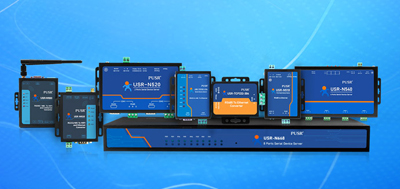
Something like the USR-M300 cellular IoT gateway — its fit for welding scenarios is genuinely solid: 1ms response, full protocol coverage, fanless passive cooling, IP40 protection, and power consumption under 15W. Not saying it's the only choice, but it's at least a starting point that "won't make you regret it."
The data traffic jam in welding shops didn't start today. But the window to solve it might be just this year or next.
Don't wait until line stops get your customer sending a formal complaint before you remember to act.
A 1-millisecond gap is the gap between "on-time delivery" and "late delivery penalty."
Can your production line afford to wait?