Key to Implementing Digital Twin Production Lines: How Cellular Gateway Achieves Second-Level Synchronization Between Physical Devices and Virtual Models
In the wave of smart factory evolution, digital twin technology is gradually becoming a core force driving the transformation and upgrading of the manufacturing industry. By constructing virtual mirrors of physical equipment, digital twin production lines enable visualization, predictability, and optimization of production processes. However, the true value of digital twins lies in the real-time, precise synchronization between physical devices and virtual models. Cellular gateway, acting as a bridge between the physical and digital worlds, is playing an increasingly important role. This article will delve into how cellular gateway facilitates second-level synchronization between physical devices and virtual models in digital twin production lines and briefly introduce a cellular gateway product suitable for this scenario—USR-M300.
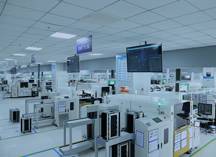
Digital twin production lines are a smart manufacturing model based on digital twin technology. They create virtual copies of physical production lines to enable real-time monitoring, simulation, optimization, and prediction of production processes. This technology not only improves production efficiency but also reduces operational costs and enhances the flexibility and responsiveness of production lines.
The effective operation of digital twin production lines hinges on real-time data synchronization between physical devices and virtual models. However, this process faces numerous challenges:
Data latency: Traditional data processing methods often require uploading data to the cloud for processing, leading to delays in data synchronization and failing to meet real-time requirements.
Data security: The risk of data leakage during transmission poses a significant challenge in ensuring data security.
System complexity: The diverse range of physical devices and varying communication protocols make seamless integration and data synchronization of heterogeneous devices a major challenge.
The emergence of cellular gateway offers solutions to the aforementioned challenges. It enables real-time processing and analysis of data at its source, reducing data transmission latency and improving the real-time synchronization of data. Additionally, cellular gateway incorporates security mechanisms such as data encryption and access control to safeguard data security. Furthermore, its powerful protocol conversion and device integration capabilities make seamless integration of heterogeneous devices possible.
Cellular gateway can collect real-time operational data from physical devices, such as temperature, pressure, and vibration, and perform preprocessing and analysis locally. This real-time processing capability significantly reduces data transmission latency, providing a foundation for second-level synchronization between physical devices and virtual models.
Smart factories feature a diverse range of physical devices with varying communication protocols. Cellular gateway possesses robust protocol conversion capabilities, enabling the unification of device data from different protocols into a standard format for seamless integration of heterogeneous devices. This integration capability provides a wide range of data sources for digital twin production lines, enhancing the accuracy and comprehensiveness of virtual models.
Cellular gateway incorporates high-performance processors and intelligent analysis algorithms, enabling complex data processing and analysis tasks locally. Through machine learning and deep learning technologies, cellular gateway can identify abnormal patterns in device operation and predict potential faults, providing strong support for predictive maintenance in digital twin production lines.
Cellular gateway employs encryption technologies during data transmission and storage to ensure data security. Additionally, it supports security mechanisms such as access control and identity authentication to prevent unauthorized access and data leakage. This security mechanism provides reliable data protection for digital twin production lines, enhancing corporate trust.
Cellular gateway first collects real-time operational data from physical devices through sensors and interfaces. Subsequently, it performs preprocessing operations such as data cleaning, filtering, and normalization locally to extract valuable information, providing a foundation for subsequent data synchronization and analysis.
To achieve second-level synchronization between physical devices and virtual models, cellular gateway needs to design efficient data synchronization mechanisms. This includes adopting real-time communication protocols (such as MQTT and OPC UA), optimizing data transmission paths, and reducing packet sizes. Through these mechanisms, cellular gateway ensures rapid and accurate data transmission between physical devices and virtual models.
Upon receiving data from physical devices, cellular gateway immediately updates the state of the virtual model. Simultaneously, based on the simulation results and predictive analysis of the virtual model, cellular gateway can also send control instructions to physical devices to optimize and adjust production processes. This bidirectional data flow and feedback mechanism fosters a close interaction between physical devices and virtual models.
An automotive manufacturer introduced cellular gateway technology to construct a digital twin production line. Through the real-time data collection and processing capabilities of cellular gateway, the company achieved second-level synchronization between physical devices and virtual models. During production, the virtual model could reflect the operational status and performance parameters of physical devices in real-time, providing strong support for production scheduling and fault prediction. According to the company's feedback, the introduction of cellular gateway improved the operational efficiency of the production line by 20% and reduced the fault rate by 30%.
USR-M300 is a cellular gateway specifically designed for the Industrial Internet of Things. It features a high-performance processor, a wide range of interface types, powerful protocol conversion capabilities, and comprehensive security mechanisms. It can adapt to harsh industrial environments and achieve real-time, precise synchronization between physical devices and virtual models.
High-performance processing capability: USR-M300 adopts a high-performance processor to meet the real-time data processing and analysis requirements of digital twin production lines.
Flexible network connectivity: USR-M300 supports multiple network interfaces and communication protocols, enabling seamless integration with various physical devices and virtual models.
Easy deployment and maintenance: USR-M300 features a modular design and supports remote management and configuration functions, reducing the difficulty and cost of deployment and maintenance.
Comprehensive security mechanisms: USR-M300 supports security mechanisms such as data encryption and access control to ensure the security and privacy of data in digital twin production lines.
An electronics manufacturer introduced the USR-M300 cellular gateway to construct a digital twin production line. Through the real-time data collection and processing capabilities of USR-M300, the company achieved second-level synchronization between physical devices and virtual models. During production, the virtual model could reflect the operational status and performance parameters of the production line in real-time, providing strong support for production scheduling and quality control. According to the company's feedback, the introduction of USR-M300 improved the production efficiency of the production line by 15% and increased the product quality pass rate by 10%.
As a bridge between the physical and digital worlds, cellular gateway plays a crucial role in constructing digital twin production lines. Through functions such as real-time data collection and processing, protocol conversion and device integration, and edge computing and intelligent analysis, cellular gateway achieves second-level synchronization between physical devices and virtual models, providing strong support for the effective operation of digital twin production lines. In the future, with the continuous development and improvement of edge computing technology, its applications in digital twin production lines will become more widespread and in-depth. We look forward to more companies introducing cellular gateway technology to promote the popularization and application of digital twin production lines, jointly ushering in a new era of smart manufacturing.