Breakthrough in Energy Consumption Management for Smart Buildings: How Cellular Modems Bridge the "Meridian and Governor Vessels" Between Modbus and BACnet Protocols
In the energy management center of a super high-rise office building in Shenzhen, Engineer Wang stares at the data streams on the monitoring screen with a furrowed brow. The data from the building automation system (using the BACnet protocol) and the smart electricity meters (using the Modbus protocol) can never be synchronized in real-time. As a result, the air conditioning system continues to operate at full power during peak electricity consumption periods, while the surplus electricity from photovoltaic power generation is wasted due to delayed monitoring. This scenario is not an isolated case. According to statistics from the China Association of Building Energy Efficiency, over 60% of smart building projects across the country experience a data collection delay rate exceeding 30% due to protocol incompatibility, directly resulting in an annual energy waste of 15%.
Behind this "protocol gap" lie three major pain points that have long plagued the field of building energy management:
These pain points act like a chronic poison, eroding the return on investment in smart buildings. While owners pay a high premium for "smartness," they find themselves trapped in a vicious cycle of "the smarter, the less efficient" due to protocol incompatibility.
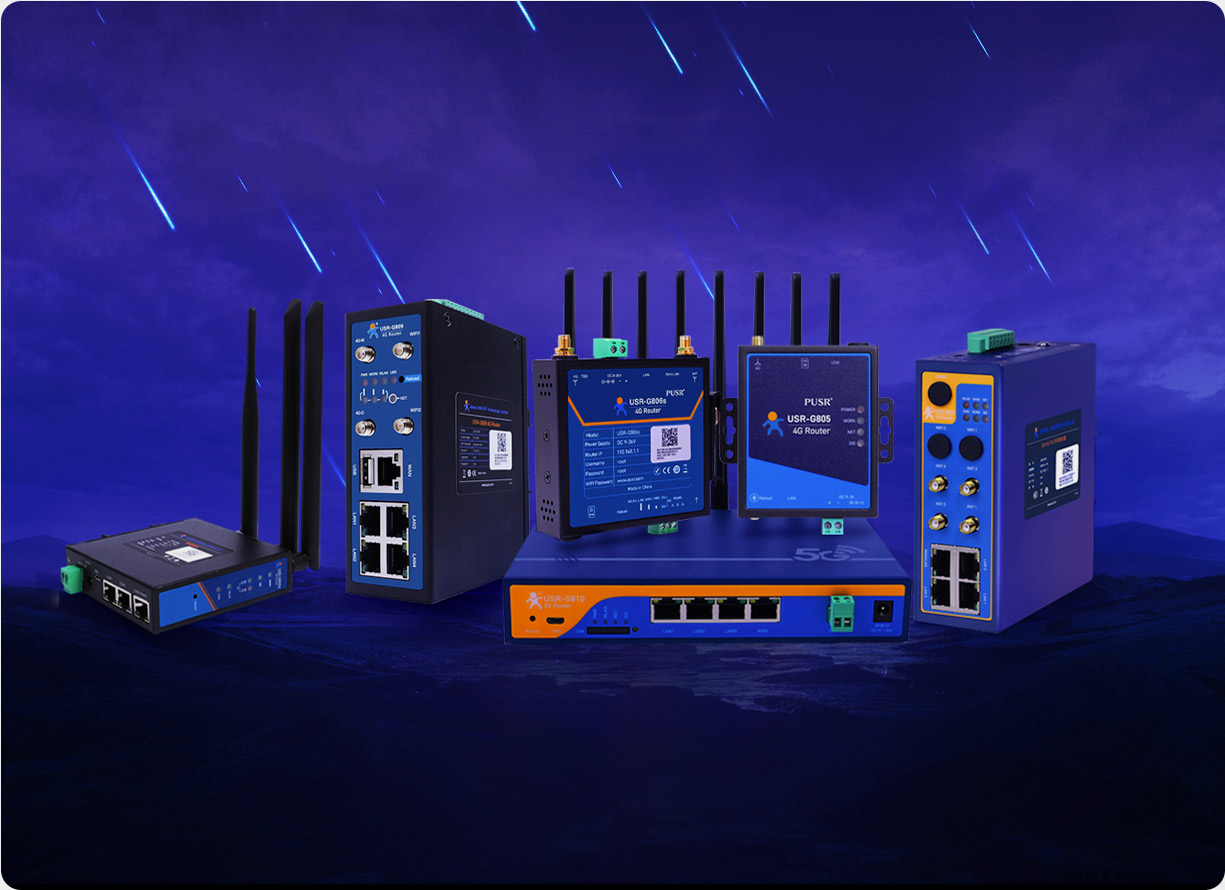
In the technological evolution of protocol conversion, cellular modems (data transmission units) are playing a pivotal role as "interpreters." Take the USR-G771 launched by USR IOT as an example. This Cat-1 DTU, specifically designed for industrial scenarios, achieves seamless integration between Modbus and BACnet protocols through the fusion of a hardware-level protocol conversion engine and edge computing capabilities.
The USR-G771 adopts a layered parsing architecture:
This technological architecture enabled a hospital project to achieve BACnet-standardized output of energy consumption data without replacing any electricity meters, reducing the retrofitting period from six months in traditional solutions to just two weeks.
Traditional protocol conversion solutions require uploading all raw data to the cloud for processing. In contrast, the edge computing capabilities of the USR-G771 bring about a disruptive change:
In a practical application at a commercial complex in Guangzhou, the USR-G771 compressed the generation time of air conditioning system control instructions from 3.2 seconds in cloud-based processing to 180 milliseconds in local processing, saving 12% in annual air conditioning energy consumption.
In response to security demands in industrial scenarios, the USR-G771 has established a four-layered protection mechanism:
Application data from a data center showed that after deploying the USR-G771, protocol conversion-related security incidents dropped to zero, saving the O&M team over 200 hours of security audit work annually.
When protocol conversion technology transcends the basic level of "connectivity," its commercial value extends to deeper levels:
Take a 200,000-square-meter commercial complex as an example:
This benefit disparity stems from the DTU solution's ability to retain existing equipment assets while achieving system-level optimization through protocol conversion. As one owner commented, "This is not just a simple technological substitution but an upgrade in the energy management paradigm."
Protocol conversion brings not only technological connectivity but also a reconstruction of the O&M system:
This transformation is reshaping the value chain of building energy management. An international property management group has incorporated protocol conversion capabilities into its supplier evaluation system as a core indicator for smart building project bidding.
Protocol conversion technology is becoming an important tool for achieving carbon neutrality in buildings:
According to calculations by the Building Energy Efficiency Research Center at Tsinghua University, the comprehensive application of protocol conversion technology can reduce carbon emissions during the operational phase of buildings by 18%-22%, providing a quantifiable technological path for achieving "dual carbon" goals.
With the development of technologies such as 5G and digital twins, protocol conversion is evolving towards greater intelligence and openness:
The next generation of protocol conversion will achieve deeper semantic understanding. For example, it will automatically identify the "air conditioning return water temperature" register in Modbus devices and map it to the "Chilled Water Supply Temperature" object in BACnet, eliminating manual configuration errors.
Through standardized interface definitions, future DTUs will support device hot-swapping. Laboratory tests have shown that the time required to connect new devices can be reduced from two hours to five minutes, achieving true "zero-configuration" deployment.
Combined with machine learning technology, DTUs can automatically optimize data collection frequencies and reporting strategies. A pilot project showed that after three months of learning, the system autonomously reduced data transmission volume by 65% while maintaining 100% coverage of key indicators.
When discussing smart buildings, we should not be misled by flashy interfaces and cool concepts. True wisdom begins with overcoming fundamental technological challenges. As demonstrated by the USR-G771, the seemingly "niche" field of protocol conversion is becoming a key pivot point for driving变革 in building energy management.
For building owners, choosing a protocol conversion solution is not just a technological decision but also a commercial strategic choice. It means retaining existing investments while gaining technological evolution space for the next decade. It meets current demands while constructing a digital infrastructure oriented towards carbon neutrality.
In this evolutionary race for smart buildings, those who take the lead in crossing the protocol gap will undoubtedly reap the triple benefits of improved energy efficiency, reduced O&M costs, and increased carbon asset value. And all of this may begin with a single cellular modem—it is not just a device connector but also an admission ticket to the new era of building energy management.