From Transmission Lines to Distribution Transformer Terminals: How Cellular Routers Overcome Communication Bottlenecks in the "Last Mile" of Power Grids
In the grand blueprint of smart grids, every link, from high-voltage transmission lines to low-voltage distribution transformer terminals, is intricately connected, weaving together an efficient, stable, and secure power supply network. However, at the end of this vast network—the "last mile," which refers to the communication connection between distribution transformer terminals and the user side—often becomes a critical factor restricting the enhancement of grid intelligence. This article delves into the current status and challenges of communication bottlenecks in the "last mile" of power grids, analyzes how cellular router can overcome this issue with their unique advantages, while empathizing with the pain points faced by customers and providing practical solutions.
The "last mile" of power grids encompasses diverse terrains and landscapes, including urban areas, rural regions, industrial zones, and mountainous areas, resulting in complex and variable communication environments. From densely packed urban centers to remote mountainous regions, and from industrial zones with severe electromagnetic interference to basements with signal shielding, each location can potentially become a communication blind spot or weakness. This complexity imposes extremely high demands on the adaptability, stability, and reliability of communication equipment.
With the advancement of smart grids, a vast number of devices, such as distribution transformer terminals, smart meters, distributed energy sources, and electric vehicle charging stations, need to be connected to the grid for real-time data collection, transmission, and processing. These devices are widely distributed and numerous, posing significant challenges to the bandwidth, capacity, and scalability of communication networks. Efficiently and securely managing these terminal devices to ensure data accuracy and timeliness has become a critical issue that grid operators must address.
The communication needs in the "last mile" of power grids are diverse and complex, encompassing low-speed control instruction transmission, high-speed data collection, and video surveillance. They require both stable wired connections and flexible wireless access. This diversity imposes higher demands on the selection and integration of communication technologies, making it difficult for a single communication technology to meet the needs of all scenarios.
As a vital component of national infrastructure, the security and reliability of power grids directly impact the stable operation of the socio-economy and the normal order of people's lives. In the "last mile" communication, ensuring the security of data transmission to prevent hacker attacks and data leaks, as well as guaranteeing communication reliability to avoid grid accidents caused by communication failures, are key issues that grid operators must resolve.
Faced with the access of massive terminals and diverse communication needs, grid operators an efficient and flexible communication solution that can easily handle various complex scenarios and ensure real-time and accurate data transmission. They hope that communication equipment can possess strong processing capabilities and scalability to meet the needs of future grid intelligence development.
Grid operators remain highly vigilant regarding security and reliability. They worry that communication failures or security vulnerabilities may lead to grid accidents, causing incalculable losses. Therefore, when selecting communication equipment, they place great emphasis on the security performance and stability of the devices, hoping to find a communication solution that can provide comprehensive security guarantees.
While pursuing efficient and secure communication, grid operators must also consider cost control. They hope to minimize the procurement, deployment, and maintenance costs of communication equipment while meeting communication needs. Therefore, cost-effective, easy-to-maintain, and manage communication equipment becomes their preferred choice.
With the continuous development of smart grid technologies, grid operators have also raised higher requirements for the future compatibility of communication equipment. They hope that communication equipment can support multiple communication protocols and technical standards, facilitating seamless integration with newly added devices or systems in the future and avoiding repeated investments and resource waste due to technological upgrades.
Cellular routers are specifically designed for harsh industrial environments, featuring wide temperature ranges, dust resistance, water resistance, and vibration resistance. They can easily cope with the complex and variable field environments in the "last mile" of power grids. Whether it's scorching heat or freezing cold, whether it's an industrial zone with severe electromagnetic interference or a basement with signal shielding, cellular routers can maintain stable operation, ensuring communication continuity and reliability.
Cellular routers support multiple communication interfaces and protocols, such as Ethernet, serial ports, Wi-Fi, 4G/5G, etc., meeting the diverse communication needs in the "last mile" of power grids. They also support various industrial communication protocols, such as Modbus, Profibus, DNP3, etc., facilitating seamless integration with various smart devices for real-time data collection and transmission.
Cellular routers possess strong data processing and forwarding capabilities, easily handling the access and management of massive terminals. They support high-speed data transmission and large-scale concurrent connections, ensuring data timeliness and accuracy. Meanwhile, cellular routers also support QoS (Quality of Service) strategies, enabling intelligent scheduling based on data importance and priority to ensure the priority transmission of critical data.
In terms of security performance, cellular routers adopt multiple security protection mechanisms, including data encryption, identity authentication, access control, firewalls, etc., ensuring the security and privacy of data transmission. They also support remote management and monitoring functions, facilitating real-time monitoring and troubleshooting of communication equipment by grid operators to promptly identify and address potential security threats.
Cellular routers feature a compact design and simple installation, supporting various installation methods such as DIN rail mounting and wall mounting, facilitating rapid deployment in various scenarios in the "last mile" of power grids. They also provide a user-friendly web management interface and network management protocols such as SNMP, facilitating remote configuration and management of communication equipment by grid operators, reducing maintenance costs and workload.
A city grid operator faced the challenge of accessing and managing a vast number of smart meters, distributed energy sources, and electric vehicle charging stations during the intelligent transformation of distribution grids. They chose the cellular router USR-G806w as their communication solution, achieving seamless integration with various smart devices through its diverse communication interfaces and protocol support. Meanwhile, the efficient data processing and forwarding capabilities of the cellular router ensured data timeliness and accuracy, providing strong decision support for grid operators.
In remote mountainous areas, grid operators faced challenges such as weak communication signals and widely distributed devices. They leveraged the strong environmental adaptability and wireless communication capabilities of cellular routers to deploy multiple communication nodes in the mountains, enabling remote monitoring and management of power equipment. The stable operation of cellular routers ensured continuous data transmission, providing grid operators with timely and accurate power monitoring information and effectively improving grid security and reliability.
We understand that the communication needs of each grid operator are unique, so we offer customized cellular router solutions. Based on customers' actual scenarios and needs, we can recommend the most suitable cellular router models and configurations to ensure the targeting and effectiveness of communication solutions.
We provide comprehensive professional training and technical support services to help customers quickly master the configuration and management skills of cellular routers. Meanwhile, our professional team will be available to provide technical support and solutions to customers at any time, jointly addressing challenges and ensuring the stable operation of communication systems.
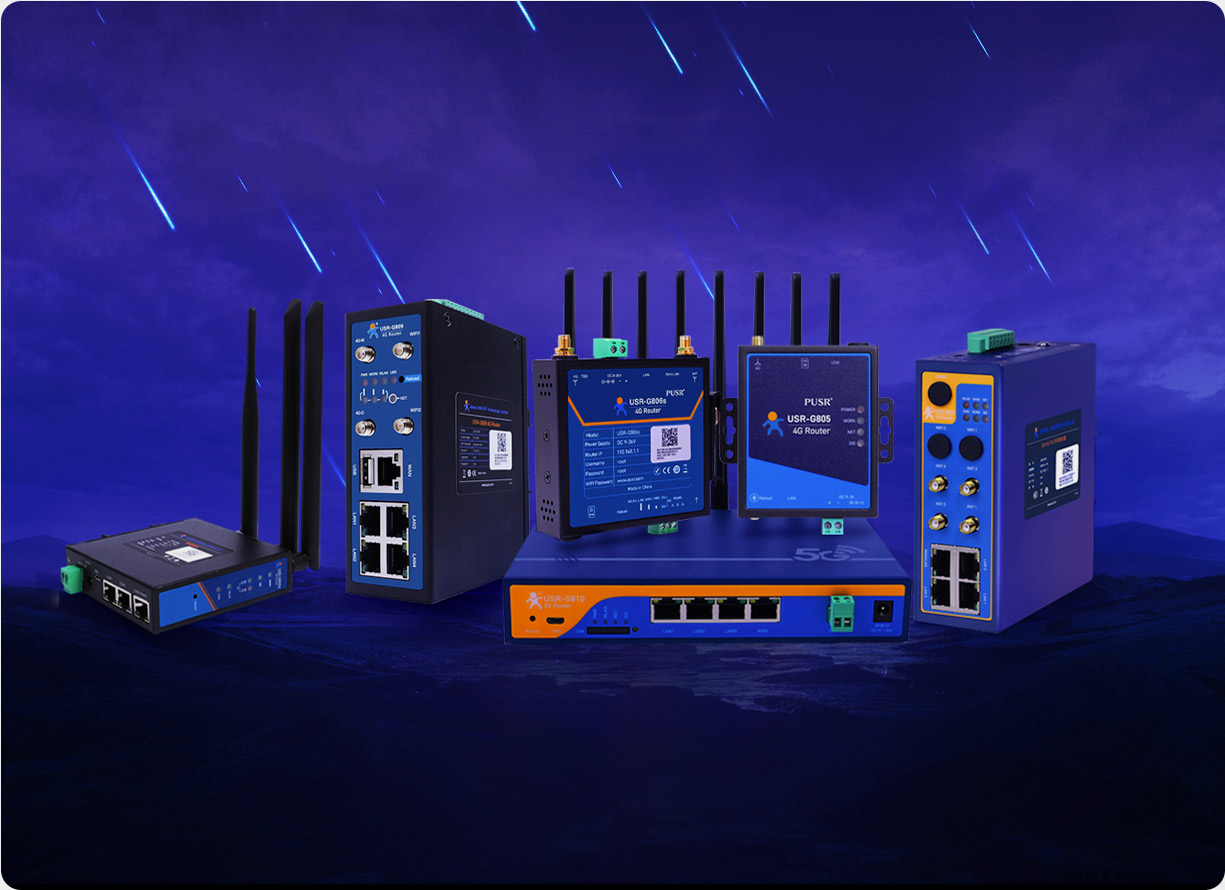
Among numerous cellular router products, USR-G806w stands out with its outstanding performance, stability, and ease of use. It supports multiple communication interfaces and protocols, possesses strong data processing and forwarding capabilities, and provides comprehensive security guarantees and easy deployment and maintenance features. Whether it's the intelligent transformation of urban distribution grids or power monitoring in remote mountainous areas, USR-G806w can provide reliable communication support.
Overcoming communication bottlenecks in the "last mile" of power grids is a critical aspect of smart grid development. Cellular routers, with their strong environmental adaptability, diverse communication interface and protocol support, efficient data processing and forwarding capabilities, comprehensive security guarantees, and easy deployment and maintenance features, have become a powerful tool to overcome this challenge. In the future, with the continuous development of smart grid technologies, cellular routers will play an even more important role in the "last mile" communication of power grids, leading the new future of grid communication.