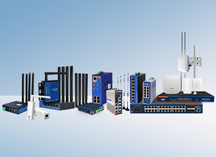
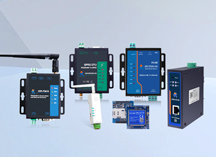
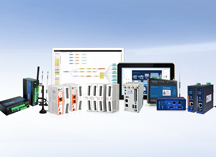
In the digital transformation of industrial scenarios, network connectivity serves as the foundation for all devices to achieve interconnection. With its wiring-free and flexible deployment features, cellular industrial routers have become core networking devices in special environments such as outdoor areas and remote factory zones. Many people may wonder how this type of router, specifically designed for industrial use, completes the internet access process.
In fact, its networking logic is not complicated. At its core, it relies on mature cellular mobile communication networks to break free from the limitation that traditional home routers must depend on wired broadband access. Essentially, a cellular industrial router connects directly to operators' 4G/5G base stations by inserting a corresponding SIM card, skipping the optical modem entry step required for home broadband, and thus directly opens up a channel to the internet.
Its complete data transmission link is clear and efficient: various on-site industrial terminal devices, such as PLCs, sensors, and surveillance cameras, first connect to the industrial router via Ethernet cables or Wi-Fi. After encapsulating and processing the data from these devices, the router transmits signals to the nearest operator's 4G or 5G base station through its built-in cellular communication module. The base station then routes the data into the operator's core network, ultimately completing two-way data interaction with the internet. The entire process enables stable internet access for industrial devices.
Compared with ordinary home routers we use daily, the advantages of cellular industrial routers fully align with the actual needs of industrial scenarios. First, there is a difference in access methods: most ordinary home routers can only work by connecting to wired broadband at the front end, while the core access method of cellular industrial routers is the mobile cellular network. As long as there is operator signal coverage, networking can be completed quickly without pre-laying Ethernet cables, significantly lowering deployment barriers and costs.
Secondly, it supports remote deployment and operation and maintenance under unattended conditions. Many industrial scenarios are distributed in the wild, mountainous areas, or scattered factory sites, making it difficult for staff to frequently go to the site for debugging. This type of industrial router supports functions such as remote configuration, remote restart, and automatic fault recovery. Operation and maintenance personnel can complete device status monitoring and parameter adjustment in the background, greatly reducing the workload of on-site maintenance.
More importantly, it has strong adaptability to complex environments. Most ordinary home routers can only be used in indoor environments with normal temperatures and dry conditions. In contrast, cellular industrial routers are optimized for wide temperature ranges, wide voltage ranges, dust resistance, and electromagnetic interference resistance from the very beginning of hardware design. Whether it is high-temperature exposure outdoors, low temperatures in winter, or complex working conditions with strong electromagnetic interference in factory workshops, they can operate stably for a long time without frequent disconnections or downtime.
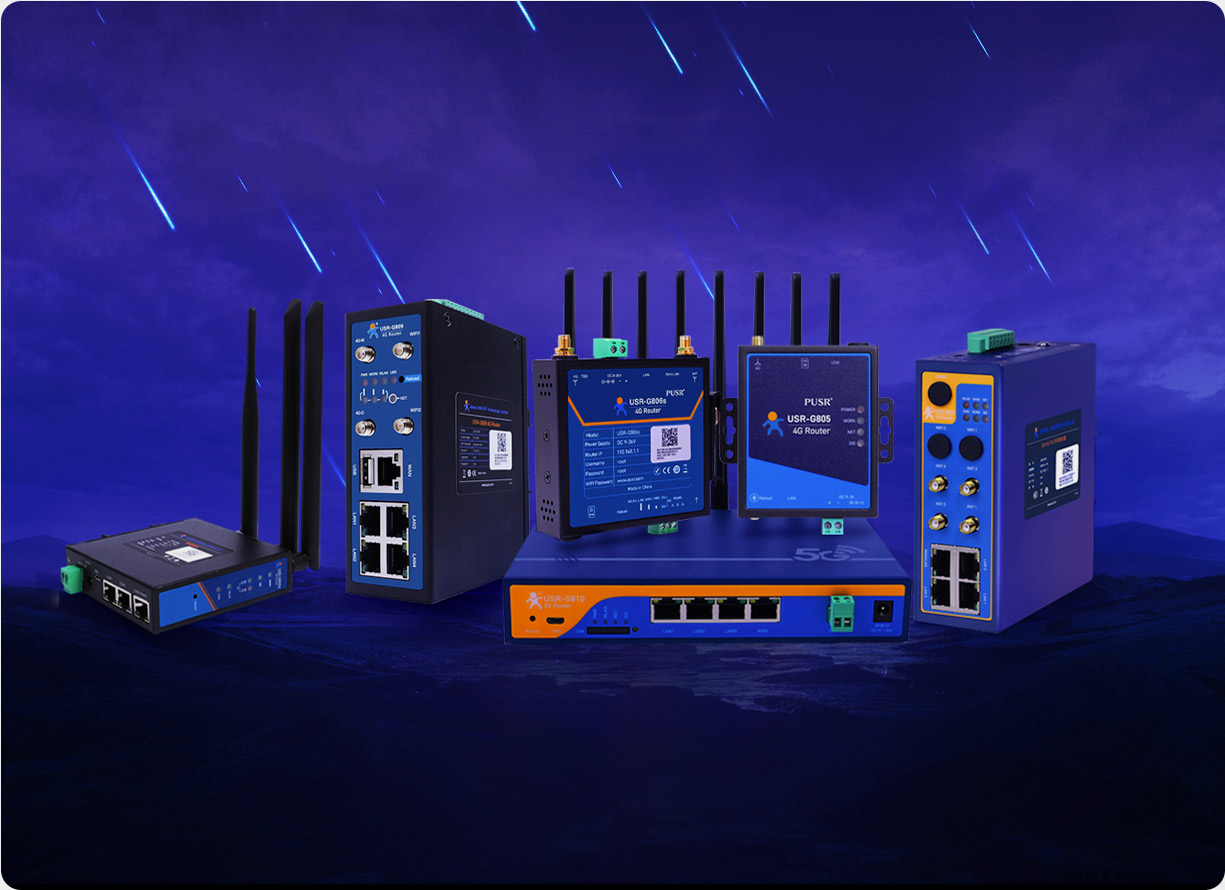
For scenarios such as small and medium-scale industrial networking, outdoor monitoring, and smart retail, the 4G Industrial Router USR-G806w is a suitable choice. It supports full-network 4G access and is compatible with most conventional industrial networking scenarios. The device has obtained multiple authoritative certifications including 3C, CE, CTA, FCC, ROHS, SRRC, RCM, WPC, NBTC, and cybersecurity certification, with its stability verified in multiple scenarios.
For high-bandwidth, low-latency 5G industrial scenarios, such as high-definition video backhaul, AGV car scheduling, and large-scale real-time industrial data collection, the 5G Industrial Router USR-G816 is a more appropriate option. It is equipped with a high-performance 5G communication module, delivering faster transmission rates and lower network latency. Meanwhile, it holds authoritative certifications including 3C, WEEE, ROHS, CTA, SRRC type approval, and cybersecurity certification, fully meeting the networking standards of high-demand industrial scenarios. Product details and parameter descriptions are available at: https://www.pusr.com/products/5g-lte-industrial-cellular-router.html.