Under the Dual Carbon Goals, How Does the Industrial LTE Router Help Substations Move from "Reactive O&M" to "Smart O&M"?
— To Every Substation O&M Engineer Woken Up by an Alarm Call at 3 AM
Let me start with a truth that might make you uncomfortable:
Your substation doesn't lack people. It lacks a brain.
Have you ever run the numbers? A 35kV substation under traditional O&M — how many people does it take? Inspection, meter reading, logging, repair reporting, follow-up — at least five or six people, up to a dozen in rotating shifts. Labor costs start at several hundred thousand yuan a year. But even so, data silos remain severe, protection settings are rigid and inflexible, fault diagnosis is time-consuming and laborious, and the risk of cascading trip-outs always hangs over your head.
You're not lacking effort. You're using 2024 manpower to carry 2026 targets.
The Dual Carbon goal isn't a slogan. It's a hard line. The2024–2025 Energy Saving and Carbon Reduction Action Plansays it in black and white: it demands improved energy efficiency through professional, digital means, and the construction of a full-process, refined energy consumption management system. Classified Protection Level 3 is the baseline. Full-link data traceability is standard. Quantifiable carbon emissions are the trend.
Look up at these requirements. Then look down at your old toolkit of "manual inspection + phone repair calls + Excel logging"—
You're not operating a substation. You're gambling with your life.
Before we talk solutions, I want you to honestly answer five questions. You don't need to tell me the answers. Just know them yourself.
If you can't remember, it means you've been in "reactive repair" mode all along. Under the traditional model, you only know about a failure after it happens. Then you dispatch someone. Then they arrive on site. Then they start investigating. The whole process takes anywhere from half an hour to most of a day. During that time, the load is running, losses are burning, carbon emissions are climbing — and all you can do is wait.
Protection data lives in protection devices. Measurement data lives in meters. Environmental data lives in sensors. Video data lives in cameras. They're fragmented, unable to connect. What you see isn't a power grid — it's a pile of shards. Data that isn't integrated isn't data. It's garbage.
Fiber breaks — you wait for the fusion splicer. Switch burns out — you wait for spare parts. Base station fails — you wait for the carrier's schedule. In a station without a wireless backup link, a communication outage equals "going blind." And under the Dual Carbon framework, the dispatch center needs your data for load forecasting, carbon accounting, and demand response — if you're down, the entire chain is down.
Crude energy management is an industry-wide illness. You can only see total consumption. You can't see itemized metering of key internal loads. Which transformer is idling? Which line has the highest losses? Which time slot can be peak-shaved? You don't know. If you don't know, you can't optimize. If you can't optimize, carbon emissions won't come down.
Beijing has already issued thePower Distribution Room Safety Management Standards, clarifying the compliance of smart O&M for power distribution. Grid companies in Shanghai, Jiangsu, and Zhejiang have already written "remote O&M capability" as a mandatory requirement in their tender documents. Unmanned operation isn't the future. It's now. Are you ready?
If these five questions left you silent, then everything that follows is written for you.
Most people's understanding of the industrial LTE router still stops at "giving devices internet access." That's a 2018 mindset.
The 2026 industrial LTE router is the substation's edge computing node + communication backup hub + remote O&M gateway + security gateway — four in one.
Let me break it down.
The industrial LTE router connects to transformers, circuit breakers, switchgear, smart meters, temperature and humidity sensors, partial discharge sensors, and cameras inside the substation via RS485, Ethernet ports, and I/O ports — all device data converges to a single node.
Then, via 5G/4G network, it transmits in real time to the monitoring center. Note — it's not "send it up and forget it." The edge computing gateway performs local preprocessing: filtering anomalous data, compressing redundant data, encrypting sensitive data. What gets uploaded isn't raw data. It's insight.
What does this mean? What the monitoring center sees is no longer a pile of numbers — it's information ready for decision-making. Abnormal current? The system auto-flags it. Temperature exceeds threshold? Alert pushed within 10 seconds. Video detects unauthorized personnel operation? AI identifies it directly and triggers a work order.
From "looking at data after the fact" to "understanding data in real time" — the value of this layer isn't saving a few people. It's flipping the O&M model from "reactive" to "proactive."
This is the industrial LTE router's most underrated capability.
When a substation's wired communication goes down — natural disaster, construction dig-up, equipment failure — the industrial LTE router's 4G/5G link takes over automatically within 200 milliseconds. No manual switching. No reboot. No waiting for O&M staff to run to the site.
Dual-link communication (WAN + 4G/5G) is standard. Primary link goes down, backup link steps in. This capability is something the traditional fiber plan can't even dream of — fiber breaks means it's broken, and repair takes hours.
More critically: under the Dual Carbon scenario, the dispatch center needs your data for load forecasting, demand response, and carbon accounting. If your communication link goes down, you don't just "lose visibility into data" — you "disappear" from the entire dispatch system. What the industrial LTE router guarantees isn't just "no downtime." It's your presence in the entire energy internet.
Remote switching, remote parameter tuning, remote video viewing, remote receipt of inspection robot imagery — in stations without an industrial LTE router, all of these are fantasies.
With it, engineers sitting in the dispatch center can complete 80% of daily O&M operations. Firmware upgrades? OTA remote push — no site visit needed. Fault diagnosis? Remote log retrieval — no flipping through devices. Inspection tasks? Dispatched to rail robots or drones — executed automatically, results returned automatically.
One manufacturing company that introduced an IoT solution completed a device firmware update that used to take a week in just 10 hours. The system successfully predicted and prevented multiple equipment failures, reducing maintenance costs by over 3 million yuan and cutting equipment downtime by 60%.
This isn't a victory of technical specs. It's a dimensional strike on the O&M model.
VPN encrypted tunnels, national cryptographic algorithms, hardware watchdog, automatic link recovery — the security design of the industrial LTE router isn't as simple as "adding encryption."
Classified Protection Level 3 requires "full-link traceability": who accessed what data at what time, all logged and retained for over 6 months. The industrial LTE router has this capability built in. Every disconnection, every switchover, every reconnection is logged. If something goes wrong, you can explain it clearly. If you can explain it clearly, you don't have to take the blame.
Under the dual pressure of GDPR and China'sData Security Law, the value of this layer is far greater than you imagine.
Some say: Dual Carbon is pressure.
I say: Dual Carbon is the industrial LTE router's biggest opportunity.
Why? Because the core of Dual Carbon isn't "use less electricity." It's "precisely manage every single kilowatt-hour." And the prerequisite for precise management is data. Real-time, complete, analyzable data.
Traditional substations can't provide this data. Manual meter reading can't. Excel can't. Protection devices won't talk on their own.
The industrial LTE router can.
It collects all the data scattered across individual devices, performs preliminary analysis at the edge, then uploads to the cloud platform. The cloud platform does deep analysis: which time slots have high load? Which equipment is inefficient? Which line has the highest losses? Where does carbon come from? How do we reduce it?
Acrel's AcrelCloud-1000 platform has already proven this logic across tens of thousands of substations: 800+ parameters monitored in real time, 10-second rapid alerts, intelligent work order dispatch, carbon emission data visualization, and precise energy analysis. From "reactive repair" to "proactive prevention," from "manned operation" to "smart O&M" — this isn't a concept. It's a delivered reality.
The numbers from a high-end manufacturing park in Suzhou are even more direct: after deploying an energy router with PV and energy storage, peak-shaving capability during daytime peak hours improved by 26%, annual electricity costs dropped by approximately 18.3%, and annual carbon emissions were reduced by about 2,700 tons.
See — Dual Carbon isn't asking you to spend more money. It's asking you to save the money you should save, and earn back the carbon credits you should earn.
And the industrial LTE router is the most critical "nerve" in this entire system.
I know what you're hesitating about.
Limited budget, but ever-rising requirements. Your leader wants unmanned operation. The dispatch center wants real-time data. Security demands Classified Protection Level 3. Carbon emissions must be quantifiable. Every item is a hard target. Every item costs money.
So what you need isn't the most expensive solution. It's the highest value-for-money path.
Process-layer protection signals go over fiber. That's the bottom line — non-negotiable.
Station-level monitoring data, video backhaul, environmental monitoring, remote O&M — the industrial LTE router handles all of it.
One device solves 80% of non-core link requirements. Deployment is measured in days, not months. O&M cost is measured in years, not in headcount.
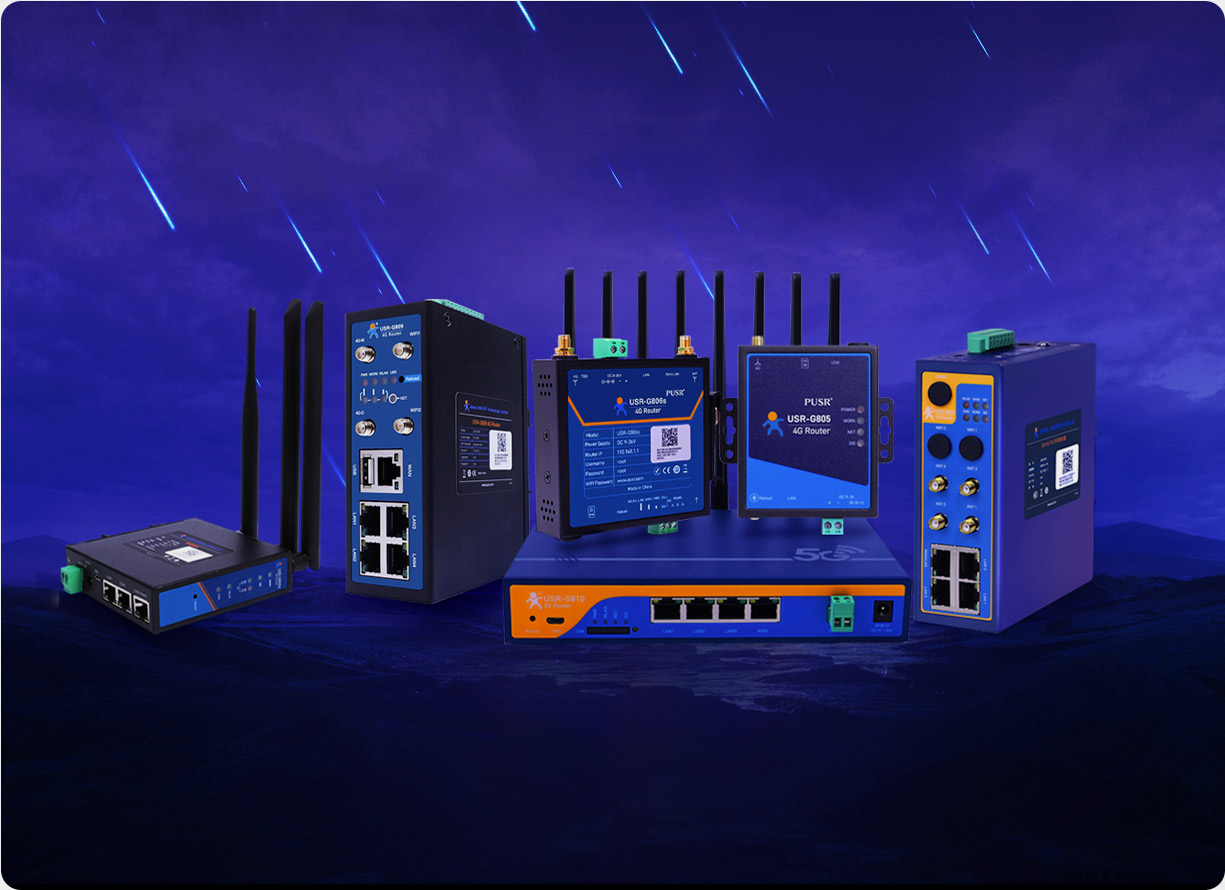
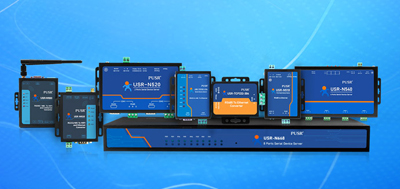
There aren't many industrial LTE routers on the market that can simultaneously handle wide temperature, strong EMI, multi-link, and national cryptographic encryption. USR IOT's USR-G806w is one of them — full metal casing, -40℃ to 70℃ wide temperature, 5G/4G dual-mode, built-in eSIM with auto-switchover across the three major carriers, five types of VPN encryption, plus site-to-site networking. In field tests at a photovoltaic substation in Northwest China, the cabinet internal temperature hit 68℃ — the device still ran at full speed, zero packet loss. Not the most expensive, but it has everything that matters.
Of course, this is just my reference point. You can use it as a ruler to measure the other options on your table.
It's 2026. Substation O&M is being redefined.
Not by policy. By data. By the question of "who can manage a station faster, more accurately, and more cost-effectively."
Your old toolkit of "people watching people, meters logging meters, phone calls for repairs" — it's not that it can't work anymore. It's that you can't afford to keep using it.
Dual Carbon won't wait for you to be ready. The dispatch center won't wait. Safety won't wait.
The industrial LTE router won't wait for you either. But it will waitfor you— wait for the moment you make the decision, then help you turn "reactive" into "proactive," "manual labor" into "machine-borne," and "gambling with your life" into "full control."
You don't need to prove to anyone that you used the most advanced technology. You only need to prove one thing to your leader: the data didn't drop, the system is stable, carbon emissions are down, headcount is reduced, and money is saved.
That's all it takes.
And the starting point for all of this might just be you spending ten minutes today to seriously think: what kind of "brain" does my substation actually need?
Once you figure that out, the path is clear.