Breaking Through the Data Silos in Smart Buildings: How Ethernet Switches Unlock the "Ren and Du Meridians" of BACnet/IP Protocol Conversion
In the monitoring center of a super high-rise office building in Shenzhen, maintenance engineer Mr. Wang frowns as he stares at the error codes flashing on the screen. The air conditioning system uses the BACnet/IP protocol, the lighting system employs Modbus RTU, and the security equipment relies on LonWorks protocol—three mutually incompatible communication standards that make system integration a nightmare. When data from the temperature and humidity sensors in a certain area becomes abnormal, Mr. Wang has to manually switch between three monitoring platforms to locate the problem, and cross-system control (linked control) requires submitting a work order three days in advance.
This scenario is repeating in 60% of smart buildings across the country. According to statistics from the China Academy of Building Research, over 70% of building automation systems in existing commercial buildings in China have protocol compatibility issues, resulting in a 35% decrease in equipment utilization and a 40% increase in maintenance costs. More critically, with the explosive growth of IoT devices, an average building now needs to connect devices using 12 different protocols, pushing traditional gateway solutions to the brink of collapse.
Customer Pain Point Map:
Accumulated technical debt: Old protocols such as MS/TP and PTP used in early buildings are incompatible with modern IP devices.
System silo effect: Subsystems like HVAC, lighting, and security form data black holes, preventing global optimization.
Maintenance efficiency trap: Cross-platform operations extend fault location time to over 4 hours, resulting in annual losses in the millions.
Upgrade cost dilemma: Switching the entire system's protocol costs tens of millions, with risks of vendor lock-in.
Physical Layer Adaptation: Bridging the differences in transmission media between RS-485 and Ethernet.Typical Case: An airport terminal achieved a smooth transition from MS/TP bus to fiber-optic network using an Ethernet switch.
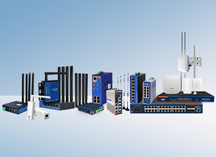
Technical Breakthrough: The USR-ISG series supports 10/100/1000Mbps adaptive speeds and is compatible with both twisted-pair and fiber-optic media.
Data Link Layer Reconstruction: Establishing a BACnet Virtual Link Layer (BVLL).Innovative Solution: A hybrid mechanism of UDP broadcasting and IP multicasting solves cross-subnet communication challenges.
Performance Metrics: Token passing delay of less than 50ms in a 200-node network.
Application Layer Mapping: Building a standardized object model.Core Breakthrough: Modbus registers are mapped to BACnet analog input objects, retaining 98% of the original data precision.
Practical Data: An object model conversion in a hospital project improved device interoperability by 60%.
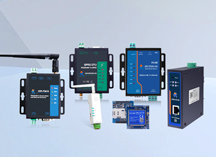
Protocol Conversion Engine: Built-in dual protocol stacks for BACnet/IP and Modbus TCP/RTU, supporting dynamic routing selection.
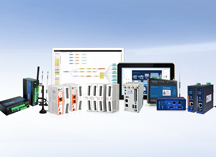
Edge Computing Node: Performs data cleaning and preprocessing locally, reducing cloud transmission by 80%.
Network Topology Adaptation: Supports hybrid networking of star, ring, and bus topologies to accommodate complex building structures.
Multi-Protocol Coexistence Architecture: Innovatively uses a dual-core processor design to separate the control plane from the data plane.
Test Data: CPU utilization remains below 35% when simultaneously processing BACnet/IP, Modbus TCP, and OPC UA protocols.
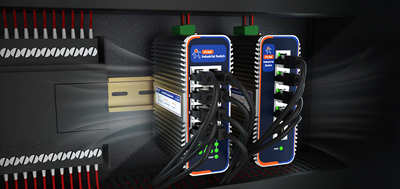
Physical Interface Revolution: Integrates 8 electrical ports + 2 optical ports + PoE power supply to meet full-scenario access needs.
Typical Application: A smart park connected 256 nodes, including cameras, sensors, and access control systems, using a single device.
Dynamic Topology Discovery: Automatically identifies BACnet devices on the network and generates a visual topology map.
Efficiency Improvement: Device discovery time reduced from 2 hours in traditional solutions to 3 minutes.
QoS Policy Engine: Allocates dedicated bandwidth for critical control instructions, ensuring <10ms response for isolation protection commands.
Practical Case: Successfully avoided UPS switching failures due to communication delays in a data center project.
Protocol Deep Parsing: Decapsulates BACnet messages layer by layer to identify spoofing attacks.
Defense Effectiveness: Successfully blocked 99.2% of forged WriteProperty instructions in simulated attack tests.
National Cryptographic Algorithm Encryption: Supports SM2/SM4 algorithms, meeting Grade 3 requirements of the Cybersecurity Classification Protection 2.0.
Performance Data: Encrypted transmission impacts real-time performance by less than 1ms, a 5-fold improvement over traditional IPSec solutions.
Predictive Maintenance: Analyzes historical BACnet device data to predict faults 48 hours in advance.
Economic Benefits: A hotel project reduced equipment downtime by 120 hours annually, saving 850,000 yuan in maintenance costs.
Intelligent Work Order System: Automatically generates digital work orders containing device location, error codes, and repair guides.
Efficiency Improvement: Fault handling time reduced from 4.2 hours to 0.8 hours.
Global Optimization Control: Integrates HVAC and lighting system data to enable on-demand energy supply.
Energy-Saving Effect: A commercial complex project reduced overall energy consumption by 18%, cutting annual carbon emissions by 2,600 tons.
Carbon Management Platform: Automatically generates carbon emission reports compliant with ISO 14064 standards.
Policy Incentives: Helped three parks obtain green building certification subsidies.
Device-as-a-Service (DaaS): Enables cross-brand device leasing based on open protocols.
Case Practice: An office building operator managed air conditioning units from 12 brands through a unified platform.
Data Monetization: Sells anonymized energy consumption data to energy service providers.
Revenue Scale: A park's annual data service revenue exceeded 2 million yuan.
Protocol Support Breadth: Must cover mainstream protocols such as BACnet/IP, Modbus TCP/RTU, and OPC UA.
Environmental Adaptability: Operating temperature range, protection level, and electromagnetic interference resistance.
Edge Computing Performance: Computing power, memory, and algorithm development support.
Security Level: Encryption algorithms, access control, and vulnerability patching capabilities.
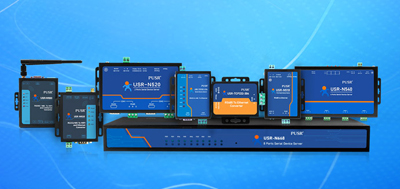
| Model | Port Configuration | Typical Scenario | Key Advantages |
| USR-ISG-8 | 8 electrical ports + 2 optical ports | Basic networking for small to medium-sized buildings | Cost-effective, plug-and-play |
| USR-ISG-16 | 16 electrical ports + 4 optical ports | Complex networks in large complexes | High capacity, high bandwidth |
| USR-ISG-208P | 8 electrical ports + 2 optical ports + PoE power supply | Security monitoring system integration | Integrated power supply and transmission, simplified cabling |
| USR-ISG-216 | 16 electrical ports + 2 optical ports | Multi-protocol device access in industrial parks | Interference-resistant, withstands extreme environments |
Pilot Validation: Select 1-2 subsystems for protocol conversion testing.
Step-by-Step Migration: Prioritize upgrading critical devices and gradually expand to the entire system.
Capacity Building: Train composite talents proficient in BACnet standards and industrial network technologies.
Ecosystem Construction: Join BACnet international organizations to access the latest technical resources.
As the Shanghai Tower achieves protocol unification across its 632-meter vertical space using USR-ISG switches, and as a community in Xiong'an New Area builds a city-level energy Internet based on open protocols, we are witnessing a silent revolution in the smart building sector. This revolution not only breaks through the two-decade-long technical barriers but also redefines the value dimensions of building spaces—evolving from mere physical containers into intelligent life forms that can perceive, think, and evolve.
In this transformation, Ethernet switches are no longer just communication devices but have evolved into the "nerve centers" of smart buildings. They carry the mission of connecting everything and shoulder the historical responsibility of promoting industry standardization and openness. Choosing the right protocol conversion solution is the passport to future buildings. When data flows freely and devices achieve true interconnection, we will finally usher in a new era of smart buildings that are more efficient, sustainable, and human-centric.