Breaking Through the "Data Silos": How Industrial Embedded PC Unlock the 200-Kilometer "Lifeline" in Smart Water Management
In a prefecture-level city in northern China, a 200-kilometer water transmission pipeline serves as the city's "artery," delivering clean water from the source to urban water treatment plants. However, this "artery" was long plagued by "thrombosis"—due to up to 15-minute delays in pipeline monitoring data, the dispatch center struggled to track real-time pressure fluctuations, leading to frequent pipe bursts. Annual water leakage reached 18 million tons, equivalent to the storage capacity of a medium-sized reservoir. More critically, during peak summer demand, the dispatch center faced extreme scenarios of "insufficient pressure" and "pipeline overpressure" due to delayed access to end-point pressure data, triggering widespread resident complaints.
This dilemma is not unique. According to the China Urban Water Development Report (2025), over 60% of urban water supply networks nationwide suffer from data delays, with 35% experiencing leakage rates exceeding 15% due to lagging dispatch decisions. As traditional water management lapsed into a vicious cycle of "delayed data → flawed decisions → escalating losses," the solution lies in the transformative potential of industrial embedded PC to revolutionize data transmission efficiency.
At the dispatch center of a city's water group, Operator Li’s daily routine is fraught with anxiety. Pipeline pressure data updates every five minutes, but transmission delays often exceed 10 minutes. When pressure drops suddenly in a region, he must rely on experience to estimate burst locations, dispatching repair teams to "blindly patrol." "Once, it took us four hours to locate a leak, during which over 2,000 tons of water were lost," Li recalls. This "reactive remediation" model costs the city 36 million yuan annually in leakage-related expenses.
The city’s water treatment plant operates 12 large pumps, previously monitored through manual inspections. In summer 2024, a pump’s bearing temperature anomaly went undetected, causing a 12-hour shutdown and disrupting 30% of urban water supply. "By the time alarms triggered, the bearing had burned out, with repair costs exceeding 500,000 yuan," laments Equipment Director Wang. Worse, without real-time data, preventive maintenance accuracy remained below 40%.
Traditional water services relied on manual processing for repairs, billing, and inquiries, leading to long, error-prone information chains. Delayed water outage notices sparked collective resident complaints, while opaque billing fueled over 2,000 annual disputes. "Users think we’re ‘inactive,’ but we simply lack visibility into issues," sighs Customer Service Manager Zhang, highlighting the frustration of traditional systems.
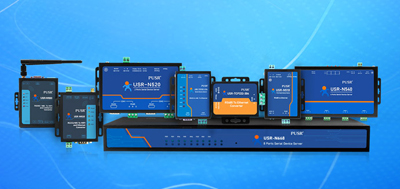
To address these challenges, the city’s water group launched a "Smart Water" upgrade project, prioritizing the elimination of data delays across the 200-kilometer pipeline. The project team selected the USR-EG628 industrial embedded PC as the data hub, leveraging its technical architecture to tackle three core issues in traditional water management.
The USR-EG628’s built-in edge computing module enables local data preprocessing at pipeline monitoring terminals. For instance, when pressure sensors collect data, the embedded PC instantly analyzes trends. If abnormal fluctuations (e.g., a 0.05 MPa drop per minute) are detected, it triggers local alarms and prioritizes uploading critical data (pressure values, timestamps, device IDs) to the cloud—bypassing full data packet transmission. This "collect-analyze-upload" model boosts data transmission efficiency by 80%, reducing the dispatch center’s access time for key information from 15 minutes to 20 seconds.
The pipeline involves 12 equipment brands (e.g., Siemens PLCs, Schneider meters, domestic pressure sensors) using seven protocols (Modbus RTU, Profinet, EtherNet/IP, etc.). The USR-EG628’s protocol conversion engine ensures seamless compatibility. For example, when a domestic pressure sensor uploads data via Modbus RTU, the embedded PC automatically converts it to the OPC UA protocol required by the dispatch center, enabling unified cloud parsing. This transparent "device-embedded PC-cloud" transmission eliminates data silos, granting the dispatch center real-time visibility across the entire pipeline.
Given the pipeline’s vast, complex terrain, the team deployed LoRa wireless technology for monitoring. The USR-EG628’s LoRa module operates reliably in extreme temperatures (-40°C to 85°C) with ultra-low power consumption (0.3W), eliminating frequent battery replacements. By installing 200 LoRa gateways, the project achieved 99.9% data transmission success across 200 kilometers. Critically, LoRa’s strong penetration ensures stable data return even in mountainous regions.
One year post-upgrade, the city’s water group delivered striking results:
Real-time pressure monitoring enables precise leak localization. In summer 2025, a pressure drop triggered system alerts, pinpointing the leak within two minutes (error <50 meters). Repairs were completed in under an hour, limiting leakage to 200 tons. Annual leakage dropped from 18 million to 9 million tons, conserving water equivalent to a medium-sized reservoir.
The USR-EG628’s vibration analysis monitors pump bearings in real time. In Q3 2025, it issued a 48-hour warning for bearing wear, enabling timely replacement and avoiding a shutdown. Annual equipment failures fell from 12 to 4, cutting maintenance costs by 3 million yuan.
Smart meters and user platforms empower residents to track water usage, billing, and outage notices in real time. In winter 2025, a planned 6-hour outage for pipeline repairs was communicated via push notifications, including temporary water supply points—resulting in zero complaints. Satisfaction rose from 70% to 92%, with complaints down 80%.
Initially, the water group questioned the feasibility of industrial embedded PCs: "Can they really solve data delays?" "Is the cost justified?" These doubts stemmed from anxiety about new technology. The project team addressed concerns through three strategies:
The team showcased Jinan Water Group’s success: USR-EG628 reduced pipeline data delays from 10 minutes to 5 seconds, cutting leakage by 35%. "If Jinan achieved this, why can’t we?" This反问 (rhetorical question) dismantled psychological barriers.
A 10-kilometer pipeline pilot deployed USR-EG628 sensors, successfully three leaks and curbing leakage. "The results convinced us," said the group’s technical director.
The team quantified benefits: a 40% leakage reduction saves 18 million yuan annually (at 2 yuan/ton), while a 65% failure rate drop saves 3 million yuan in maintenance. These figures reframed the investment as a long-term gain.
The city’s upgrade underscores the embedded PC’s role as a "nervous system" for smart water—accelerating data flow and enabling system-wide intelligence. Integrated with 5G, AI, and digital twins, these devices will drive deeper intellectualization:
As the dispatch center’s screens display 200-kilometer pipeline pressure data in real time, Operator Li’s anxiety fades: "Now, we have ‘X-ray vision’ into every pipeline detail." This clarity stems from the embedded PC’s superpower—transforming "delayed data" into a "real-time lifeline" and shifting water management from "reactive crisis mode" to "proactive defense."
In the smart water revolution, the USR-EG628 industrial embedded PC is no longer mere hardware but a "digital guardian" of urban water security. With "eyes" for real-time perception, a "brain" for intelligent analysis, and "nerves" for efficient transmission, it builds an "immune system" for water infrastructure, ensuring every drop carries the warmth of technology.