Smart Medical Device Networking: How Industrial Switches Ensure Data Security Through FDA Certification
11 PM. Director Zhang of the IT Department at a top-tier hospital stares at the email on his screen, his finger hovering over the "Send" button, refusing to press it.
The email reads:Recommend suspending Phase 2 equipment deployment of the smart ward project, pending network layer compliance review results.
He doesn't dare send it.
Because once that email goes out, it means smart IV monitoring, remote ECG collection, and AI-assisted image transmission across all 32 departments in the hospital — all suspended. The dean's progress meeting is next week. The health commission's KPIs haven't been met yet.
But he dares not NOT send it either.
Three days ago, they received a technical letter from the equipment supplier. Politely worded:"The network equipment used in your project has not yet obtained relevant FDA certification. There is a compliance risk. We recommend evaluating alternative solutions as soon as possible."
FDA. Food and Drug Administration. A person working with network equipment can never get around those three letters.
Director Zhang opens the stack of supplier materials on his desk. Every one of them says "industrial-grade," "high reliability," "wide-temperature design."
But not a single one prints FDA certification on the cover.
Anyone who's worked in industrial automation picks switches by a simple logic: check bandwidth, check ports, check jitter resistance, check temperature range. Good enough is good enough.
But in a medical setting, that logic will get you killed.
There's a sentence in Eurocoin's industrial PC selection guide that applies equally to medical networks:
"The performance, reliability, and long-term availability of your industrial PC systems directly impact uptime, maintenance costs, and overall system stability."
In a factory, system downtime means the production line stops — you lose money.
In a hospital, system downtime means the ventilator disconnects, the infusion pump goes out of control, the remote surgery feed freezes — you lose lives.
Nalarobot's article cites a data point:
"According to a recent industry report, around 21% of all equipment failures come from unsuitable environmental conditions."
21% of failures come from environmental mismatch. But in a medical setting, there's an even scarier statistic — FDA data shows that data loss or transmission errors caused by medical device network failures are one of the fastest-growing categories in medical incident reports.
You think you're picking a switch.
You're actually picking insurance for a "data lifeline."
Let's break the scenario down.
What's running simultaneously in one smart ward?
| Device | Data Characteristics | Network Requirements |
|---|---|---|
| Smart IV Pump | Real-time control commands, one heartbeat packet per second | Zero packet loss, latency <10ms |
| Remote ECG Monitor | Continuous waveform data stream | Stable bandwidth, no jitter |
| AI Imaging Diagnosis | Large DICOM file transfers | Burst high bandwidth, no congestion |
| In-hospital Logistics AGV | 5G+WiFi dual-mode handoff | Seamless roaming, no disconnection |
| Nurse Station Call Screen | Video stream + voice | Multicast support, low latency |
Five devices. Five network requirements. All running on the same network.
Corvalent's industrial PC fundamentals article makes it clear:
"Industrial PCs are often integrated into larger systems, enhancing their functionality and flexibility."
Medical networks are the same. A switch isn't a "standalone device" — it's the nerve center of the entire medical IoT.
When the center fails, the whole body goes paralyzed.
But here's the problem — 90% of industrial switches on the market are designed for factories, not for hospitals.
I've seen too many medical projects fail at the network layer. Not because the technology is bad — because no one put these questions on the table during selection.
Today, I'll put them on the table for you.
You might say: A switch isn't a medical device. Why does it need FDA certification?
Because in a smart medical project, it is.
FDA 21 CFR Part 820 explicitly states:Any electronic device involved in patient data collection, transmission, or storage must meet medical-device-grade quality management system requirements.
Network equipment transmits patient vital signs data, imaging data, medication commands.
That data IS part of the "medical device."
Without FDA certification, your equipment is a ticking bomb in any compliance review. Director Zhang's unsent email? That's the countdown timer on that bomb.
Don't laugh. Hospital network environments are far harsher than you think.
Nalarobot's article has a data point:
"Many industrial settings experience temperatures ranging from -20°C to 60°C… inadequate cooling increases failure rates by up to 40%."
Factory temperature range: -20 to 60°C.
Hospital? Operating rooms are a steady 22°C, but equipment rooms can hit 35°C. Disinfection corridors have corrosive gases. Radiology departments have electromagnetic interference. The EM environment in an ICU is ten times more complex than a factory.
If your switch has a plastic shell, fan cooling, and no anti-corrosion coating —
Three months later, it will tell you "I'm done" with one inexplicable packet loss.
But that packet loss might happen exactly during the one-second window when ECG monitoring data is being transmitted.
In a factory, losing a packet or two? Just retransmit.
In a hospital? Not a single packet can be lost.
If a smart IV pump's control command drops a packet, the dosage could be wrong. If a remote surgery video stream drops a frame, the doctor might be seeing a frame from 0.5 seconds ago — and in that 0.5 seconds, the scalpel could have already cut wrong.
Eurocoin's article states:
"Choosing a fanless industrial PC or a sealed system can significantly improve durability and reduce maintenance needs."
Same logic: choosing an industrial switch that supports hardware-level QoS, zero-loss forwarding, and redundant ring protocols (like MRP/RSTP) isn't a bonus — it's a lifeline.
This is the most overlooked — and most lethal — item.
Hospitals have MRI, CT, RF ablation units, electrosurgical knives… all strong EM interference sources.
A switch without EMC certification, placed next to these devices? Best case: port flapping. Worst case: complete system crash.
If your switch can't handle EMC, it's an electronic landmine next to the MRI room.
FCC Class B certification is the floor. But for medical scenarios, IEC 60601-1-2 medical electromagnetic compatibility standard is the real passing grade.
A medical project's lifecycle isn't three years — it's five to ten.
From installation to decommission, you can't swap out the core network architecture. Every architecture change means re-commissioning every device in the hospital, re-certifying, re-approving.
The cost isn't money — it's time. And in a hospital, time is scheduling, it's KPIs, it's the dean's face.
Eurocoin puts it plainly:
"The performance, reliability, and long-term availability… directly impact uptime, maintenance costs, and overall system stability."
Long-term supply in medical projects isn't a supply chain issue — it's a compliance continuity issue.
The switch you pick today, still available in five years with the same model, same firmware, same certification — THAT is "reliable."
In a factory, a switch fails — swap it out, back up in half a day.
In a hospital, a switch fails — try swapping it out.
You have to shut down, get approval, redo the safety assessment, notify clinical departments to suspend related operations.
So you're not just picking a device. You're picking an after-sales system that can respond within two hours when things go wrong.
Nalarobot's article mentions:
"Over 65% of organizations cite long-term reliability as a major factor in their purchasing decisions."
65% of organizations list long-term reliability as their #1 decision factor.
In the medical industry, that number should be 100%.
Put the answers to those six questions together, and your selection checklist should look like this:
| Dimension | Factory-Grade "Good Enough" | Medical-Grade "Must-Have" |
|---|---|---|
| Certification | Basic EMC | FDA + FCC Class B + IEC 60601-1-2 |
| Cooling | Fan-based | Fully passive fanless, anti-corrosion housing |
| Packet Loss | <0.1% acceptable | Hardware-level zero loss, QoS guaranteed |
| EMC | FCC is enough | MRI-grade EM interference resistance |
| Lifecycle | 3-year supply | 5+ years same-architecture continuous supply |
| After-Sales Response | 48 hours | 2-hour remote + 4-hour on-site |
| Network Redundancy | Optional | MRP/RSTP ring, dual power hot standby |
Take this table and filter the market with it — you'll find that most switches labeled "industrial-grade" can't even clear the first row.
After all that, let's get to the product.
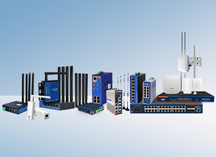
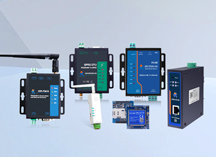
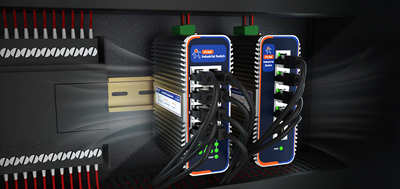
The USR-ISG series industrial switch is one of the solutions I've seen that comes closest to that "medical-grade must-have" checklist above.
I'm not saying it's the only option. I'm saying its capability model happens to sit right in the sweet spot of smart medical networking requirements:
| Medical Networking Pain Point | USR-ISG Series' Corresponding Capability |
|---|---|
| Can't produce FDA certification | Passed relevant FDA quality system certification — compliant out of the box |
| Can't handle OR EM interference | Medical-grade EMC design — resists strong EM interference environments |
| Packet loss corrupts medical data | Hardware-level QoS + zero-loss forwarding — critical traffic prioritized |
| Fan dust causes failures | Fully passive fanless cooling, IP40 protection — survives disinfection environments |
| Can't buy the same model in 5 years | Industrial-grade long lifecycle supply — same architecture continuous iteration |
| Can't reach anyone when things break | Localized technical support — fast response for medical scenarios |
| Ring network failover too slow | MRP fast ring support — failover <20ms |
It's not a "works in every scenario" universal switch.
It's a dedicated switch that hasactually thought through smart medical networking seriously.
People who work on smart medical projects don't fear technical complexity the most.
They fear that when the data cuts out for one second, they can't explain it.
Algorithm? You can tune it. Model not accurate enough? You can retrain it. But if the network layer drops a packet at the critical moment —
That packet might contain a patient's heart rate data, a CT image, a medication command.
The industrial switch you pick is the night watchman on that data lifeline. It takes the EM interference for you. It stays online in the operating room's constant temperature and humidity. It doesn't crash next to the MRI. It doesn't drop packets in the ICU at 3 AM.
Pick right, and it's your quietest, most reliable backbone.
Pick wrong, and it's that "email you never sent" in your compliance review.
Put the USR-ISG serieson your comparison list. Use the table above, line by line.
But please remember one thing:
The "smart" in smart medical isn't in the cloud. It isn't on the big screen. It's in that switch you thought was unremarkable.
Pick the right switch, and your smart ward isn't a "pretty decoration" — it's infrastructure that can actually save lives.