The "Bottleneck" Challenge in AGV Cluster Scheduling: How Industrial Wireless Routers Enhance Efficiency by 30% with Multi-Band Fusion Tech
In smart manufacturing, AGV cluster scheduling systems are vital for boosting productivity and cutting labor costs. However, practical challenges, especially network stability and efficiency, persist. This article explores three technical bottlenecks in AGV scheduling and how industrial wireless routers with multi-band fusion technology can drive a 30% efficiency increase.
Every second of delay in AGV scheduling can trigger a chain reaction. When AGVs perform complex tasks like obstacle avoidance and collaborative loading in dense production lines, delayed scheduling commands can cause lagging actions or even collisions. A car parts factory suffered monthly losses of tens of thousands of yuan due to AGV collisions caused by network latency, impacting overall production efficiency.
Factory workshops often have metal structures and electromagnetic interference sources that weaken wireless signal strength and stability. In an electronics manufacturer's AGV scheduling system, 4G signal strength dropped from -60dBm to -110dBm due to dense steel structures, causing frequent AGV disconnections and hindering real-time tracking and scheduling efficiency.
As smart manufacturing evolves, AGV scheduling systems must support more device connections and complex scenarios. Traditional industrial wireless routers have limitations in compatibility and scalability, struggling to meet future upgrade needs. A logistics company had to invest heavily in network upgrades when its existing router couldn't support new AGV devices, increasing operational and time costs.
To address these pain points, industrial wireless routers with multi-band fusion technology offer efficient and stable network solutions for AGV scheduling. By integrating 2.4GHz, 5GHz, 4G/5G, and other bands, this technology enhances network stability and efficiency through complementary advantages.
Multi-band fusion technology intelligently selects the optimal band to minimize scheduling command latency. With 5G, end-to-end latency can drop to 1ms, meeting real-time demands for AGV tasks like obstacle avoidance. Industrial wireless routers also support dual-link backup and wired redundancy, ensuring seamless switching and uninterrupted AGV operations.
A car manufacturer reduced scheduling latency from over 100ms to under 10ms after adopting multi-band fusion routers, improving command delivery efficiency by 90%, reducing collision rates by 80%, and boosting overall production efficiency by 20%.
Multi-band fusion technology uses intelligent channel selection and dynamic frequency selection (DFS) to avoid interference and prioritize optimal bands for communication. High-gain antennas and robust hardware designs enhance signal penetration and coverage, maintaining stable connections in challenging environments.
An electronics manufacturer improved 4G signal strength from -110dBm to -70dBm after deploying multi-band fusion routers, reducing AGV disconnection rates from 30% to under 5% and increasing scheduling efficiency by 30%.
Multi-band fusion technology supports multiple communication protocols and interface standards, enabling seamless integration with various AGV devices. Modular designs allow for easy upgrades and expansions, meeting evolving smart manufacturing demands.
A logistics company integrated new AGV devices quickly without major network overhauls after adopting multi-band fusion routers, reducing operational and time costs.
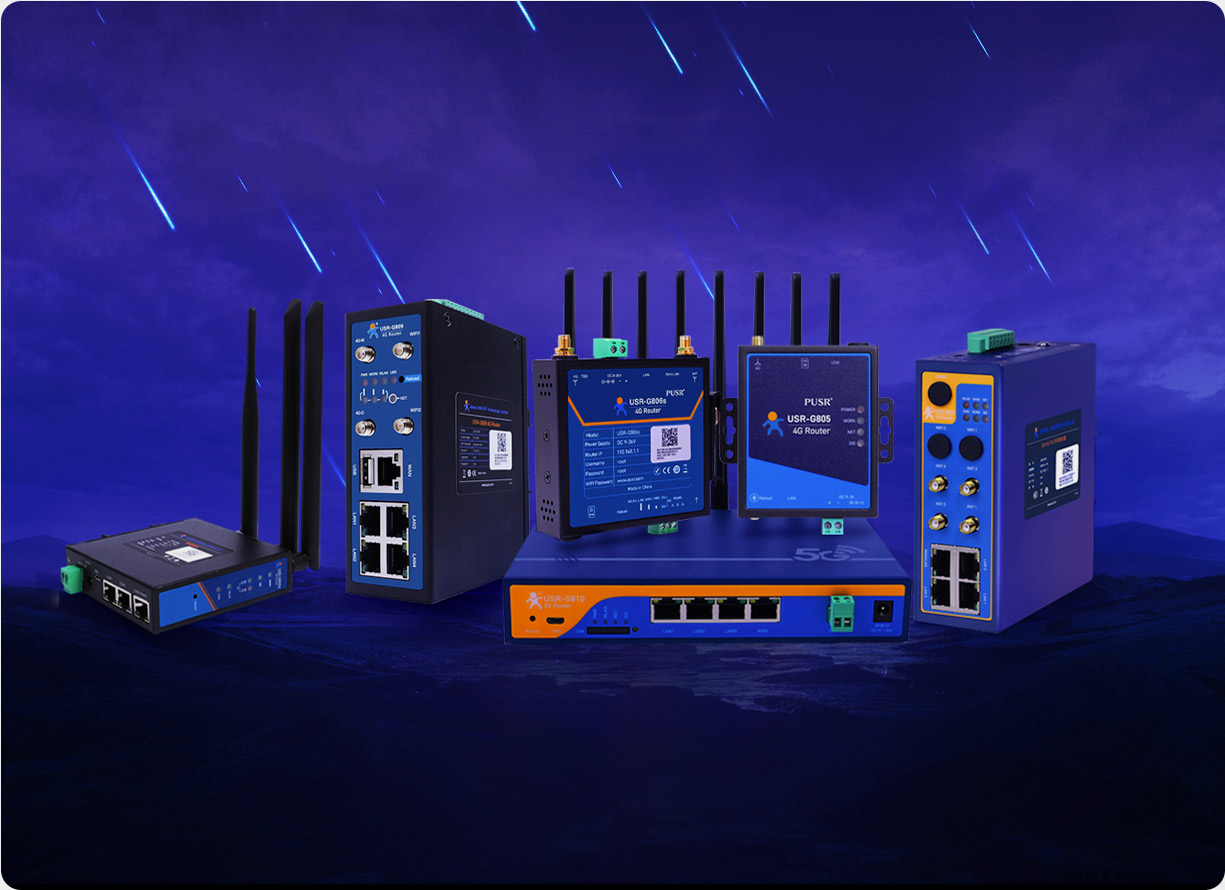
Among industrial wireless routers, USR-G806w stands out with its exceptional multi-band fusion capabilities, making it ideal for AGV scheduling. It supports 2.4GHz, 5GHz, and 4G/5G bands, intelligently selecting the best band for minimal latency.
USR-G806w also features high-gain antennas and robust hardware for strong signal penetration and coverage in complex environments. Dual-link backup and wired redundancy ensure uninterrupted AGV operations.
For compatibility and scalability, USR-G806w supports multiple protocols and standards, enabling seamless integration with various AGVs. Its modular design facilitates future upgrades and expansions.
As a cornerstone of smart manufacturing, AGV scheduling systems rely on stable and efficient network communication to impact productivity and costs. Multi-band fusion technology integrates diverse bands for optimal performance, offering a reliable solution. USR-G806w, as a leading practitioner, delivers exceptional flexibility and performance for AGV scheduling.
Looking ahead, as smart manufacturing advances, AGV scheduling will face more complex scenarios and higher demands. Multi-band fusion technology will continue to evolve, driving innovation and opening new chapters in smart manufacturing. Let's collaborate to propel smart manufacturing to new heights with technological advancements!