When a device is hundreds of kilometers away, remote management is a basic requirement. The real question is whether the same management path can also be opened by an attacker. For an industrial cellular router, “the device is online” is not enough. The access path, authentication method, and default rules all matter. A router can be reachable because a site needs service, but that reachability should not become a permanent opening to the public internet. The same goes for diagnostic access, monitoring access, and firmware maintenance access.
Remote management usually should not mean exposing a management port to the public internet. A more stable approach is to let the device enter an encrypted tunnel first, then access it from the internal network. The cellular link connects field equipment back to headquarters. The VPN makes that connection controlled, identifiable, and deniable. In practical terms, the field site keeps its cellular uplink, while the management plane stays behind the same encrypted channel used for trusted operations. This keeps the operational path and the public surface separate.
A cellular router solves the link problem. Where broadband or LAN cabling is unavailable, devices can return to headquarters over 4G or 5G. But once that link exists, it can also become an entry point for scanning and attempts. The common risk is not “no channel,” but “too wide a channel”: management ports are directly reachable, passwords are never changed, default rules are too permissive, and firmware is not updated in time. In field environments, the issue is often that equipment must stay reachable for maintenance, even when no one is on site.
The role of a VPN is not to replace these basics, but to narrow the entry point. When the device connects as a client to the corporate network, the public side sees only the cellular data channel. Management access happens only after authentication, through the router’s built-in web page or device services. In other words, remote login changes from “a public address” to “a controlled access inside the internal network.” This also makes it easier to separate routine monitoring from privileged changes such as firmware upgrades or parameter edits.
Configure field equipment as a VPN client first, connecting to a VPN server at headquarters or in a private cloud. Client mode reduces the number of exposed ports and shrinks the surface that can be reached directly. If the device can also act as a server, use that role only in controlled scenarios and pair it with strict access control. For multi-site projects, this also keeps each remote site from becoming a standalone public endpoint.
Web management, remote firmware upgrades, and parameter changes should happen on the internal side. The cellular side should carry the required data forwarding, but SSH, Telnet, and HTTP/HTTPS management ports should not be mapped directly to the public internet. For devices that need to reach PLCs, gateways, or sensors, create rules by destination IP, port, and protocol instead of using a broad “allow all” fallback. When a new service is needed, add one narrow rule and document the reason.
Once one device is configured, the question becomes how to maintain hundreds of devices. A device management platform is useful here: check online status in bulk, reboot devices remotely, upgrade firmware, and receive alarms. Centralizing management actions makes auditing easier. When a device goes offline, signal drops, or traffic behaves abnormally, the issue can be caught before the field calls. Alarm coverage should include not only connectivity, but also weak signal and traffic overrun events that often point to an earlier problem.
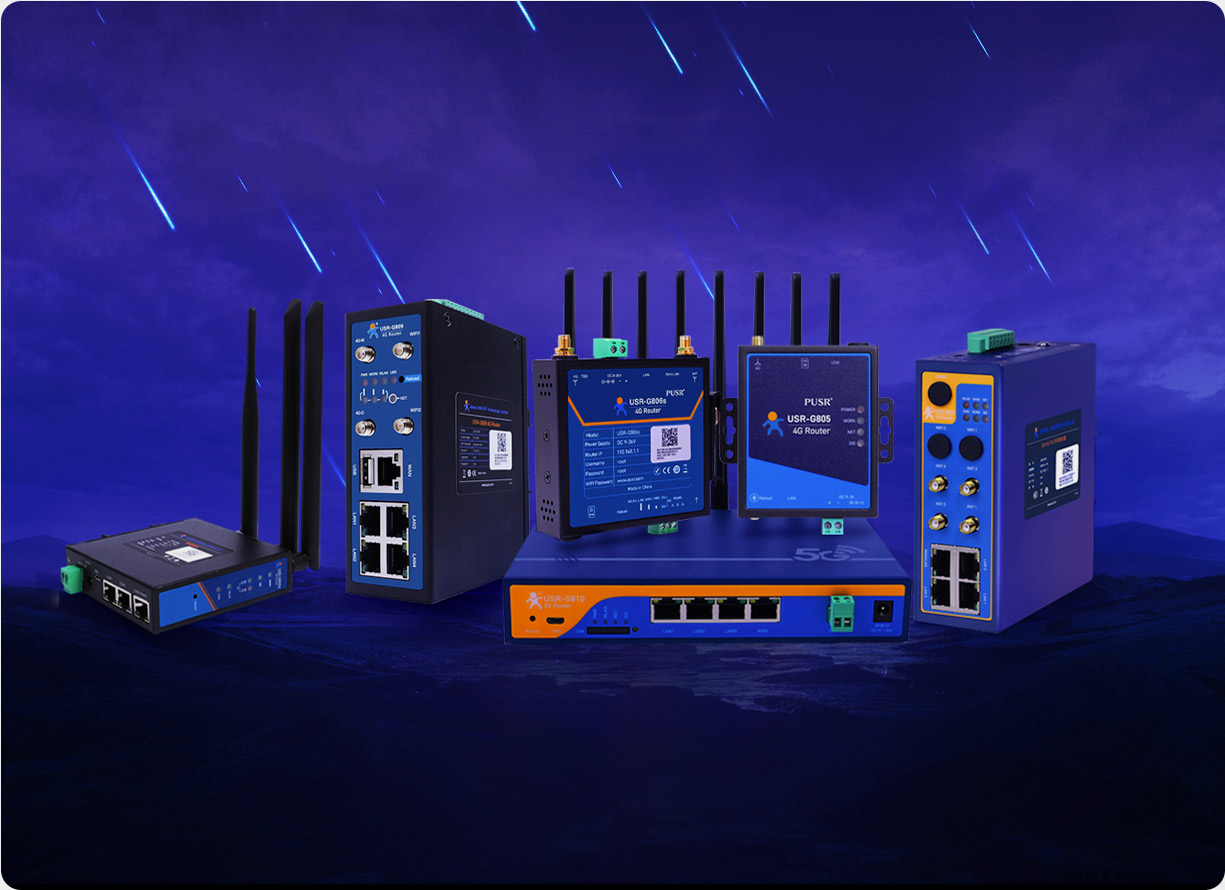
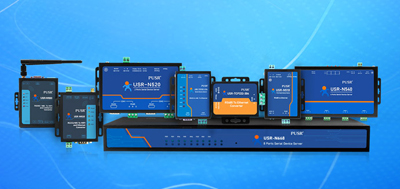
The USR-G806w suits compact spaces and equipment-access scenarios that need 4G cellular backhaul. It has three Ethernet ports, supports PPTP, L2TP, IPSec, OpenVPN, and GRE, and can switch between cellular, wired, and Wi-Fi links. Its dual watchdog and wide-temperature design fit long-term unattended operation. It is lightweight and offers multiple connection methods, making it suitable as the backhaul point for field equipment where the site is small but the management path must remain stable.
The USR-G816 is aimed at higher bandwidth and lower latency scenarios. It uses a Qualcomm quad-core processor with an X62 5G modem, supports SA/NSA, and supports PPTP, L2TP, IPSec, Enhanced OpenVPN, and GRE. Enhanced OpenVPN can connect to three servers as a client and can also act as a server, which fits multi-site, multi-link industrial cellular router deployments that need a more stable remote channel. For projects with several remote sites, this kind of router is better suited when the remote path needs to carry not only status data, but also configuration and monitoring traffic.
First, inventory the site: number of devices, interface types, cellular signal, power supply, and installation location. Second, create a template: unify VPN settings, management accounts, firmware versions, and alarm rules. Third, test the links: failover between primary and backup networks, offline alarms, and remote reboot behavior. Fourth, tighten access: keep management access inside the tunnel, make public rules default-deny, and allow only the required ports one by one. Keeping these four steps written down also helps when the site is handed over to another maintenance team.
The goal of remote management is not “always accessible,” but “accessible only to those who should be.” For equipment deployed hundreds of kilometers away, the cellular link makes devices manageable, while the VPN keeps those management actions controlled. The reliability of an industrial cellular router depends not only on signal strength, but also on whether every incoming connection is verified, recorded, and reversible. A well-designed remote access setup reduces dependence on someone being physically present while still keeping the field equipment inside a manageable security boundary. That boundary is the practical difference between being online and being safe.