Smart City Traffic Signal Control: How an Ethernet Switch Enables Centralized Management of 200 Intersections
If you're in charge of a city-level traffic signal control project, right now you're probably staring at a spreadsheet that looks like this:
200 intersections. Each intersection has 4–8 signal light groups, 2 cameras, 1 set of geomagnetic detectors, and 1 pedestrian crossing button. All data must be sent back to the same command center, with latency no more than 50 milliseconds.
And it can't stop. Not for a single day.
If the signal system crashes during morning or evening rush hour, it's not something you can explain away with "there was a malfunction" — it's the entire city gridlocked, complaints flooding in, and a meeting with the leadership.
This article isn't about technical specs.
What I want to talk about is: the anxieties during selection that no one says out loud for you.
Eurocoin's industrial PC selection guide opens with a sentence that stings:
"The performance, reliability, and long-term availability of your industrial PC systems directly impact uptime, maintenance costs, and overall system stability."
In traffic signal control, translated into plain language:
Pick the wrong switch, and every traffic light in the city pays the price for you.
But here's the problem — ask ten suppliers, and nine will tell you "we're industrial-grade, wide-temp, lightning-proof, vibration-resistant — no problem."
The tenth one will ask you: "What's the farthest distance between your intersections? Fiber or Ethernet cable in between? Does the command center need ring redundancy?"
The first nine are selling boxes. The tenth is thinking for you.
What you actually need isn't an "industrial-grade switch." You need a network solution where 200 intersections won't all fail at the same time.
The gap between those two things is where your anxiety comes from.
Nalarobot's article cites a data point that gives me chills every time I see it:
"Around 21% of all equipment failures come from unsuitable environmental conditions."
21% of failures come from environmental mismatch.
In traffic signal scenarios, that number is only higher.
Think about it — what's the environment inside a signal cabinet at one intersection?
| Factor | Reality | Impact on Equipment |
|---|---|---|
| Temperature | Cabinet interior can exceed 65°C in summer | Standard switches overheat and crash |
| Humidity | Condensation in rainy season, frost in winter | Circuit board short circuits |
| Lightning | Signal poles are lightning rods — frequent surges | Port burnout |
| Dust | Road dust + exhaust oil | Clogged vents → overheating → crash |
| Vibration | Heavy vehicles passing, constant low-frequency vibration | Connector loosening |
Corvalent's article puts it plainly:
"Industrial PCs are designed to withstand harsh conditions, ensuring reliable and efficient operation."
Same logic for switches. And at intersections, conditions are "dirtier" than in a factory.
A factory at least has air conditioning, dust protection, and dedicated maintenance staff.
An intersection cabinet? Locked on the roadside, opened maybe once every six months. There might be a family of mice living inside.
So your first iron rule: it must be fanless, fully sealed, IP40 or above.
Not "nice to have." It's "if it doesn't have it, don't even put it on the shortlist."
This is the real deep water.
Technically, connecting 200 intersections isn't hard. The hard part is — once they're connected, how do you manage them?
Imagine this scene:
Monday, 7:50 AM. Rush hour. On the command center's big screen, the signal controller at Intersection #127 suddenly goes offline.
Your ops guy, Xiao Wang, opens the management console and sees every port on the Intersection #127 switch is red.
What does he do?
Call the outsourced maintenance guy at Intersection #127? He won't arrive for at least 40 minutes — rush hour is already over.
Remote reboot? If it's a hardware fault, rebooting won't help.
Switch to a backup link? Do you even have a backup link?
Nalarobot's article has a sentence that feels custom-made for this traffic signal scenario:
"Over 65% of organizations cite long-term reliability as a major factor in their purchasing decisions."
65% of organizations list long-term reliability as their #1 factor.
In a traffic signal project, I think it should be 100%. Because you're not managing 200 devices — you're managing 200 nodes thatcannot fail.
What you need isn't just a switch. You need:
That's what "centralized management" really means — not "connected together," but"manageable."
This layer of anxiety is rarely mentioned, but it's the most lethal.
What's the lifecycle of a traffic signal control project?
Five to ten years.
The switch you pick today — will it still be in production in five years? Will firmware still be maintained? Will spare parts still be available?
Eurocoin puts it plainly:
"Long-term availability of your industrial PC systems directly impact… maintenance costs, and overall system stability."
Long-term supply directly impacts maintenance costs and system stability.
In traffic signal projects, long-term supply = the project won't become an orphan.
I've seen too many cases like this: project delivered, three years later a device fails, the supplier says "that model's discontinued — let me push you the new one."
Is the new model compatible with the old one? No.
So what do you do? 200 intersections across the city, swap switches one by one, re-commission one by one, re-certify one by one.
Calculate that cost. Then calculate that timeline. Then calculate the look on the leadership's face.
So during selection, you must ask one question clearly: "How many years do you commit to supplying this model?"
Less than five years? Think twice.
OK, anxiety covered. Let's get practical.
Based on the four layers of anxiety above, I've put together an Ethernet switch selection checklist for traffic signal control projects:
| Dimension | What You Think Is Enough | What You Actually Need |
|---|---|---|
| Certification | A CE mark is fine | CE + FCC Class B + lightning protection rating met |
| Cooling | A fan is fine | Fanless, fully passive cooling |
| Protection | IP20 is OK | IP40 or above, dustproof and anti-condensation |
| Redundancy | Single link works | MRP/RSTP ring, dual-link hot standby, failover <20ms |
| Management | Pingable is enough | SNMP + Web management, batch config, remote alarms |
| Ports | 8 ports is enough | Actual devices per intersection × 1.5 redundancy |
| Lifecycle | 3 years is enough | 5+ years same-architecture continuous supply |
| EMC | FCC pass is enough | 4kV+ surge immunity, outdoor lightning environment rated |
Take this table and filter the Ethernet switches on the market with it.
After filtering, you'll find very few that can check every box.
After all those pain points, let's get to the product.
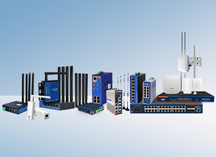
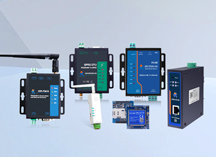
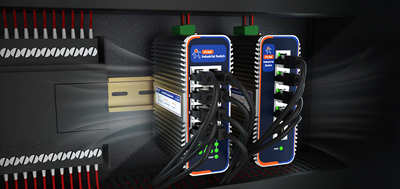
The USR-ISG series Ethernet switchis one of the solutions I've seen whose capability model best matches the "traffic signal centralized management" scenario.
Not the only one. Thebest match.
| Your Pain Point | How USR-ISG Handles It |
|---|---|
| Cabinet hits 65°C, equipment overheats | Fanless fully passive cooling, operating temp -40°C~75°C |
| Rainy season condensation, circuit board shorts | IP40 protection, sealed design, anti-corrosion coating |
| Lightning burns ports | 4kV port surge protection, 6kV power surge protection |
| One link down = entire intersection dead | MRP ring redundancy, failover <20ms, zero interruption |
| Can't manage 200 intersections | Unified network management platform, batch config, tiered alarms, remote O&M |
| Can't buy spare parts in 5 years | Industrial-grade long lifecycle supply, same-architecture continuous iteration |
| No one responds when rush hour hits | Localized technical support, fast response mechanism |
It's not a "can do everything" universal device.
It's a dedicated device that hasactually thought through traffic signal control seriously.
People who work on traffic signal projects don't fear technical difficulty.
They fear that at a rush-hour intersection, all the traffic lights suddenly go dark, and when you get the call, your hand is shaking.
At that moment, you'll remember every decision you made during selection —
You picked one with a fan — now the fan is clogged. You picked a single-link design — now the link is down. You picked one that gets discontinued in three years — now spare parts are gone.
TheEthernet switchyou picked is the "fuse" for 200 intersections.
You don't notice it on normal days. But on a stormy night, on a rush-hour morning, on a holiday evening —
It holds the line for you.
Put the USR-ISG serieson your comparison list. Use the table above, line by line.
But please remember one thing:
The "smart" in smart traffic isn't in the flashy heat maps on the big screen. It's in that unremarkable cabinet at the intersection, in that switch you thought "good enough if it works."
Pick the right switch, and your 200 intersections aren't just a "smart city on paper."
They're the infrastructure that actually gets citizens home ten minutes earlier.