Smart Manufacturing MES System: How Does an RS485 to Ethernet Converter Enable Real-Time Data Collection from CNC Machine Tools?
In today's era of smart manufacturing sweeping across the globe, MES (Manufacturing Execution System) has become a core tool for enterprises to achieve production transparency and refined management. However, for numerous manufacturing enterprises reliant on CNC (Computer Numerical Control) machine tools, the challenge of collecting data from CNC equipment scattered throughout the workshop in real-time and accurately into the MES system remains a key pain point hindering digital transformation. This article delves into the technical principles, application scenarios, and solutions of RS485 to Ethernet converter in CNC data collection, and recommends a low-power, highly reliable product specifically designed for industrial scenarios—USR-TCP232-304—to assist enterprises in overcoming data collection challenges.
Traditional CNC data collection often relies on manual transcription or local storage, presenting three core issues:
Poor real-time performance: Manual data recording lags, failing to reflect equipment status promptly;
Low accuracy: Manual data entry is prone to errors, compromising data reliability;
Inefficiency: A significant amount of repetitive work consumes manpower and increases management costs.
With the advancement of smart manufacturing, enterprise demand for data has shifted from "post-event analysis" to "real-time decision-making." For instance:
Predictive maintenance of equipment: Requires real-time monitoring of parameters such as spindle vibration and temperature to preemptively warn of failures;
Production scheduling optimization: Necessitates dynamic acquisition of equipment utilization and processing progress to adjust production plans;
Quality control closed-loop: Demands correlation of equipment parameters with product quality inspection data to trace the root causes of quality issues.
However, CNC machine tools employ diverse communication protocols (e.g., Fanuc's FOCAS, Siemens' S7, Modbus, etc.), and some older equipment only supports serial communication (RS232/RS485), posing technical barriers to data collection due to "protocol incompatibility and interface non-uniformity."
An RS485 to Ethernet converter is an industrial device that converts serial communication (e.g., RS232/RS485) into TCP/IP network protocols. Its core functions include:
Protocol conversion: Supports over 200 industrial protocols such as Modbus, OPC UA, and MTConnect, compatible with mainstream CNC brands;
Transparent transmission: Ensures data integrity and real-time performance without modifying the original equipment communication protocol;
Remote management: Enables remote device configuration and firmware upgrades via cloud platforms, reducing operational and maintenance costs.
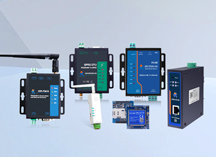
Taking USR-TCP232-304 as an example, its working principle is as follows:
Data collection: Connects to the controller of the CNC machine tool via a serial port to read data such as spindle speed, feed rate, and alarm codes in real-time;
Protocol conversion: Encapsulates serial data into TCP/IP packets, supporting lightweight protocols such as HTTP and MQTT;
Data transmission: Uploads data to the MES system or cloud platform via Ethernet or 4G/5G networks;
Reverse control: Receives instructions from the MES system to adjust equipment parameters or trigger processing tasks.
RS485 to Ethernet converters find extensive applications in CNC data collection, covering core aspects such as production monitoring, quality traceability, and equipment management:
Real-time monitoring: Displays equipment status (running/idle/fault), processing progress, OEE (Overall Equipment Effectiveness), and other indicators through visual dashboards;
Fault warning: Predicts spindle wear, tool life, etc., based on historical data and AI algorithms, triggering maintenance work orders in advance;
Quality traceability: Correlates equipment parameters with product quality inspection data to generate quality reports and support rapid problem localization;
Energy efficiency management: Monitors equipment energy consumption, optimizes processing parameters, and reduces unit product energy consumption costs.
Case Study: A automotive parts manufacturer achieved networked monitoring of 200 CNC machine tools by deploying USR-TCP232-304. After system implementation, equipment fault response time was reduced by 60%, and annual downtime losses decreased by RMB 2 million. By optimizing processing parameters, energy consumption per unit decreased by 15%, saving over RMB 500,000 in annual electricity costs.
USR-TCP232-304 is a new-generation RS485 to Ethernet converter launched by USR IOT for industrial scenarios, featuring core advantages such as:
Ultra-low power consumption design: Consumes less than 0.1W in sleep mode, supports long-term stable operation with solar power systems, and adapts to scenarios without mains power such as remote mountainous areas and wilderness;
Industrial-grade protection: IP67 protection rating, dustproof and waterproof, suitable for harsh environments with high humidity and salt spray; wide temperature design (-40℃~85℃) ensures stable performance under extreme temperatures;
Intelligent power management: Supports DC 9-36V wide voltage input, compatible with various power supply types in industrial settings; dual power supply redundancy design prevents data interruption due to single-point failures;
Strong protocol compatibility: Supports over 200 protocols such as Modbus RTU/TCP, OPC UA, and MTConnect, compatible with mainstream CNC brands such as Siemens, Fanuc, and Haas;
Cloud platform integration: Seamlessly connects to the USR Cloud platform, providing functions such as device management, data storage, and alarm push, and supports remote monitoring via mobile apps.
A precision machining enterprise originally had 50 CNC machine tools with diverse brands and non-uniform protocols, relying on manual data collection, which was inefficient. After deploying USR-TCP232-304:
Protocol adaptation: Quickly matched the communication protocols of different equipment using configuration tools, completing network connection of all equipment within one day;
Data collection: Real-time collection of over 10 key parameters such as spindle speed, feed rate, and processing quantity, with a data accuracy rate of 99.9%;
MES integration: Pushed collected data to the MES system via the MQTT protocol, enabling automatic production scheduling and real-time analysis of equipment utilization;
Cost savings: Reduced the need for two data entry personnel, lowering annual labor costs by RMB 150,000; decreased equipment failure rate by 40% through predictive maintenance, reducing annual maintenance costs by RMB 300,000.
Select devices that support mainstream CNC protocols (e.g., FOCAS, S7, Modbus) to avoid collection failures due to protocol mismatches.
Choose devices with an IP67 or higher protection rating for outdoor or harsh environments, and IP30 or above for indoor equipment.
Prioritize devices with wide voltage input (DC 9-36V) and dual power supply redundancy design to ensure power supply stability.
Support functions such as DI/DO digital input/output and external GPS modules to meet future upgrade needs.
Select devices that support SSL/TLS encryption and access control to prevent data leakage.
In the era of smart manufacturing, CNC data collection has evolved from an "optional configuration" to a "core infrastructure." As the "bridge" connecting equipment to the MES system, the low-power and high-reliability of an RS485 to Ethernet converter directly determine the efficiency and cost of data collection. USR-TCP232-304, with its industrial-grade design, intelligent power management, and strong protocol compatibility, has become the preferred solution for numerous manufacturing enterprises.