How does the "triple electromagnetic shielding protection" of industrial 4G routers ensure power grid communication security and achieve precise traceability under the threat of electromagnetic pulse attacks?
In today's world, where digitalization and intelligence are deeply integrated, the power grid, as the lifeblood of national energy, directly relates to the stable operation of the socio-economy and the tranquility of people's lives. However, with the potential threat of electromagnetic pulse (EMP) attack technology becoming increasingly prominent, power grid communication systems face unprecedented challenges. EMP attacks can release a powerful electromagnetic field in an extremely short time, causing devastating damage to electronic equipment, leading to communication interruptions, data loss, and even the paralysis of the entire power grid. In this context, the "triple electromagnetic shielding protection" technology of industrial 4G router has emerged as a key defense line to ensure power grid communication security and achieve precise traceability. This article will delve into this technology, gain insight into the psychology of customers before use, empathize with their pain points, and explore how to solve these challenges through innovative technologies.
Electromagnetic pulse attacks, a non-kinetic weapon method that utilizes high-energy electromagnetic waves to destroy electronic equipment, are astonishing in terms of their rapid energy release and immense destructive power. They can generate an electric field strength of tens of thousands of volts per meter within microseconds, sufficient to penetrate the protective layers of ordinary electronic equipment and directly affect internal circuits, causing severe consequences such as component burnout, data loss, and system crashes. For power grid communication systems, EMP attacks not only disrupt real-time data transmission but may also sever the connection between the monitoring center and field equipment, plunging power grid operations into a "blind spot" and increasing the risk of accidents.
Faced with the potential threat of EMP attacks, operation and maintenance personnel and managers of power grid enterprises inevitably feel anxious and uneasy. They understand that once the communication system is attacked, it will not only result in economic losses but may also trigger social panic, affecting corporate image and industry reputation. Therefore, they urgently need a solution that can effectively resist EMP attacks and ensure communication security. However, with a plethora of products on the market and complex technical parameters, choosing a truly reliable and practical industrial 4G router has become a significant challenge for them.
The safe and stable operation of power grid communication systems not only concerns the continuity of power supply but also directly impacts multiple sectors of the socio-economy. Under the shadow of EMP attacks, power grid enterprises must not only ensure the security of communication systems but also consider their operational efficiency. This means they need an industrial 4G router that can effectively shield against EMP interference while guaranteeing data transmission speed and accuracy. However, reality often falls short of expectations, as many products struggle to find a balance between security and efficiency, leaving power grid enterprises in a dilemma when making choices.
The first layer of protection for industrial 4G routers is the physical shielding layer, which is made of highly conductive materials (such as copper and aluminum) and can effectively absorb and reflect EMP energy, reducing its direct impact on internal circuits. The design of the physical shielding layer must consider the conductivity, thickness, and integrity of the material to ensure stable shielding effects under EMP attacks. Additionally, the physical shielding layer must possess good heat dissipation performance to prevent a rise in temperature due to prolonged operation from affecting the shielding effect.
Circuit-level protection is the second line of defense for industrial 4G routers, enhancing the device's resistance to EMPs by incorporating electromagnetic compatibility (EMC) technology into circuit design. This includes using filtering circuits, transient voltage suppressors (TVSs), and other components to purify input signals and eliminate potential electromagnetic interference. Simultaneously, optimizing circuit layout and wiring reduces electromagnetic coupling and radiation, minimizing the impact of EMPs on the circuit. The design of circuit-level protection must fully consider factors such as the spectral characteristics, energy intensity, and duration of EMPs to ensure effective protection in various attack scenarios.
Software-level protection and intelligent monitoring constitute the third, and most intelligent, layer of protection for industrial 4G routers. Leveraging advanced software algorithms and artificial intelligence technology, they monitor and analyze communication data in real-time, promptly detecting and isolating abnormal signals to prevent EMP attacks from damaging data. Meanwhile, software-level protection can continuously optimize protection strategies through intelligent learning algorithms, enhancing the device's adaptability to unknown EMP attacks. Additionally, the intelligent monitoring system provides real-time feedback on the device's operational status and protection effects, offering decision support to operation and maintenance personnel and ensuring the continuous safe operation of power grid communication systems.
After an EMP attack, quickly locating the attack source, assessing the scope of damage, and taking effective measures for repair are crucial to restoring the normal operation of power grid communication systems as soon as possible. Precise traceability technology can accurately identify the location and type of the attack source through feature analysis of attack signals and tracking of propagation paths, providing strong evidence for subsequent emergency response and legal accountability.
As one of the core devices in power grid communication systems, industrial 4G routers play a vital role in precise traceability. They not only record communication data in real-time but also capture and analyze abnormal signals through built-in intelligent monitoring systems. During an EMP attack, industrial 4G routers can swiftly identify the characteristics of the attack signal and upload them to the monitoring center for analysis and processing. Meanwhile, by combining the power grid's topological structure and historical data, industrial 4G routers can assist the monitoring center in tracking the propagation path of the attack signal and ultimately locate the attack source.
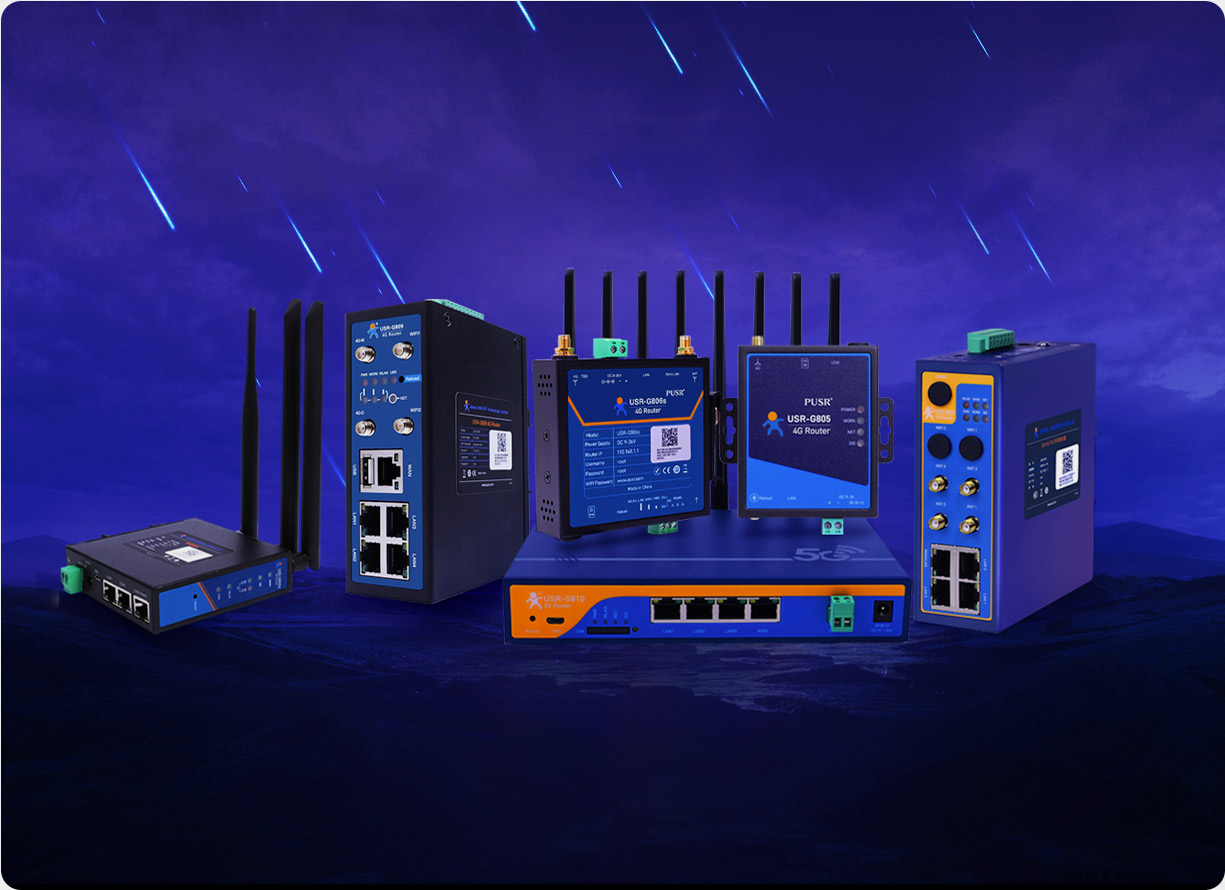
Among numerous industrial 4G routers, the USR-G806w stands out with its exceptional electromagnetic shielding performance and precise traceability capabilities. It adopts advanced "triple electromagnetic shielding protection" technology to ensure stable communication and data integrity under EMP attacks. Additionally, the USR-G806w incorporates an intelligent monitoring system that captures and analyzes abnormal signals in real-time, providing strong support for precise traceability. In practical applications, the USR-G806w has successfully helped multiple power grid enterprises quickly locate EMP attack sources, effectively reducing the impact of attacks on power grid communication systems.
A power grid enterprise in a certain region has recently faced frequent threats from EMP attacks, resulting in interruptions in some communication lines and obstructed data transmission. To ensure the safe and stable operation of its power grid communication system, the enterprise decided to introduce industrial 4G routers equipped with "triple electromagnetic shielding protection" technology.
After market research and product comparison, the enterprise ultimately chose the USR-G806w industrial 4G router as the core device for its power grid communication system. The USR-G806w not only exhibits outstanding electromagnetic shielding performance but also enables precise traceability through its intelligent monitoring system. During deployment, the enterprise reasonably planned the installation locations and quantities of USR-G806w routers based on the power grid's topological structure and communication requirements, ensuring comprehensive coverage and efficient operation of the communication system.
Since the deployment of the USR-G806w, the communication system of the power grid enterprise in the region has not suffered any damage from EMP attacks. Meanwhile, through real-time feedback and precise traceability functions of the intelligent monitoring system, the enterprise can promptly detect and address potential electromagnetic interference issues, ensuring the continuous safe and stable operation of the power grid communication system. Additionally, the ease of use and reliability of the USR-G806w have received unanimous praise from the enterprise's operation and maintenance personnel.
As an invisible killer of power grid communication security, the threat of EMP attacks cannot be ignored. However, by introducing industrial 4G routers equipped with "triple electromagnetic shielding protection" technology, such as the USR-G806w, we can effectively resist EMP interference and destruction, ensuring the safe and stable operation of power grid communication systems. Meanwhile, the application of precise traceability technology provides us with the ability to quickly locate attack sources, assess the scope of damage, and take effective measures for repair. In future development, we will continue to explore and innovate, co-building a new chapter in intelligent protection and safeguarding power grid communication security.