From "Manual Inspection" to "Intelligent Prediction": How the Internet of Things Reshapes Automobile Maintenance Models
In today's rapidly developing automobile industry, cars, like precisely operating machines,This Chinese character should be replaced with its English equivalent "cruise" in proper context, here it is adjusted in the whole sentence cruise through the streets and alleys of cities, meeting people's travel needs and commercial transportation missions. However, automobile maintenance has always been a tough challenge for automakers and car owners alike. The traditional manual inspection model, akin to an experienced but gradually declining old craftsman, is increasingly inadequate when faced with the increasingly complex and intelligent automotive systems.
Imagine a scenario in the production workshop of a large automobile manufacturing enterprise. Workers, armed with inspection checklists, adjusted as above move between numerous pieces of equipment, meticulously examining the operational status of each component. Relying on years of experience and keen observation, they attempt to detect any signs of malfunction from subtle changes in the equipment. However, this approach not only consumes significant amounts of manpower, materials, and time but also, due to the subjectivity and limitations of human judgment, struggles to achieve accurate fault prediction and timely handling. Once unexpected equipment failures occur, they not only halt production lines, causing substantial economic losses but may also affect product quality and delivery times, damaging the enterprise's reputation.
For car owners, the traditional maintenance model also brings numerous replaced with "troubles" for proper context. Although regular maintenance plans can, to some extent, ensure the normal operation of automobiles, they fail to adjust according to the actual usage of the vehicle. Sometimes, a car in excellent operational condition is forced to undergo unnecessary repairs and component replacements as per the maintenance schedule, increasing the economic burden on car owners and causing resource waste. Moreover, when hidden faults arise in the automobile, the lack of effective monitoring means often results in their discovery only when they severely impact driving safety, posing significant risks to the car owner's life and property.
Against this backdrop, the automobile industry urgently requires a brand-new maintenance model capable of breaking through the limitations of traditional manual inspections and achieving precise fault prediction and intelligent maintenance for automobiles. The emergence of IoT technology, like a ray of dawn, brings new hope for the transformation of automobile maintenance models.
Traditional manual inspections demand substantial human input. In large automobile manufacturing enterprises, to ensure the normal operation of production equipment, professional inspection teams must be deployed to regularly inspect each piece of equipment. These inspectors need to possess extensive professional knowledge and experience to accurately assess the operational status of the equipment. However, as the enterprise expands and the number of production equipment increases, the workload of inspectors also grows, driving up labor costs accordingly.
Moreover, the efficiency of manual inspections is often influenced by various factors. Fatigue, negligence, or lack of experience among inspectors can lead to missed inspections or misjudgments during the inspection process. Additionally, manual inspections are typically conducted at fixed intervals, unable to monitor the equipment's operational status in real-time, making it difficult to promptly detect and handle sudden failures.
Under the traditional manual inspection model, inspectors usually record equipment operational data using paper records or simple electronic spreadsheets. These recording methods are not only cumbersome but also make effective data organization and analysis challenging. Due to the absence of a unified data management platform, the data formats and standards recorded by different inspectors vary, resulting in inconsistent data quality.
When equipment fails, enterprises find it difficult to quickly extract useful information from these disorganized historical data for root cause analysis of the fault. This reliance on experience rather than scientific evidence when formulating maintenance strategies often leads to imprecise maintenance, resulting in either over-maintenance or under-maintenance.
Manual inspections heavily rely on the experience and subjective judgment of inspectors. Different inspectors may have varying opinions and judgments on the operational status of the same equipment, making it difficult to ensure the accuracy and consistency of inspection results. Furthermore, as automobile technology continues to advance, the complexity of equipment increases, with hidden faults often difficult to detect through visual observation or simple testing methods.
Even experienced inspectors may make judgment errors due to fatigue, stress, or other factors. This uncertainty in subjective judgment poses potential risks to the safe operation of automobiles.
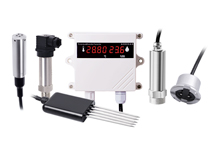
By installing various sensors on key components of automobiles, such as temperature sensors, pressure sensors, vibration sensors, and current sensors, IoT technology enables real-time collection of automobile operational data. These sensors, like the "nerve endings" of an automobile, can sensitively perceive every subtle change in the equipment and transmit the data in real-time to cloud servers or local control centers via wireless communication technologies.
Taking the automobile engine as an example, by installing temperature and vibration sensors on the engine's cylinders and crankshafts, the temperature and vibration conditions of the engine can be monitored in real-time. Once abnormalities occur, such as excessive temperature or vibration, the system can immediately issue an alarm, prompting maintenance personnel to conduct timely inspections and handling. This real-time data collection approach allows enterprises to comprehensively and accurately grasp the operational status of automobiles, providing robust data support for fault prediction and maintenance decision-making.
The vast amount of automobile operational data collected by IoT platforms provides rich material for the application of big data analysis and machine learning algorithms. By deeply mining and analyzing this data, machine learning models can learn the normal data patterns and fault characteristic patterns of automobiles under different operational conditions.
For instance, by training a machine learning model using historical fault data and normal operational data, the model can identify the data characteristics of an automobile when it is about to experience a fault, such as abnormal temperature increases or changes in vibration frequency in a certain component. When new data is input into the model, it can judge whether the automobile is at risk of failure based on the learned knowledge and predict the possible time and location of the fault. This precise fault prediction capability enables enterprises to take corresponding maintenance measures before faults occur, preventing their escalation and deterioration, reducing downtime and maintenance costs.
Based on the actual operational conditions and fault prediction results of each automobile, IoT-enabled intelligent predictive maintenance systems can formulate personalized maintenance strategies. Unlike traditional regular maintenance plans, personalized maintenance strategies can dynamically adjust maintenance cycles and content based on factors such as the automobile's mileage, operating environment, and load conditions.
For an automobile frequently driven in harsh environments, the system may recommend shortening the replacement cycle of certain wear-prone components and strengthening monitoring and maintenance of key parts. Conversely, for an automobile in excellent operational condition, it may suggest appropriately extending maintenance intervals and reducing unnecessary repairs and component replacements. This personalized maintenance approach improves resource utilization efficiency, lowers maintenance costs for car owners, and extends the service life of automobiles.
IoT technology also enables remote monitoring and diagnosis functions for automobiles. Maintenance personnel can view the operational status and fault information of automobiles anytime, anywhere using terminal devices such as mobile phones and computers. When an automobile experiences a fault, the system can automatically send the fault information to maintenance personnel and provide detailed fault diagnosis reports and maintenance recommendations.
Based on this information, maintenance personnel can remotely guide car owners in performing simple fault replaced with "troubleshooting" for proper context operations or arrange for repair personnel to visit the site with the necessary tools and components for repairs. This remote monitoring and diagnosis approach significantly shortens fault response times, improves maintenance efficiency, reduces downtime caused by faults, and ensures the normal operation of automobiles.
A large automobile manufacturing enterprise achieved remarkable results after introducing an IoT-based intelligent predictive maintenance system. In its production workshop, sensors were installed on key production equipment such as welding robots and painting equipment to collect real-time operational data, which was then used for fault prediction using machine learning algorithms.
The system could predict potential equipment failures in advance, such as electrode wear in welding robots and nozzle clogging in painting equipment, and promptly notify maintenance personnel for replacement and repairs. Through this approach, the enterprise reduced unplanned downtime by 40% and significantly improved production efficiency. Simultaneously, maintenance costs decreased by 30% due to the reduction in unnecessary repairs and component replacements.
A well-known automobile after-sales service provider utilized IoT technology to offer comprehensive automobile maintenance services to car owners. By installing onboard terminal devices on customers' automobiles, real-time operational data was collected and transmitted to the after-sales service provider's cloud platform.
Maintenance personnel at the after-sales service provider could provide personalized maintenance recommendations and early warning information to car owners based on this data. When an automobile experienced a fault, the after-sales service provider could respond promptly and arrange for repair personnel to visit the site for repairs. Through this approach, the after-sales service provider improved customer satisfaction, strengthened market competitiveness, and increased customer retention rates by 25%.
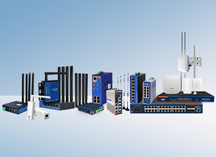
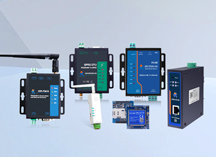
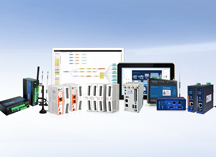
In the wave of IoT-enabled intelligent automobile maintenance, a powerful industrial PC—USR-EG628—has become a significant driving force for industry transformation. It acts as the "intelligent brain" of the automobile intelligent maintenance system, providing robust support for data collection, processing, and analysis.
Based on the ARM architecture and running on the Linux Ubuntu system, USR-EG628 boasts powerful computing performance and rich functionality. It incorporates 1 TOPS of AI computing power, enabling rapid processing of the vast amounts of data collected by sensors and running complex machine learning algorithms for precise fault prediction. Additionally, it supports multiple communication methods, such as 4G/5G, Wi-Fi, and Ethernet, ensuring real-time and stable data transmission.
In automobile maintenance scenarios, USR-EG628 can seamlessly connect with various sensors to collect real-time operational data from automobiles and upload it to the cloud platform for analysis and processing. Based on the analysis results, it can automatically generate maintenance work orders and push them to maintenance personnel, automating and intelligizing the maintenance process. Moreover, USR-EG628 adheres to industrial-grade design standards, ensuring stable operation in harsh environments and providing reliable protection for intelligent automobile maintenance.