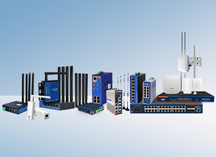
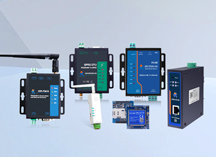
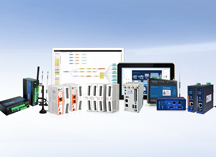
A typical control cabinet on a small to mid-sized production line holds a 24 V power supply, a PLC, an HMI, and one switch tying together the upper computer, servo drives, and field devices. The network is that small, yet quotes for the switch line item alone can range from a couple of hundred yuan to several thousand. In industrial automation communities, this gap comes up again and again, and the question underneath is always the same: cheaper models raise doubts about reliability, while reliable ones seem overpriced. Choosing an Industrial Ethernet Switch is essentially about finding the balance between the two.
Selection errors usually come from lumping two different budgets together.
One budget is reliability: whether the device keeps running, and keeps running for years, under heat, supply fluctuation, electromagnetic interference, dust, and vibration. The other is features: management capabilities such as VLAN segmentation, ring self-healing, port mirroring, and remote management.
The network in a small or mid-sized project usually just links a fixed set of devices statically. The scale is small and the topology does not change. What such projects lack is reliability, not management features. Yet budgets often go the other way around — paying a premium for features that will rarely be used, while leaving little choice on power supply and protection, where it matters most.
Whether a switch is worth its price has little to do with the brand label. Judge it by how it copes with four site conditions.
Heat.Inside a cabinet, temperature is usually higher than ambient — more so in sealed enclosures. A fanless design with an aluminum housing is more reliable than an internal fan, because the fan is the only moving part in the switch, and in dusty environments it tends to be the first component to fail after a few years. A wide-temperature model rated to -40 to +85 °C covers most cabinet environments. A quick field check: when the surface of a closed cabinet is too hot to keep a hand on, assume the air inside runs well above the ambient reading, and size the temperature class accordingly.
Power.On site, a 24 V supply fluctuates, wiring can be reversed, and motor start and stop create surges. Wide-voltage input, redundant dual power, and reverse-polarity and short-circuit protection decide whether the device recovers by itself after a power fault, instead of waiting for someone to visit the site. Recovery after a power interruption matters just as much as surviving the interruption in the first place.
Electrical environment.When a cabinet also holds VFDs and servo drives, interference and induced lightning are the main causes of equipment damage. This is where EMC compliance to an industrial level and surge protection on both the power and network ports matter far more than the look of the enclosure. When long cable runs leave the cabinet, induced energy usually enters through the ports, which is why port-side surge protection is part of the specification to read.
Mounting and lifespan.DIN-rail mounting, IP40 dust protection, a metal housing, and metrics such as MTBF (mean time between failures) determine how the device performs three to five years down the road — invisible at purchase time, and appreciated only after a failure. Datasheets state MTBF in hours; comparing this figure across the shortlist takes little time and says a lot about design intent.
An unmanaged switch is enough in the following cases:
Unmanaged models are plug-and-play. With no configuration interface, there is no misconfiguration to take a network down. The signals that genuinely call for a managed switch are: a large network, ring self-healing requirements, business segments that must be isolated, or remote troubleshooting across distributed equipment — none of which shows up often in small or mid-sized projects.
A practical approach is to turn the requirements into five questions and answer them one by one:
Once these five are answered, the shortlist narrows down quickly. Most small and mid-sized projects reach the same conclusion: an unmanaged, gigabit, wide-temperature switch with dual power and DIN-rail mounting is already sufficient.
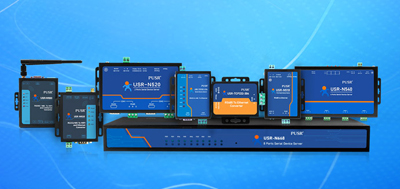
PUSR's USR-ISG series is built exactly along these lines: 5/8/16-port gigabit unmanaged switches that are plug-and-play; a fanless aluminum housing with IP40 protection, operating at -40 to +85 °C; redundant dual power with wide DC input, plus reverse-polarity and short-circuit protection; 6 kV surge protection on both power and network ports; EMC compliance at industrial level 3; and MTBF over 300,000 hours. The series carries 3C, CE, FCC, and RoHS certification, and supports DIN-rail mounting in a compact size. Measured against the five questions above, these specs cover what small and mid-sized projects care about most — environmental tolerance, power safety, and protection rating — without stacking management features that would rarely be used, which is also what keeps the price in a reasonable range.
For a small or mid-sized automation project, the reliability budget for an Industrial Ethernet Switch should go into hardware protection, not into features that sit unused. Check heat, power, electrical environment, and mounting first; decide only then whether management features are worth paying for — and the selection will rarely go wrong.