When selecting an iot router, operating temperature is often the parameter discovered too late. By the time the equipment is installed on-site, you realize the rated temperature range doesn't cover the actual environment. Redeploying and repurchasing means sunk costs.
Temperature selection for iot routers isn't complicated. The core principle is simple:choose equipment based on the site's minimum and maximum temperatures, with some margin built in.
Here's how to do it.
On-site temperatures often exceed what equipment specs claim. Several typical scenarios:
Outdoor deployment in cold regions. Outdoor temperatures of -30°C in northern areas during winter are not uncommon. Standard equipment rated for -20°C will simply go offline at boot.
Installation in hot enclosures. Sealed enclosures with poor heat dissipation run 10-15°C hotter than ambient temperature. When summer ambient reaches 40°C, enclosure interior can hit 55°C. If the equipment's rated maximum is only 70°C, running near the limit continuously affects both lifespan and stability.
Mixed indoor-outdoor deployment. In the same project, some devices go in warm control rooms, others in cold outdoor base stations. Using one equipment model across both scenarios creates problems in the cold installations.
iot router operating temperatures generally fall into three tiers:
-20°C to 70°C: Entry-level industrial temperature, suitable for climate-controlled indoor environments such as server rooms and control rooms. This range covers most temperate regions.
-25°C to 75°C: Mid-range wide temperature, suitable for non-climate-controlled indoor environments like factory floors and warehouses. Handles winter conditions in unheated indoor spaces.
-35°C to 75°C: Full wide temperature, suitable for outdoor deployment or extreme environments. Northern winter outdoors, unheated outdoor enclosures, high-altitude regions.
When selecting, check the site's minimum temperature first, then the maximum, and take the intersection of both.
Check local meteorological data and take the historical minimum. Northern regions should start at least at -30°C; coastal areas may get by with -20°C.
If the device is installed in an insulated enclosure, the internal temperature is typically 5-10°C higher than the outside. You can adjust accordingly. But if the enclosure seal is poor or insulation has degraded, design for external temperature.
Here's a commonly overlooked factor: self-heating from the device itself. iot routers generate heat during continuous operation. Enclosure interior actual temperature = ambient temperature + device self-heating + solar radiation (if applicable).
For sealed enclosures, add an extra 10-15°C margin. If the enclosure has fans or air conditioning, use the ambient temperature directly.
A gap of at least 5-10°C between rated temperature and actual temperature is recommended. Running equipment continuously near its rated limits accelerates component aging and increases failure rates.
Choosing a -35°C to 75°C device for a -30°C environment is safer than choosing a -20°C to 70°C device.
Operating temperature is just one part of industrial-grade design for iot routers. The following designs matter equally:
Wide voltage input. Voltage fluctuations are common in industrial environments. Wide voltage input prevents reboots caused by unstable power supply.
EMC immunity. Electromagnetic interference from frequency converters and motors in factories affects communication stability. High EMC-rated equipment maintains connectivity in these environments.
Hardware watchdog. Device software can fault after extended operation. A hardware watchdog detects and restarts the device automatically, without manual intervention.
Fanless design. Fans are high-failure components. Fanless designs dissipate heat through heatsinks, offering longer lifespan and dust resistance.
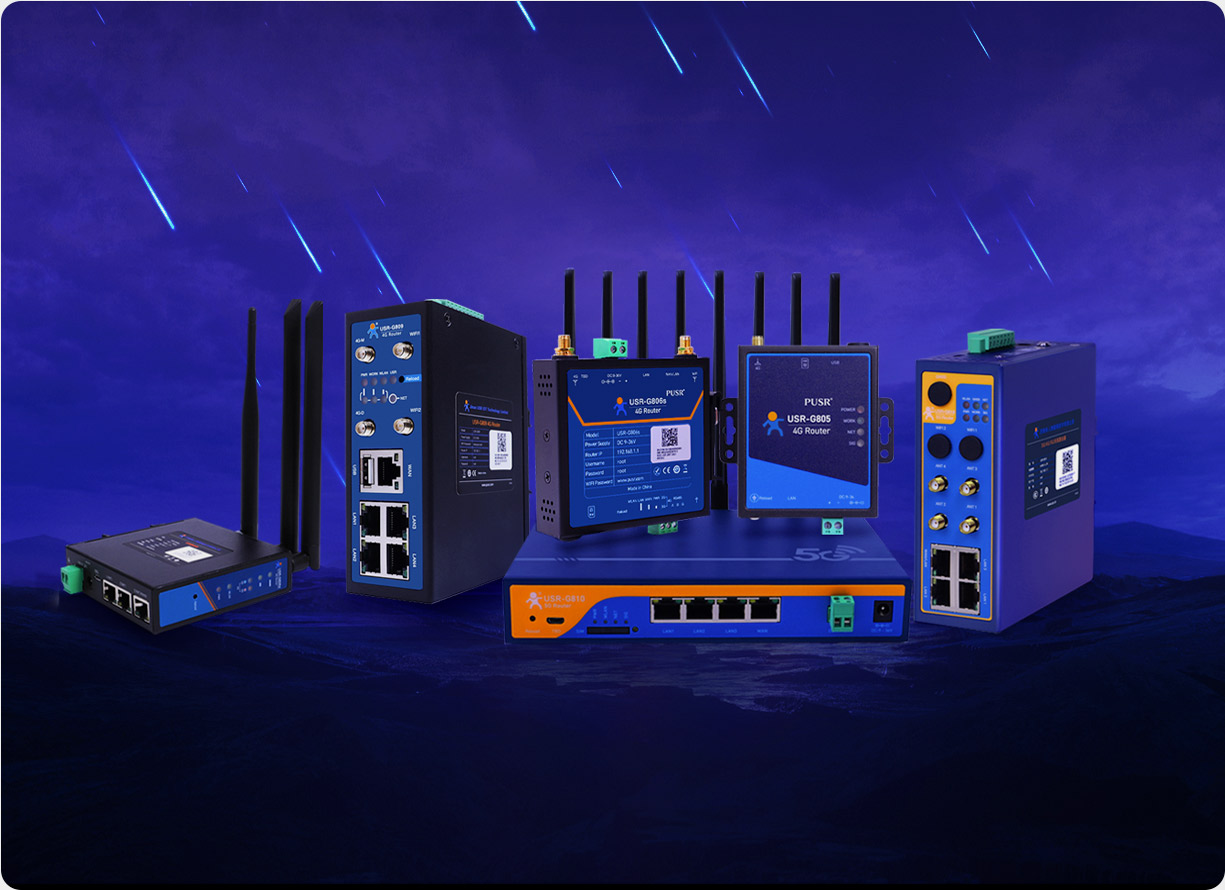
PUSR offers several iot routers covering different temperature needs:
USR-G816 5G IoT Routersupports -35°C to 75°C operating temperature, features a Qualcomm X62 modem, and is suitable for outdoor deployment in cold regions or applications with strict temperature requirements. Industrial-grade design standard including wide temperature, wide voltage, EMC protection, hardware watchdog, and fanless design.
USR-G809s Gigabit Edge Routersuits scenarios requiring throughput and stability, with temperature range -25°C to 75°C, ideal for non-climate-controlled industrial environments.
USR-G806w 4G IoT Routerfeatures a Qualcomm chipset with temperature range -20°C to 70°C, suitable for 4G industrial applications in moderate environments.
You don't need the highest spec for every application. Select the appropriate tier based on actual temperature requirements. Adequate temperature margin and proper industrial-grade design matter more than spec stacking.
The core logic for iot router temperature selection:
Get these steps right, and temperature selection won't go wrong.
Standard home or commercial routers are designed for 0°C to 40°C operating temperature, suitable for air-conditioned environments. iot routers use wide-temperature design with operating ranges as low as -35°C and as high as 75°C or beyond, enabling stable operation in uncontrolled industrial environments and outdoor settings.
A wider temperature range indicates the device can withstand harsher environments, but doesn't directly translate to better overall performance. Performance also depends on processor, memory, network interfaces, wireless communication capability, and multiple other dimensions. Temperature range is merely a baseline requirement for industrial-grade equipment and should be evaluated alongside specific application scenarios.
Low temperature primarily affects batteries (if any), LCD screens (if any), response speed of electronic components, and material brittleness. The main risks for iot routers at low temperatures include difficulty booting, slower communication module response, and brittle enclosures and interface materials. Wide-temperature designs solve these issues by selecting components and materials with better low-temperature characteristics.
High temperature primarily accelerates electronic component aging and reduces equipment lifespan. Semiconductor component failure rates increase exponentially at high temperatures. High temperature also reduces heat dissipation efficiency, creating a vicious cycle. iot routers handle high temperatures through fanless heat dissipation design, large-area heatsinks, and high-temperature-rated components.
A minimum margin of 5-10°C is recommended. If equipment operates continuously near its rated limit temperature, component aging accelerates significantly and failure rates rise. For example, if the site minimum is -25°C, choose a device with a rated minimum of -30°C or lower.
Check historical meteorological data for the application location to get extreme minimum and maximum temperatures. If the device is installed indoors with climate control (e.g., server room, control room), -20°C to 70°C is usually sufficient. If installed indoors without climate control (e.g., factory floor, warehouse), -25°C to 75°C is recommended. If installed outdoors or in extreme environments, choose -35°C to 75°C or a wider range.
Industrial-grade design typically includes: wide operating temperature range, wide voltage input support, high EMC immunity rating, hardware watchdog (automatic recovery), fanless design (dust and vibration resistant), and industrial-standard protection ratings (such as IP30 or higher). These designs work together to ensure long-term stable operation in harsh industrial environments.
In iot router applications, the core advantage of iot routers over standard cellular routers lies in environmental adaptability and long-term stability. Industrial-grade design enables stable operation in uncontrolled industrial sites, outdoors, and extreme temperatures, while standard routers only suit air-conditioned environments. iot routers typically require 7×24 hours uninterrupted operation, and industrial-grade design significantly reduces failure rates and maintenance costs.