The Call You Fear Most Isn't "The Device Is Broken" — It's "The Data Is Gone"
Preface: This Article Is Not Written for Engineers
Who Is This Article For?
It's for the project manager woken up at 3 AM by a phone call. It's for the O&M supervisor staring at a blank screen on the client's big display with no idea how to explain it. It's for the power station owner who spent money building a system but always feels like "something is off."
You don't lack technical solutions. What you lack is someone telling you: your anxiety is valid, and there is a fix.
After years in distributed energy, I've noticed a pattern: what really keeps you up at night is never equipment failure. Broken equipment has spare parts, vendors, and procedures.
What really breaks you is "not knowing."
The call you fear most isn't "the transformer blew up" — it's one of these five:
The first: "Boss Zhang, the data from Rooftop Station #3 has been down for three days."
Three days. Not three hours. Not thirty minutes. Three days.
You ask why he's only telling you now. He says: "I thought it was normal fluctuation."
The second: "The client came for inspection. Half the sites on the big screen are gray."
You stand there, sweat running down your back. The client didn't blow up, but that expression is worse than anger — he's thinking: "Can I trust this person?"
The third: "I went to the site. The industrial wireless router is fried."
Wind turbines on the mountain, energy storage in the basement, solar panels on the roof. You sent someone out — the equipment is still alive, but the industrial wireless router has overheated and died. All data cut off, no backup whatsoever.
The fourth: "The grid operator says your data doesn't meet standards. Subsidy suspended this month."
You thought data was always transmitting. Turns out it was down for two weeks in the middle — and you had no idea.
The fifth, and the scariest: "I suddenly realized I have no idea what my power station is actually doing."
No real-time data, no alerts, no early warnings. You own tens of millions in assets, but you understand them less than you understand your home air conditioner.
How many of these five moments have you lived through?
If more than two — your data is being "collected," but not collected well. If all five —
You're not operating a power station. You're gambling.
Most people blame data collection failures on "bad people" — sloppy O&M, wrong solution choice, cheap equipment.
Wrong.
People are the last link. If the road ahead is paved wrong, no amount of effort helps.
Let's do a thought experiment.
Suppose your distributed energy project has 100 data collection points: 30 on rooftops, 50 on mountaintops, 20 in basements.
Your current architecture most likely looks like this: each point has a standard 4G router. Data goes from the industrial wireless router to the public internet, from the internet to the cloud platform, from the cloud platform to your monitoring screen.
This path looks fine. But think carefully —
The rooftop point: 30 inverters are all pumping data into the industrial wireless router at once. A standard router's CPU can't handle it — it starts dropping packets. You don't know packets are being dropped because there's no edge-side judgment. By the time you notice the data looks wrong, three days of data are gone.
The mountaintop point: signal is already weak. A gust of wind triggers a base station handover, and the industrial wireless router disconnects. No watchdog auto-restart, no backup link — it just sits there dead. Next time someone climbs the mountain for inspection — maybe two weeks later.
The basement point: concrete blocks the signal completely. You added an external antenna — it barely connects. But the basement is hot. The standard industrial wireless router overheats and throttles. Data speed drops from 1 Mbps to 100 Kbps. BMS data is already heavy — at this speed, data starts queuing. Queue builds up, router memory overflows, and it crashes.
See? It's not one point that's broken. Every point is broken in its own way.
And your monitoring screen shows "all online."
This is the scariest part: you think everything is fine, but nothing is fine.
Let's start with a mindset shift.
Most people, when choosing a communication solution, think: "I need a industrial wireless router."
Wrong.
You don't need a router. You need a "data collection architecture."
What is a data collection architecture? It means every hop between the sensor and your monitoring screen has someone responsible, a backup, and a judgment.
I break it into three layers:
Layer 1: Field Layer — Can the Data "Get Out"?
This layer solves the "collection" problem. Solar inverters speak Modbus protocol. Wind turbine sensors speak IEC 104. Energy storage BMS speaks CAN bus. These "languages" are all different.
If your industrial wireless router doesn't understand these protocols, the data you collect is garbage — the cloud platform can't parse it, and the screen can't display it.
So the key to Layer 1 isn't "can it connect to the internet?" — it's "can it understand what the equipment is saying?"
This is the biggest difference between an industrial wireless router and a standard router: it has a built-in edge collection engine. Modbus, IEC 104, MQTT — these industrial protocols are parsed directly. What you receive is clean data. No secondary processing needed on the cloud side.
Layer 2: Transport Layer — Can the Data "Arrive"?
This layer solves the "communication" problem.
Rooftops need concurrency handling. Mountaintops need uninterrupted connection. Basements need signal penetration. Three scenarios, three needs.
But if you use one solution to cover all three, there will always be a weak spot.
The right approach: choose communication strategy by scenario.
Rooftop: 4G dual-card load balancing, max bandwidth, handles concurrency from dozens of inverters.
Mountaintop: 4G + Ethernet dual-link. When signal is weak, switch to wired. When wired drops, switch to the other SIM. There's always a path up.
Basement: external high-gain antenna + edge local storage. When public internet drops, data stores locally first. When network recovers, it auto-uploads. Not a single second lost.
This isn't something a "more expensive router" can fix. This is an architecture design problem.
Layer 3: Management Layer — Once the Data Arrives, Can You "See It"?
This is the layer most people ignore.
You have 100 sites, each with a router. If you have to log into every router to check status, change configs, review logs — you need 100 O&M staff.
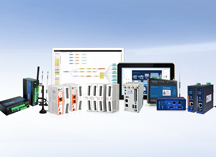
So you need a cloud management platform — one backend that sees all sites: who's online, who's down, who has abnormal traffic, who needs a firmware upgrade.
Not for show — so you know something's about to go wrong before it does.
Now let's revisit those five sleep-stealing moments.
"Data was down for three days and nobody knew" → Edge alerts + cloud management platform. The router locally judges "data interruption exceeds 5 minutes" and pushes an alert immediately. You don't wait three days — you know in five minutes.
"Half the sites on the big screen are gray" → Dual-link + watchdog. Router dies? Auto-restart. Link drops? Auto-switch. Gray sites on the screen go from 50 to 0.
"The router burned out" → Industrial-grade wide-temperature design. Operates normally from -40°C to 75°C, no throttling, no crash. Your O&M staff doesn't need to climb a mountain in a rainstorm to reboot a router.
"Data doesn't meet standards, subsidy suspended" → Edge collection + local storage. Data doesn't wander across the public internet — no packet loss, no distortion. Every data point has a timestamp, a source, and a checksum. When the grid operator pulls it, it's crystal clear.
"I have no idea what the power station is doing" → Cloud management platform + real-time big screen. 100 sites, one backend, all online, all visible. You don't need to guess. You just look.
See? Same problem, different architecture — completely different answers.
In distributed energy, the biggest pain isn't technical difficulty — it's uncertainty.
You're not sure if the data arrived. You're not sure if the equipment is still alive. You're not sure if the big screen will be green or gray when the client comes to inspect tomorrow.
This uncertainty slowly eats away at your confidence. You stop making promises to clients. You stop putting your reputation on the line with your boss. You stop posting about your projects on social media.
But you shouldn't have to.
The power station you spent tens of millions building deserves to be properly "seen." How much power each solar panel generated, how many rotations each turbine made, how much energy each battery stored — this data isn't "nice to have." It's your asset proof, your O&M basis, your revenue source.
You don't need a more expensive solution. You need a solution that lets you sleep at night.
An industrial wireless router isn't some high-tech magic. It's the thing that helps you pull data from rooftops, mountaintops, and basements — piece by piece — and deliver it to you, safely and steadily.
It's not flashy. But it's solid.
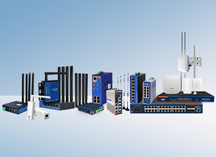
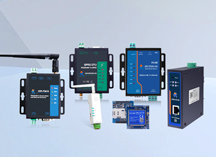
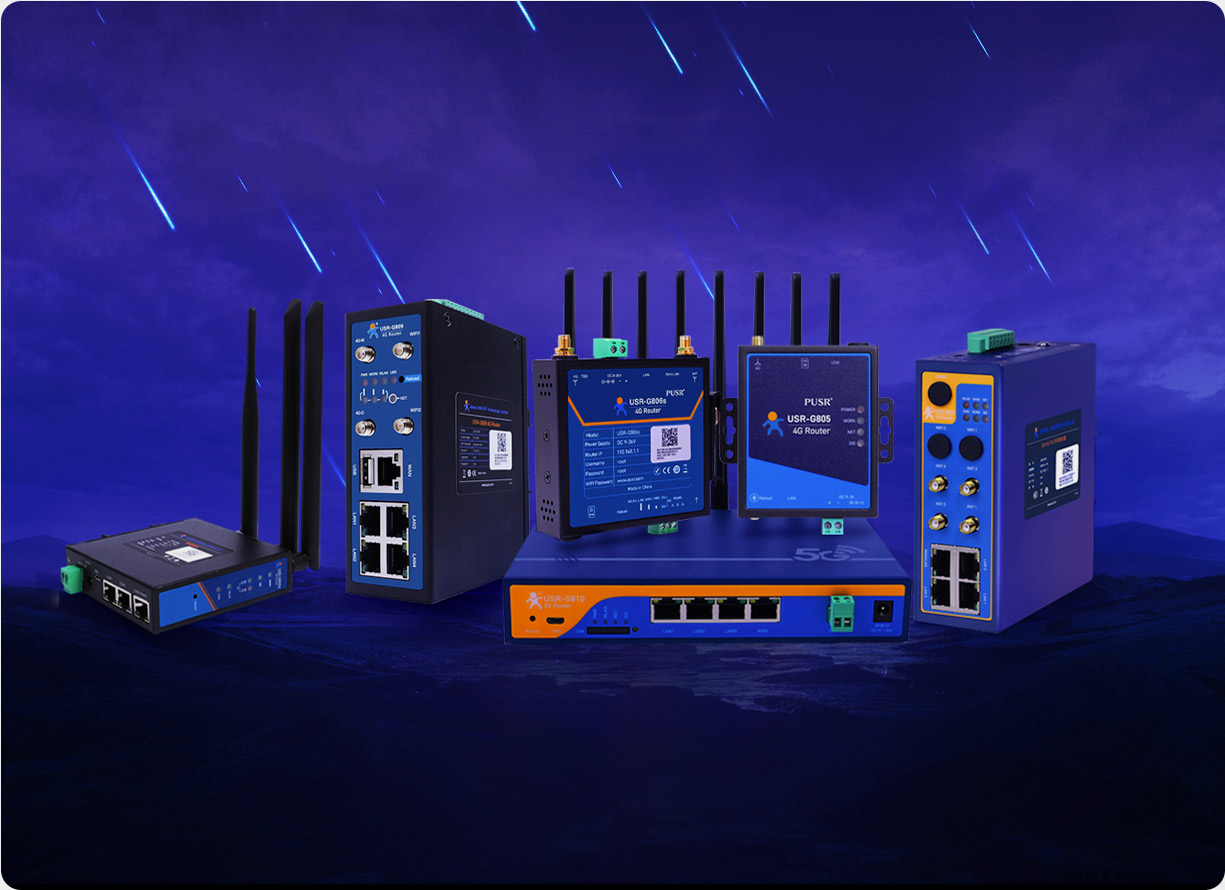
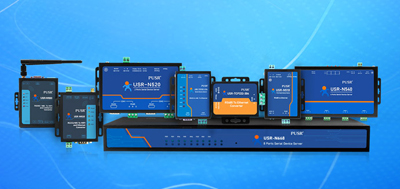
If you're building a data collection architecture, take a look at the USR-G806w. Dual-card 4G, edge collection, watchdog, cloud management — works on rooftops, mountaintops, and basements. The price is reasonable too. It's not the only choice, but at this price point, something that does all of this well is rare.
Of course, it ultimately depends on your own scenario. How many points, what protocols, what budget — you know these better than anyone. If the specs match, go for it. If they don't, keep looking.
Don't settle. Because your power station shouldn't be running blind.