In-Depth Analysis of the Synchronization Mechanism Between Industrial Gateway and Alibaba Cloud Link Platform's Device Shadow Service
In the rapid development of the Industrial Internet of Things (IIoT), efficient collaboration between devices and the cloud has become a core requirement for enterprises' digital transformation. However, prevalent issues in industrial settings, such as unstable networks, offline devices, and concurrent access by multiple systems, result in challenges like data synchronization delays and lost control commands, severely restricting production efficiency and intelligence levels. The deep integration of Alibaba Cloud Link Platform's Device Shadow service with industrial gateway provides an innovative solution to these challenges. This article will offer an in-depth analysis of the synchronization mechanism of the Device Shadow service from three dimensions: technical principles, application scenarios, and implementation paths. It will also explore how the industrial gateway USR-M300 enhances the value of this mechanism through its edge computing capabilities.
The Device Shadow is a lightweight state management service provided by Alibaba Cloud Link Platform. It is essentially a virtual device mirror in JSON format, comprising three key areas:
Desired Area: Stores device control commands issued by cloud applications (e.g., temperature setpoints).
Reported Area: Records the last reported real-time status of the device (e.g., current temperature values).
Metadata Area: Records metadata such as timestamps and version numbers of state changes.
Each physical device has one and only one Device Shadow in the cloud, achieving bidirectional synchronization through the MQTT protocol. When the device is online, the Desired commands are directly sent to the device; when the device is offline, the commands are temporarily stored in the shadow and automatically synchronized upon reconnection.
State Consistency Amid Network Fluctuations
In scenarios such as mines and oil and gas fields, network interruptions are common. The Device Shadow ensures that cloud commands are not lost during device offline periods through a local caching mechanism. For example, a monitoring system for oilfield pumping units previously experienced 48 hours of data loss due to network failures. After adopting the Device Shadow, even after 72 hours of offline operation, the device could still fully recover historical commands and states upon reconnection.
Decoupling of Concurrent Access by Multiple Systems
In traditional modes, when multiple cloud applications (e.g., MES, SCADA) simultaneously request device status, the device must respond repeatedly, leading to increased load. The Device Shadow reduces device load by 90% through a "one-time report, multiple reads" mechanism. In a welding robot monitoring system at an automobile factory, the Device Shadow reduced the daily response count for a single device from 120,000 to 12,000, significantly improving system stability.
Command Timeliness and Security
The Device Shadow adds timestamps and version numbers to each command to ensure that expired commands are not executed. For example, if a temperature control command for a reactor in a chemical enterprise exceeds its preset validity period (e.g., 5 minutes), the Device Shadow automatically discards the command to prevent production accidents.
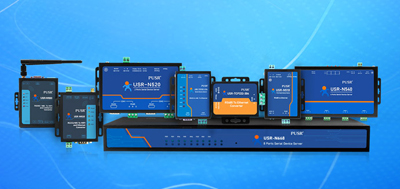
The USR-M300 is a high-performance, scalable edge gateway whose technical characteristics highly complement the Device Shadow service:
Protocol Compatibility: Supports over 30 industrial protocols, including Modbus RTU/TCP, OPC UA, and S7comm, enabling seamless integration with mainstream PLCs such as Siemens S7-1200 and Mitsubishi FX5U.
Edge Computing Capability: Equipped with a 1.2GHz quad-core processor and 2GB of memory, it can process over 2,000 data points in parallel and supports local AI inference (e.g., YOLOv5 object detection model inference speed reaches 30 frames per second).
Network Reliability: Features WAN/LAN + 4G dual-link backup with link detection and automatic switching, achieving 99.95% network availability.
Local State Caching and Preprocessing
The USR-M300 can maintain a local "edge shadow" of device states, performing filtering, aggregation, and other preprocessing on sensor data before uploading it to the cloud. For example, in a blast furnace monitoring project at a steel enterprise, the USR-M300 increased the compression rate of raw data from 12 types of devices to 65%, reducing invalid data uploads and lowering cloud load.
Local Execution of Offline Commands
When the network is interrupted, the USR-M300 can parse Desired commands from the Device Shadow and execute control logic locally. For example, in a wind turbine vibration monitoring system at a wind farm, the USR-M300 could still trigger alarms and initiate protection mechanisms based on shadow commands during offline operation, preventing equipment damage.
QoS Strategy Optimization
The USR-M300 supports three levels of MQTT QoS (0/1/2) and can dynamically adjust transmission strategies based on command priority. Critical control commands use QoS 2 to ensure reliable delivery, while status report data uses QoS 0 to reduce network overhead. A semiconductor manufacturer reduced firmware upgrade time from 2 hours to 15 minutes using this strategy.
Scenario Pain Points: Wind turbines in wind farms are widely distributed with insufficient network coverage. Traditional cloud-based analysis suffers from high latency, resulting in low accuracy in fault prediction.
Solution:
Edge Side: The USR-M300 collects 12 types of parameters from wind turbines, such as vibration and temperature, and performs anomaly detection locally using an LSTM model every 5 minutes.
Cloud Synchronization: Detection results are reported through the Reported area of the Device Shadow, and maintenance commands are received through the Desired area from the cloud.
Implementation Effect: Fault prediction accuracy reached 92%, unplanned downtime was reduced by 65%, and annual maintenance costs were reduced by RMB 2 million.
Scenario Pain Points: The production line speed reaches 30 pieces per minute, and cloud-based inference delays result in a high rate of missed detections.
Solution:
Edge Side: The USR-M300 connects to industrial cameras and deploys a YOLOv5 model for real-time defect detection, achieving an inference speed of 30 frames per second.
Cloud Synchronization: Detection results are synchronized to the MES system through the Device Shadow, and quality inspection parameter adjustment commands are received through the Desired area.
Implementation Effect: The missed detection rate was reduced from 5% to 0.8%, and quality inspection labor costs were reduced by 70%.
Hardware Preparation: Configure the USR-M300 gateway with WAN/LAN + 4G dual-link support and integrate 2 DI/DO ports, 2 AI ports, and RS485 interfaces.
Protocol Integration: Use the USR-M300's graphical programming tool to configure the Modbus TCP protocol and map wind turbine vibration sensor data to virtual registers.
Shadow Configuration: Create a Device Shadow on Alibaba Cloud Link Platform and define Desired (e.g., vibration threshold) and Reported (e.g., current vibration value) fields.
Edge Logic Development: Use the USR-M300's Python SDK to write local inference scripts. When the vibration value in the Reported area exceeds the threshold in the Desired area, trigger a local alarm and report to the cloud.
With the maturity of digital twin technology, the Device Shadow service is evolving from single-state management to full-element simulation. The deep integration of the USR-M300 with Alibaba Cloud Link Platform can construct a three-dimensional digital model encompassing device status, production processes, and energy consumption. For example, an automobile assembly plant achieved a reduction in capacity prediction error rate from 15% to 3% and shortened order delivery cycles by 20% using this solution.
Contact PUSR to obtain customized edge-cloud collaborative solutions tailored to your industry. Our technical team will provide:
On-site working condition assessments and device selection recommendations;
Deployment architecture design and ROI calculations;
A 72-hour response after-sales support system.
Let the Device Shadow and edge computing become the core engines of your digital transformation, ushering in a new era of industrial intelligence!