When equipment is installed in control cabinets near machine tools, fans, or conveyor belts, standard networking gear tends to develop problems over time. Vibration loosens ports, degrades card connections, and cracks solder joints through fatigue. These failures don't appear suddenly—they accumulate day by day. Industrial IoT gateway are designed with this reality in mind.
Common vibration sources in factory workshops include:
This vibration travels through equipment bases to the installation point and ultimately affects the gateway inside the control cabinet. Standard networking gear is designed for office environments with low seismic ratings and ports lacking additional locking mechanisms. After long-term operation, typical issues include:
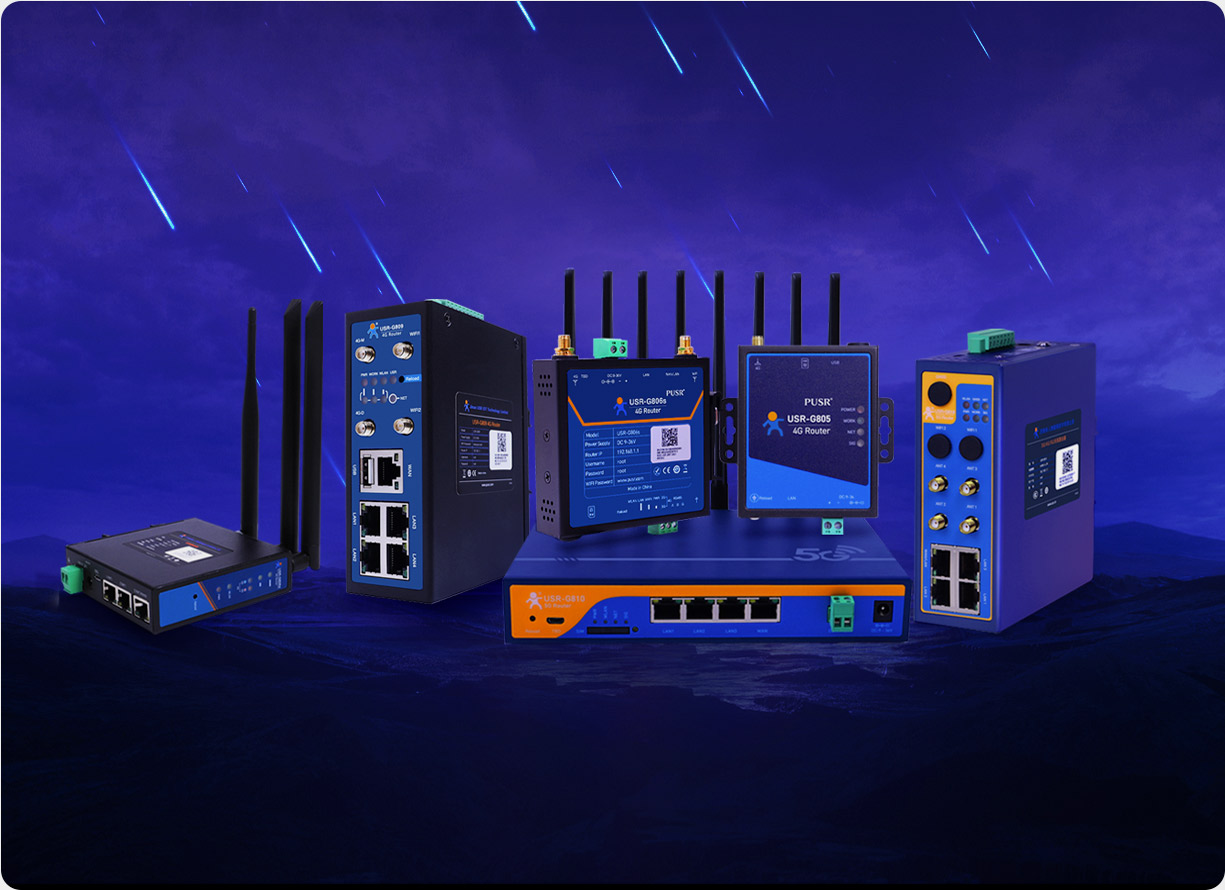
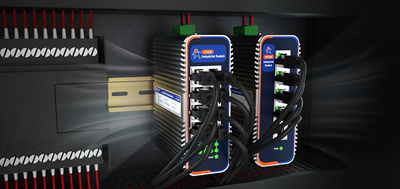
The enclosures and mounting methods of industrial IoT gateways are reinforced for vibration-prone environments. Mainstream products like the USR-M300 support both DIN rail mounting and wall mounting. Rail mounting clips provide additional mechanical locking force, preventing equipment displacement caused by vibration. The metal enclosure and internal component mounting strength exceed that of standard networking equipment.
Reliable products require EMC (Electromagnetic Compatibility) certification and anti-seismic testing. The USR-M300 meets IEC6000 standards with Level 3 EMC protection, meaning the device maintains stable operation in environments where vibration and electromagnetic interference coexist. The operating temperature range of -25~75℃ covers most industrial site conditions.
Single points of failure are costly in vibration-prone environments. Gateways supporting multiple WAN links (wired + 4G/5G) can automatically switch to backup links when the primary link is disrupted by vibration, ensuring uninterrupted data collection. This redundancy is especially critical for production lines running 24 hours a day.
When choosing an industrial gateway for vibration-prone environments, focus on these parameters:
Mounting Method: DIN rail mounting is more reliable than screw fixation. The clip design effectively resists vibration-induced displacement. The USR-M300 supports both DIN rail and wall mounting, allowing flexible selection based on control cabinet space and layout.
EMC Level: Level 3 or higher means the device passed stricter interference resistance testing. The IEC6000 series standards serve as the reference benchmark in industrial applications, with test conditions closer to real vibration environments.
Operating Temperature: Vibration environments often accompany high temperatures, such as positions near fans or compressors. The wide temperature range of -25~75℃ covers the vast majority of industrial scenarios. The USR-M300 uses a dual-core 1.2GHz processor running Linux, maintaining performance without degradation across the wide temperature range.
Power Supply Range: DC 9~36V wide voltage input adapts to voltage fluctuations on industrial sites, reducing additional failure risks caused by unstable power supply.
Industrial IoT gateways do more than solve connectivity issues—they add value in vibration-prone environments. The USR-M300 supports Node-RED graphical programming, can collect up to 2000 data points, and handles Modbus RTU/TCP protocol conversion. In vibration environments, this means the gateway can perform data collection and preprocessing at the edge, reducing dependency on unstable cloud transmission links.
For example, sensor data from a vibrating conveyor line is collected via Modbus RTU to the gateway, where filtering and outlier processing occur at the edge before transmission to the cloud via Ethernet or 4G. Even if the local network experiences brief interruptions due to vibration, data is cached locally and automatically retried when the link recovers.
In vibration-prone industrial IoT applications, gateway selection isn't about choosing the one with the most features—it's about choosing the one built to endure. Structural reinforcement, seismic certification, interface redundancy, wide temperature and voltage tolerance—these seemingly unremarkable parameters determine whether equipment runs stably for three years or fails repeatedly.
Industrial IoT gateways represented by the USR-M300 consider these needs from the design phase. From metal enclosures and DIN rail mounting to IEC6000 certification, wide-temperature operation, and protocol conversion capabilities—they provide a complete solution for vibration-prone environments.