When selecting network communication equipment for industrial sites, many people start by looking at CPU clock speed, memory capacity, and interface count. Once the specs look impressive on paper, the device seems like a solid choice. But when it actually gets installed in a workshop, electrical cabinet, or outdoor enclosure, problems show up—operating temperature goes out of range, power supply becomes unstable, electromagnetic interference triggers reboots.
The difference between an industrial router and a DIY soft router or consumer home router isn't in benchmark scores. It's in deployment environment and reliability design.
DIY soft routers and consumer home routers are designed for office and home environments. Operating temperature is typically 0°C to 40°C, power supply is stable mains electricity, and the electromagnetic environment is relatively clean.
Industrial sites aren't.
Welding workshops can exceed 60°C. Food processing washdown lines use hot water and chemical cleaners. Outdoor enclosures sit in direct sunlight and rain. In these environments, consumer equipment simply doesn't have enough design margin.
A typical case: a manufacturing company installed a self-assembled router in a control cabinet inside a welding workshop. The ambient temperature regularly exceeded 50°C. After prolonged operation, internal temperatures climbed further, system stability degraded, and production line communication eventually failed. The device specs weren't the problem—the design environment didn't match the actual operating conditions.
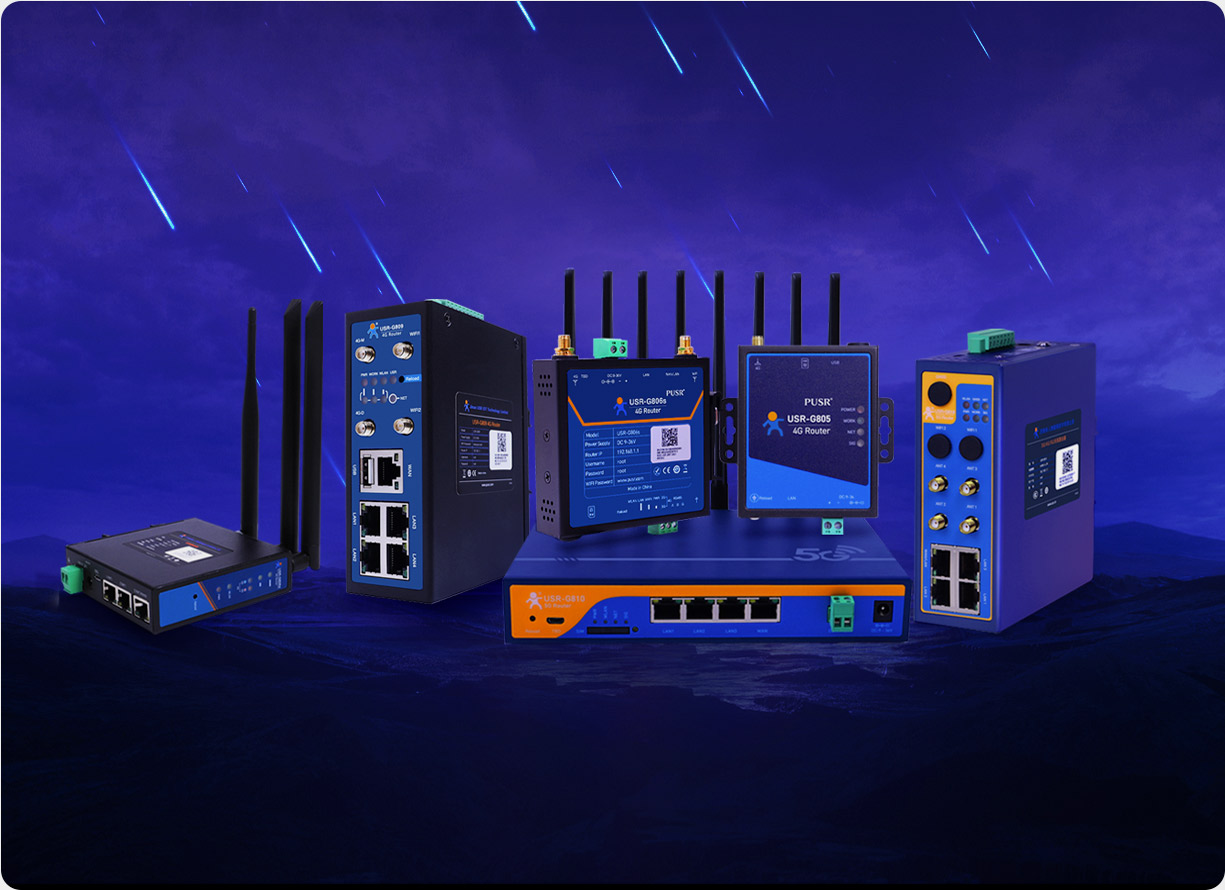
The core principle of an industrial router is stability first, performance second. PUSR's product line covers 4G, 5G, and wired scenarios. Selection by application:
USR-G816 (5G industrial router) operates from -35°C to 75°C. This range covers typical extreme conditions from winter outdoors in northern regions to summer factories in the south. Component selection, chip specifications, and thermal design all target this temperature band.
USR-G806w (4G industrial router) operates from -20°C to 70°C, suitable for most indoor industrial scenarios.
USR-G806w uses a dual watchdog design (hardware watchdog + software watchdog). USR-G816 also includes hardware watchdog functionality. When a hardware watchdog detects a program crash or deadlock, it resets the system automatically, no manual intervention needed.
Industrial equipment is typically unattended. Watchdog functionality lets the device recover itself.
USR-G806w passes industrial EMC tests including surge, electrical fast transient (EFT), and electrostatic discharge (ESD). Welding operations, motor start-stop cycles, and high-power equipment generate electromagnetic interference. The metal chassis and circuit design of industrial routers keep this interference out.
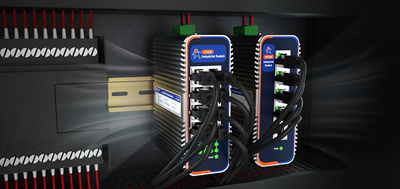
Industrial routers support wide-voltage DC input (9V to 36V), adapting to different power supply conditions on site. DIN rail mounting or wall mounting allows flexible installation in control cabinets, outdoor enclosures, or on walls.
Different scenarios have different network requirements:
Start by checking three hard specs: operating temperature, power supply stability, and electromagnetic compatibility. Once those are met, consider bandwidth and interface count.
When selecting, ask one question first: in what environment will this device operate? The answer filters out half your options immediately.
The main differences span three areas: operating temperature range, electromagnetic compatibility (EMC), and reliability design. Consumer routers are designed for office and home environments with operating temperatures typically 0°C to 40°C. Industrial routers cover -35°C to 75°C or wider ranges and include hardware watchdogs, surge protection, and wide-voltage power supply capabilities.
Yes. Industrial routers with wide temperature design (such as -35°C to 75°C) are specifically built for outdoor and extreme temperature scenarios. Deployment should also account for ingress protection rating (IP30 or higher) and installation location (avoid direct sunlight or direct water exposure).
A hardware watchdog is an independent monitoring circuit that automatically resets the system when it detects a program deadlock or crash, without requiring manual intervention. This is critical for unattended industrial environments, significantly reducing downtime caused by software faults.
EMC testing evaluates a device's stability under strong electromagnetic interference and its interference level to surrounding equipment. Industrial routers typically pass IEC 61000-4 series standards, including electrostatic discharge (ESD), surge, and electrical fast transient (EFT) tests, ensuring stable operation in welding workshops, substations, and similar environments.
Most industrial routers support 9V to 36V wide-voltage DC input, adapting to different on-site power conditions (such as 24V industrial power supplies or 12V vehicle power). This makes them less sensitive to power stability than consumer routers.
It depends on bandwidth requirements. 4G LTE Cat.4 (150Mbps downlink) suits medium bandwidth scenarios like sensor data collection and PLC communication. 5G routers (download speeds from 700Mbps to 1.5Gbps) are appropriate for high bandwidth, low latency scenarios such as video surveillance, AGV scheduling, and AR remote maintenance.
Industrial routers typically support DIN rail mounting (standard DIN rail, inside control cabinets) and wall mounting (fixed to walls or cabinet exteriors). Some models also support embedded installation. Consumer routers are generally designed for desktop placement.
Industrial routers use industrial-grade components and metal chassis design, with MTBF (Mean Time Between Failures) typically exceeding 10,000 hours and a service life of over 10 years.Consumer home routers have a typical design lifespan of 3 to 5 years.