Growing Crops on the Other Side of the World: The Biggest Fear Isn't Natural Disasters — It's Losing Internet
During the 2024 dry season, in Mato Grosso, Brazil, on a 12,000-hectare soybean farm.
Farm owner Carlos stood in the monitoring room, staring at rows of red alerts on the screen — all soil moisture sensors were offline. He picked up the satellite phone and called the on-site manager. The man's voice was torn apart by wind noise: "The equipment… all dead… last month's thunderstorm… seven routers fried…"
Seven.
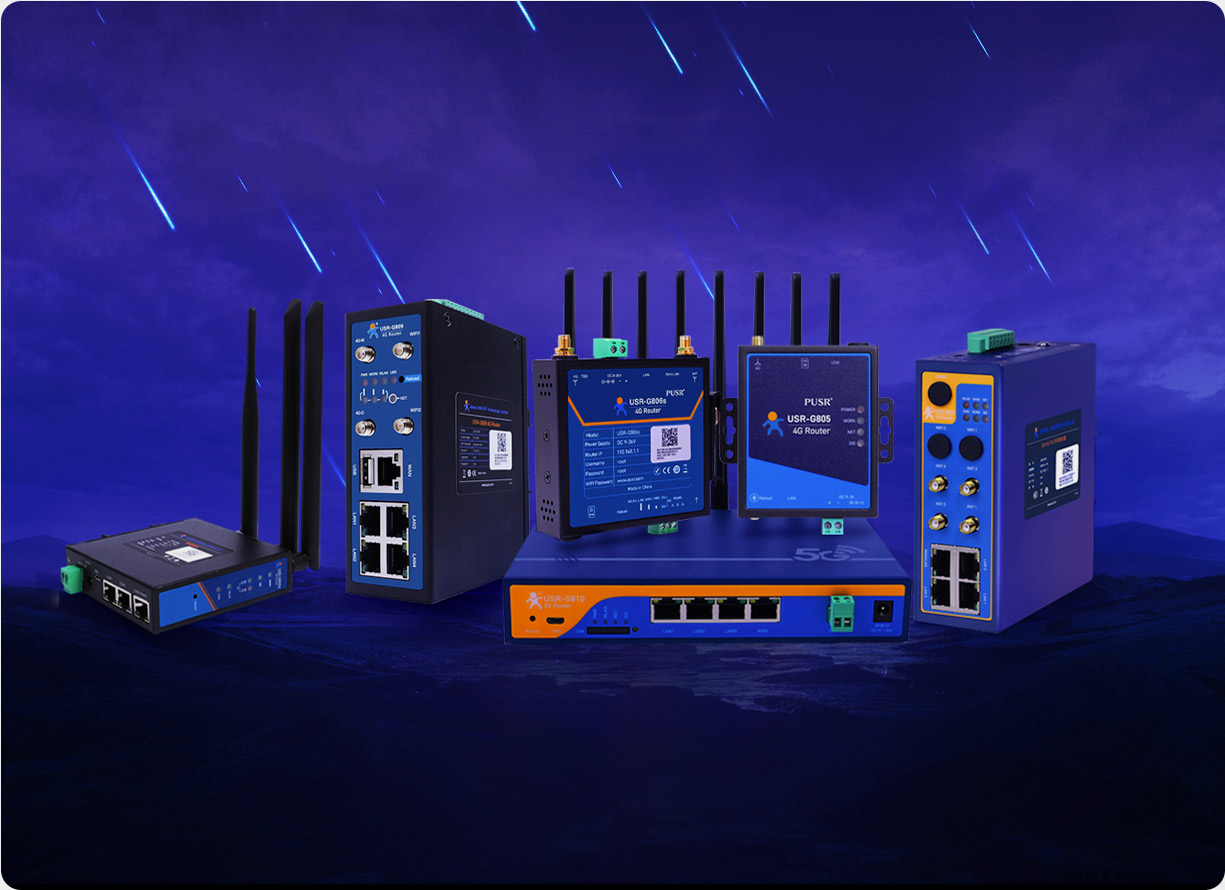
These weren't ordinary home routers. They were seven industrial 4G routers he had spent three months shipping from China — each one expensive — specifically prepared for this wasteland with no fiber, no ADSL, and spotty cell signal.
One thunderstorm, and they were all gone.
Carlos later did the math: procurement cost for seven devices, plus international shipping from China to Brazil, plus two round-trip flights for on-site engineers to troubleshoot — a total of $27,000, for two weeks of crops dying from water shortage.
He later said something to me that I've never forgotten:
"I'm not afraid of bugs, not afraid of drought, not afraid of price swings. What I fear most is — I spend money building a system, and when I need it most, it goes silent."
If you've only ever done projects in China, you may not truly understand the network dilemma on overseas farms.
Even in China's most remote rural areas, there's at least 4G coverage. Worst case, run a fiber line — a construction crew shows up in three days.
But overseas — especially on large farms in South America, Southeast Asia, and Africa — it's completely different.
Farms in inland Brazil can be 80 km from the nearest town. No pipelines, no cable trays, the nearest fiber node is hundreds of kilometers away. You're not going to run tens of kilometers of cable for a few sensors.
Rubber and oil palm plantations in Southeast Asia sit on hills and swamps — construction crews simply can't get in.
Large plantations in Africa don't even have stable electricity, let alone networks.
Farms in tropical regions see temperatures above 35°C year-round, humidity over 90%. During rainy season, lightning strikes a dozen times a day. Metal equipment in this environment isn't a question of "can it work" — it's "how many days can it survive."
The seven routers Carlos lost were fried because they lacked lightning protection and wide-temperature design. A standard industrial VPN router is rated for -20°C to 70°C, but under direct tropical sun, the casing temperature easily exceeds 80°C. Chips overheat and the device crashes.
Back home, when something breaks, an engineer drives two hours to fix it. Overseas farm? The nearest technician might be in the capital — a full day's flight, then half a day's drive to the site.
You're not going to fly halfway around the world to reset a router.
So the core requirement for overseas farm network solutions is never "how fast is it" — it's:
Once this thing is installed, can I completely forget about it until harvest day?
Carlos's farm later switched to a new solution. It's not complicated in theory, but every step hits the pain points.
The core device in the new setup is the USR-G806w from USR IoT. The reasons for choosing it are straightforward:
Wide-temperature design: officially rated -40°C to 75°C, it has run stably in Brazil's tropical environment for over 14 months without a single heat-related crash. A domestic packaging factory ran the same device in a workshop with temperatures above 40°C year-round for 14 months — zero failures.
IP30 protection + metal casing: the sheet-metal body isn't for looks — it's for heat dissipation and physical durability. The farm has wild boars and tractors rolling through; plastic casings would've shattered long ago.
Dual SIM + wired backup: primary card on one carrier, backup on another. When the primary drops, it auto-switches to backup in a tested 2 seconds. The farm's irrigation system runs automatically — a 2-second interruption means pumps stop, water in the pipes can flow back and damage valves. A 2-second switchover means zero impact on the data stream — this capability is especially critical overseas, because you can't send someone to swap SIM cards on site.
Lightning protection: built-in ESD and surge protection circuits. During the next thunderstorm that hit Carlos's farm, three devices at the neighboring farm fried again — his setup didn't flinch.
The biggest risk on overseas farms is single-point failure. One device dies, and all sensors in the entire area go dark.
The new setup uses a dual-link architecture: 4G as primary, wired as backup. Each irrigation zone has a USR-G806w sending data to the cloud via 4G. Meanwhile, the farm management center keeps a wired broadband line as backup — 4G down? Auto-switch to wired. Wired down? Auto-switch to 4G.
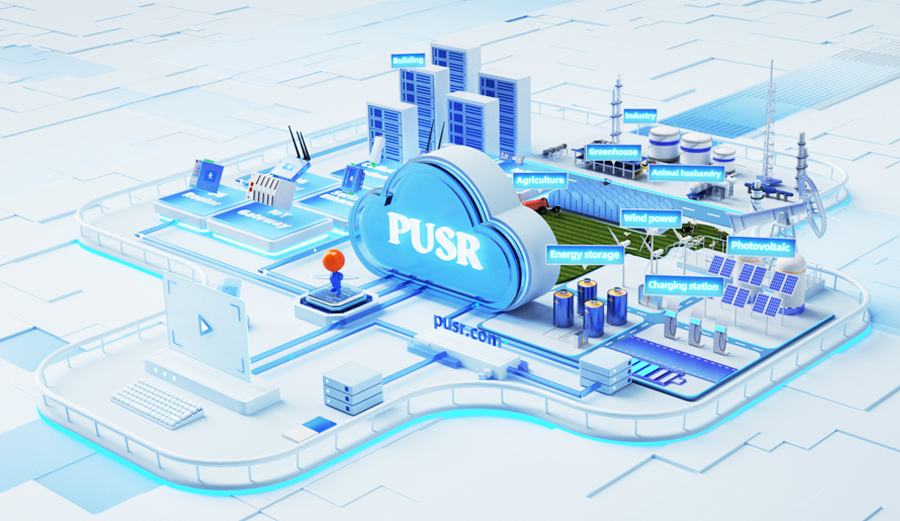
More importantly, they used the USR Cloud Platform for remote management.
What does that mean?
It means Carlos doesn't need to fly to Brazil. He sits in his office in São Paulo, opens his phone, and sees every router's status — online or offline, signal strength, data usage, whether firmware needs updating.
Once late at night, one router's signal suddenly dropped to -85dBm (normal should be above -70dBm). The cloud platform auto-pushed an alert to his phone. He logged in remotely and found the antenna connector was loose — rebooted it, signal restored.
No one was ever sent to the site.
Data costs on overseas farms are 3 to 5 times higher than in China. If every sensor streams data in real time, the monthly data bill could cost more than the equipment itself.
Their strategy: critical data in real time, regular data in batches.
Soil moisture, weather data — these directly affect irrigation decisions — are uploaded via 4G in real time, latency controlled to seconds.
Device status, historical logs — these don't need to be real-time — are batched and uploaded during the daily early-morning low-traffic window.
The USR-G806w supports traffic monitoring and alerts. Carlos set a threshold on the cloud platform: no more than 10GB per device per month. Exceed it, get an auto-alert, then decide whether to adjust the strategy or add a data package.
In practice, each device uses only about 200MB per day — 10GB per month is more than enough.
Carlos later ran a comparison for me:
| Metric | Old Solution (7 standard routers) | New Solution (USR-G806w + Cloud Platform) |
|---|---|---|
| Equipment cost | $14,000 | $8,400 (lower unit price, fewer units) |
| International shipping | $6,000 | $2,800 (lighter, smaller devices) |
| Annual failure rate | 7/year (basically all fried) | 0 (14 months, zero failures) |
| Maintenance travel | $18,000 (two engineer trips) | $0 (fully remote) |
| Crop loss | $47,000 (two weeks of water shortage) | $0 |
| Year 1 total cost | $85,000 | $11,200 |
He said something very down-to-earth:
"I'm not buying routers. I'm buying 'no worries.' Once this thing is installed, I don't touch it. It stays alive on its own, data comes back on its own, and if something goes wrong I see it on my phone. That's all I need."
Three most common pitfalls in overseas deployment
Based on Carlos's lessons and feedback from multiple other overseas farms, here are three points most people overlook:
Most people pick routers based on "supports all 4G bands" and "150Mbps download speed." On an overseas farm, those specs are worthless.
What you should look at: operating temperature range, IP rating, lightning protection, DIN rail mounting (you may not have a table to put the device on).
The USR-G806w's -40°C to 75°C wide-temp range, IP30 protection, DIN35 rail mounting, built-in surge protection — these are the hard specs that let equipment survive a tropical farm.
In China, when a device fails, you send someone. Overseas, you can't.
So remote management isn't a "nice-to-have" — it's a lifeline.
The USR Cloud Platform supports remote parameter changes, remote firmware upgrades, remote reboots, traffic alerts, and device status monitoring. These features may seem "optional" back home. Overseas, they're the difference between survival and failure.
Overseas data is expensive — that's a fact. But expensive doesn't mean unusable; it means you have to use it smartly.
Critical data goes real-time. Non-critical data goes batched. Set traffic thresholds, get alerts when exceeded. Don't let every device stream to the cloud 24/7 — that's not using a network, that's burning money.
The USR-G806w supports traffic monitoring and alerts, and paired with the USR Cloud Platform's traffic management, every cent is spent where it counts.
People who work on overseas agriculture projects are lonely to the bone.
You're thousands of miles from home, facing land you don't know, workers you don't know, equipment you can't touch whenever you want. The only thing you can rely on is the system you chose — it has to be tough enough, smart enough, and reliable enough to let you sleep soundly on the other side of the world.
Carlos now opens his phone every morning, glances at the USR Cloud Platform dashboard: all devices online, signals normal, yesterday's irrigation complete, soil moisture at 68% — right in the optimal range.
Then he puts the phone down and goes for coffee.
That's what a good network solution should give you: not specs — peace of mind.
If your project faces the same challenges — no fiber, harsh environment, remote-only maintenance — take a serious look at devices like the USR-G806w, built specifically for industrial scenarios. Dual-SIM backup, wide-temp durability, cloud management — everything you need, nothing you don't.
Equipment is the tool. Peace of mind is the goal.