At present, the intelligent transformation of China's manufacturing industry has entered a deep-water zone. The intelligent workshop benchmarks built by leading automobile enterprises and top electronic manufacturing enterprises have been widely popularized. However, more than 90% of the small and medium-sized manufacturing enterprises that make up the main body of the market are still generally stuck in the bottleneck stage of "having the will to transform but lacking the implementation path".
Field survey data of manufacturing clusters in North China shows that 73% of small and medium-sized parts processing plants, food processing plants and hardware processing plants still use traditional industrial control equipment, which can only realize basic equipment operation control and have no edge-side AI computing power support at all.
Such enterprises generally face four common pain points:
In the manual inspection mode, the missed detection rate has long been higher than 3%, and each production line needs to be equipped with 3-5 full-time inspectors, leading to a year-on-year rise in labor costs;
The proportion of unplanned equipment downtime exceeds 15%, and a single downtime will cause tens of thousands of yuan in losses in production capacity and materials;
The traditional cloud-based AI solution has an end-side response delay of more than 200ms, which cannot meet the real-time control requirements of industrial scenarios, and there are clear compliance risks when sensitive production data is transmitted externally;
The transformation cost of replacing all production lines with imported intelligent equipment generally exceeds one million yuan, which is unaffordable for the vast majority of small and medium-sized manufacturing enterprises.
The real demand of small and medium-sized manufacturing enterprises is by no means "building a fully unmanned factory in one step". Instead, they hope to rely on lightweight and low-cost implementation solutions to quickly solve three high-frequency pain points in quality inspection, operation and maintenance, and data collection, so as to obtain measurable efficiency improvement with the minimum investment. This is also the core design starting point of this set of AI computing power solutions.
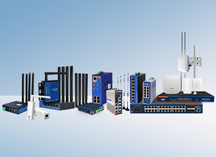
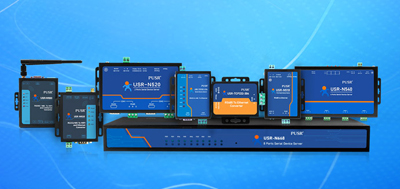
Relying on a full range of industrial-grade computing power hardware products, this solution builds a "low-medium-high" three-level full-coverage computing power supply system for the differentiated computing power demands of different production line scenarios. It not only avoids unnecessary cost waste caused by redundant computing power, but also prevents the failure of AI tasks to be implemented normally due to insufficient computing power.
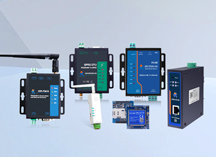
For low-computing scenarios such as basic data collection and simple production line linkage, the USR-EG528 Linux edge computing gateway is selected. This model is equipped with the Ubuntu system and built-in Node-RED visual programming tools, which can quickly complete multi-source data collection of production lines without complex code development. It supports 2 network ports and 4 RS485 interfaces, and can directly connect to PLCs and various sensing equipment in the workshop to complete real-time collection and local preprocessing of equipment operation data and environmental parameters. The cost of a single device is only 60% of that of traditional industrial gateways, which is especially suitable for the low-cost digital transformation of old production lines.
For scenarios of conventional edge data processing and basic AI tasks of small production lines, the USR-EG218 ARM industrial PC is selected. This series provides multiple chip configurations such as RK3562 and RK3568 for selection, with standard 4GB memory and 64GB storage, pre-installed Ubuntu system, and supports multiple communication methods such as Ethernet, Wi-Fi and Bluetooth. It can be flexibly deployed at various nodes in the workshop to complete lightweight AI tasks such as simple OCR character recognition and basic equipment status analysis. It balances performance and cost advantages, and can cover the basic computing power demands of the vast majority of small and medium-sized manufacturing enterprises.
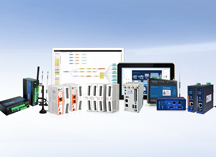
For the core AI visual quality inspection scenario, the USR AI visual industrial PC is directly deployed. This model is built with an NPU neural network acceleration unit with a maximum of 1TOPS, supports mainstream AI frameworks such as Caffe, TensorFlow and ONNX, and can connect 4-8 industrial cameras at the same time. It can complete the full-process closed loop from image collection, defect analysis to result feedback within 500 milliseconds, realizing all-round real-time detection of product appearance, size and printed characters. The detection accuracy can reach 99.7%, which can completely replace the traditional manual visual inspection mode, and a single production line can save more than 150,000 yuan in quality inspection-related labor costs every year.
For high-computing scenarios such as high-precision 3D visual inspection, multi-equipment collaborative control, and end-side deployment of lightweight industrial large models, the USR-EG928A high-computing AI industrial PC is selected. This model is equipped with a high-performance heterogeneous computing architecture, and the overall AI computing power can reach more than 50TOPS. It supports synchronous processing of multiple 4K video streams, and can run defect detection models, equipment predictive maintenance models, and production line scheduling models at the same time. In high-precision manufacturing scenarios such as auto parts and high-end electronic components, it can increase the product yield of key processes by 5%-8% and reduce unplanned downtime by 40%.
The whole set of solutions adopts the implementation path of "pilot first and then promotion". Priority is given to deploying computing power nodes on the core production lines of the workshop to quickly get through the two core scenarios of AI quality inspection and predictive maintenance. After verifying the actual benefits, the deployment will be gradually expanded to cover the whole workshop.
In the quality control link, the USR AI visual industrial PC is deployed at the end of the production line to replace the traditional manual quality inspection mode. The system can automatically record the defect type and location information of each product, and reversely optimize the front-end production process through data analysis, so as to realize the full-process traceability of product quality, help enterprises build a complete quality database, and greatly reduce the customer complaint rate.
In the equipment operation and maintenance link, the USR-EG928A and USR-EG218 form a computing power collaboration. The edge nodes collect the vibration, temperature and current data of the equipment in real time, and run the predictive maintenance model locally, which can warn of potential faults several days in advance and automatically generate maintenance work orders, so as to minimize the unplanned downtime of the equipment and reduce the operation and maintenance-related labor costs by more than 30%.
In the data flow link, all the data collected and preprocessed by the edge computing power nodes are uniformly aggregated to the local private cloud platform of the enterprise. There is no need to upload the original production data to the public cloud, which not only meets the security and compliance requirements of industrial data, but also can complete intelligent production decision-making based on the full amount of production line data, automatically optimize production plans, dynamically schedule AGV material distribution, and realize the flexible collaboration of the whole production line.
From the pilot data of many parts manufacturing enterprises, the overall transformation cost of this lightweight AI computing power solution is only 30% of that of the traditional imported intelligent transformation solution, and the implementation period is no more than 2 weeks. After being put into production, all the investment can be recovered through labor cost savings and yield improvement within 6-8 months. It perfectly adapts to the intelligent transformation demands of small and medium-sized manufacturing enterprises, and truly realizes the AI empowerment effect of "small investment, fast implementation and high return".