Challenges in PLC Networking for Smart Factories: How Can Serial Port to Ethernet Adapters Achieve Interoperability Across Different Brands of Equipment Protocols?
In the current wave of Industry 4.0 sweeping across the globe, smart factories have become the core direction for the transformation and upgrading of the manufacturing industry. However, when enterprises attempt to connect PLC devices scattered throughout various stages of the production line to a network, they often find themselves trapped in the dilemma of "protocol islands". Different brands of PLCs (such as Siemens, Mitsubishi, and Omron) use proprietary protocols like Modbus TCP, Profinet, and EtherNet/IP, with significant differences in physical interfaces. Communicating across different brands is akin to "a chicken talking to a duck". A certain automobile factory once experienced a delay of over 30 minutes in production line data collection due to PLC protocol incompatibility, resulting in direct economic losses amounting to millions of yuan. This article will provide an in-depth analysis of how serial port to ethernet adapter can leverage technologies such as protocol conversion and edge computing to overcome the challenges of networking PLCs across different brands, offering practical solutions for the construction of smart factories.
Industrial sites feature a variety of PLC brands with diverse protocol standards. For example, Siemens S7 series uses the Profinet protocol, Mitsubishi FX series supports Modbus RTU, and Omron CP1H relies on EtherNet/IP. This protocol fragmentation prevents direct communication between devices, necessitating reliance on customized gateways or host computer software for data collection, which results in long development cycles and high costs. A certain electronics factory once had to maintain five different protocol-based collection systems due to the use of multiple brands of PLCs, increasing operational complexity by 300%.
Older equipment often uses RS-232/RS-485 serial communication, while newer PLCs support Ethernet interfaces. The significant differences in voltage, speed, and transmission distance between different interfaces make direct interconnection prone to signal interference or data loss. For example, RS-485 buses support a maximum transmission distance of only 1,200 meters, while industrial Ethernet can reach 100 meters to 10 kilometers. Cross-regional wiring requires additional repeaters or fiber optic converters, increasing system complexity.
Even if devices are networked through protocol conversion, data may still become isolated due to issues such as inconsistent formats and differences in sampling frequencies. For example, in a certain photovoltaic power station, the sampling frequency of inverter data was 1 second per instance, while that of the weather station was 10 seconds per instance. Direct integration would result in misaligned data timestamps, affecting analysis accuracy. Additionally, data lacking semantic labels is difficult for MES, ERP, and other systems to directly utilize, requiring manual secondary processing and resulting in low efficiency.
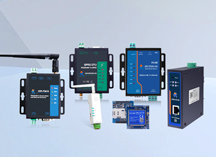
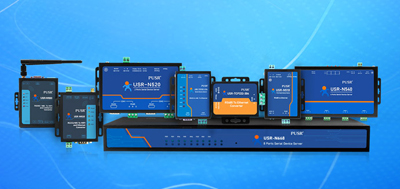
The core function of a serial port to ethernet adapter is to convert serial protocols (such as RS-485) into TCP/IP protocols while supporting multi-protocol interconversion. For example, the USR-N510 single serial port to ethernet adapter features a deeply optimized TCP/IP protocol stack that enables bidirectional conversion between Modbus TCP and Modbus RTU, compatible with mainstream PLC brands such as Siemens and Mitsubishi. Its working principle is as follows:
Data Encapsulation: The Modbus RTU frame (such as address field, function code, and data field) sent by the PLC through the serial port is encapsulated into a TCP/IP packet, with header information such as source/destination IP and port number added.
Protocol Parsing: The receiving end serial port to ethernet adapter decapsulates the TCP/IP packet and restores it to a Modbus RTU frame, ensuring data integrity.
Multi-Protocol Support: Through software configuration, protocols such as Profinet and EtherNet/IP can be extended to meet the needs of different brands of equipment.
After deploying the USR-N510, a certain automobile factory achieved unified networking of 200 PLCs across different brands, reducing data collection delay from 30 minutes to 10 seconds and increasing equipment utilization by 18%.
New-generation serial port to ethernet adapters integrate edge computing capabilities, enabling local data cleaning, aggregation, and format conversion to reduce cloud load. Taking the USR-N510 as an example:
Data Cleaning: Filters out abnormal values (such as sensor readings exceeding the range) and fills in missing values (such as data gaps caused by communication interruptions).
Aggregation Calculation: Calculates equipment OEE (Overall Equipment Effectiveness), energy consumption, and other metrics based on time windows, reducing the volume of raw data transmission.
Format Conversion: Converts binary data into JSON format, supporting custom labels (such as "Equipment ID_Temperature_Timestamp") for direct utilization by MES systems.
Through the edge computing function of the USR-N510, a certain photovoltaic power station aggregated the power generation data of 1,000 photovoltaic modules into hourly reports, reducing cloud storage volume by 70% and increasing analysis efficiency by three times.
In response to the differences between serial and Ethernet interfaces, serial port to ethernet adapters offer flexible adaptation solutions:
Voltage Isolation: Uses optocoupler isolation technology to prevent voltage conflicts between the RS-485 bus and Ethernet, protecting equipment safety.
Speed Adaptation: Supports automatic negotiation of serial port speeds ranging from 9,600 bps to 115,200 bps, compatible with older equipment.
Multi-Network Port Design: For example, the dual-socket function of the USR-N510 allows simultaneous connection to two servers, enabling data redundancy backup.
Through the dual-network port design of the USR-N510, a certain chemical plant simultaneously uploaded PLC data to both local monitoring systems and cloud platforms, ensuring that single-point failures did not affect production monitoring.
Processor: Cortex-M7 solution with a main frequency of 400MHz and processing delay of less than 5ms.
Protocol Support: Over 200 industrial protocols including Modbus TCP/RTU, Profinet, and EtherNet/IP.
Interfaces: 1×RS-485 serial port, 1×10/100Mbps Ethernet port.
Environmental Adaptability: Operates in a wide temperature range of -40℃ to 85℃, with an IP66 protection rating and resistance to electromagnetic interference (EMC Level 3).
Security: Two-way certificate verification + SSL/TLS encryption to prevent data tampering.
Networking PLCs Across Different Brands: In scenarios such as automobile manufacturing and electronics assembly, it uniformly connects PLCs from brands such as Siemens, Mitsubishi, and Omron, enabling real-time production line data collection.
Upgrading Older Equipment: Connects serial devices from a decade ago through RS-485 interfaces, enabling access to the industrial internet without hardware replacement.
Remote Operation and Maintenance: Supports VPN tunnel encryption, allowing engineers to remotely debug PLC programs at factories in different locations from headquarters, reducing fault handling time from 48 hours to 2 hours.
Case of a Certain Electronics Factory: After deploying the USR-N510, the equipment networking rate increased from 60% to 95%, and operational costs decreased by 30%.
Case of a Certain Logistics Park: By connecting weighing instruments, gate barriers, and other equipment through the USR-N510, it achieved automatic generation of electronic weight slips, reducing manual intervention by 90% and increasing weighing efficiency by three times.
Prioritize devices that support multi-protocol conversion, such as the USR-N510, which can be extended to over 200 protocols, avoiding compatibility issues when new equipment is added in the future.
If local data processing is required, choose models with edge computing functions, such as the USR-N510, which supports JSON format conversion and aggregation calculation, reducing cloud load.
Pay attention to the device's protection rating, operating temperature range, and anti-interference capability. The USR-N510's IP66 protection and EMC Level 3 certification make it suitable for harsh environments such as oil fields and mines.
Choose devices that support SSL/TLS encryption and VPN tunnels to prevent data leakage. The USR-N510 uses two-way certificate verification to ensure communication security.
Automatically identify unknown protocol formats using machine learning models, reducing manual configuration workload. For example, utilize NLP technology to parse PLC communication logs and generate protocol rule libraries.
Combine 5G's low latency (<1ms) with Time-Sensitive Networking (TSN) technology to achieve deterministic transmission for PLC control, meeting the demands of high real-time scenarios such as motion control.
Promote the popularization of open protocols such as OPC UA over TSN to fundamentally solve the issue of protocol fragmentation. Currently, major PLC manufacturers worldwide are gradually supporting OPC UA, making cross-brand communication more convenient in the future.
In the construction of smart factories, PLC networking is the key link in enabling the flow of production data. Serial port to ethernet adapters provide a highly reliable and low-cost solution for interconnecting equipment across different brands through protocol conversion, edge computing, and industrial-grade design. As a benchmark product in industrial-grade serial port to ethernet adapters, the USR-N510 has helped hundreds of enterprises achieve equipment networking and digital upgrades. If you are facing challenges with PLC protocol interoperability, contact PUSR, and we will provide you with customized solutions to help your factory advance into the Industry 4.0 era.