PUSR Cellular Router: The Key to Breaking Down Data Silos in Smart Buildings
In the operation and maintenance center of a super high-rise office building in Shenzhen, Li Ming, the property manager, frowned as he stared at the jumping numbers on the monitoring screen. The energy consumption of the air-conditioning system was 23% higher than the designed value, the data delay between the elevator fault warning system and the fire monitoring platform reached 15 minutes, and the intelligent lighting system in the underground garage was turning on无故 (unnecessarily) during the day. This smart building project with an investment of over 100 million yuan was falling into the vicious circle of "the smarter, the harder to manage." This is not an isolated case. According to statistics from the China Construction Industry Association, 68% of smart buildings nationwide have subsystem fragmentation issues, and the annual increase in operation and maintenance costs due to data silos exceeds 30%. Amid the growing pains of this smart transformation, the PUSR cellular router is reshaping the value chain of smart buildings in the role of a "data plumber."
Traditional smart buildings adopt a vertical system architecture, with each subsystem (such as building automation, security monitoring, and energy management) independently building its own dedicated network, leading to three major dilemmas:
Data Format Barriers: More than 20 industrial protocols, such as BACnet, Modbus, and OPC UA, are incompatible with each other, making it like different departments speaking different languages and unable to communicate.
Network Hierarchy Redundancy: A commercial complex project found that the duplication rate of its network equipment reached 47%, with seven layers of switches deployed alone.
Low Operation and Maintenance Efficiency: The logistics team of a top-tier hospital needs to operate 12 management platforms simultaneously, with an average fault location time of 2.3 hours.
The hidden losses caused by system fragmentation far exceed the explicit investments:
Energy Waste: The disconnection between the air-conditioning system and the personnel positioning system leads to overcooling in 30% of the areas.
Safety Risks: The data delay between the fire alarm system and the access control system resulted in the failure to open evacuation routes in a timely manner during a fire incident.
Asset Depreciation: Equipment that cannot undergo predictive maintenance has an average lifespan shortened by 40%.
A smart park project estimated that through system integration, operation and maintenance costs could be reduced by 38% and energy efficiency could be improved by 25%. However, traditional integration solutions require a renovation period of 6-18 months and huge investments.
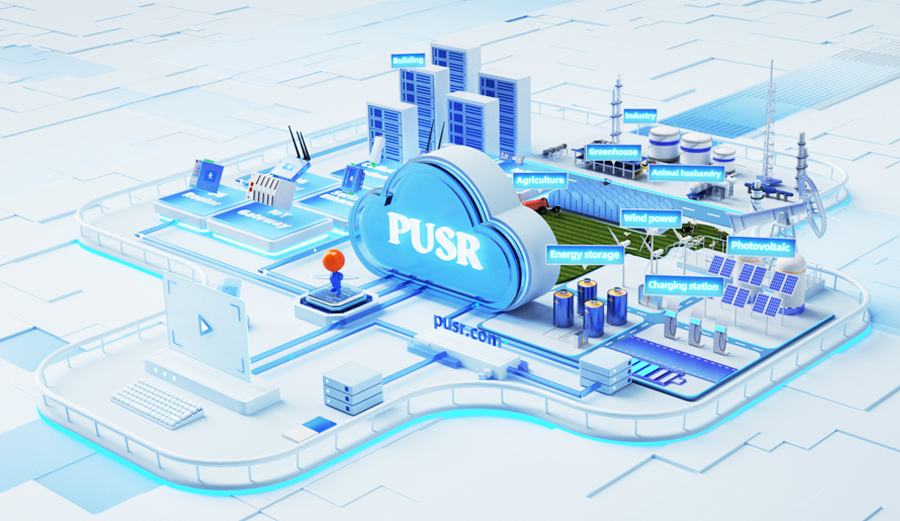
The PUSR cellular router can simultaneously handle 15 industrial protocols, such as Modbus TCP/RTU, BACnet IP, and SNMP, through its built-in protocol parsing engine, enabling seamless integration of heterogeneous systems. In a smart hospital project in Hangzhou, it unified more than 2,000 data points from 47 types of medical equipment from 32 brands onto a single platform, with a protocol conversion delay of less than 50ms.
Adopting multi-network intelligent switching technology, it supports 5G/4G/Wi-Fi/wired quad-network backup to ensure zero data loss for critical information. The USR-G806w cellular router deployed in a financial center in Shanghai automatically switched to the 5G network during a typhoon, ensuring the continuous operation of the security system and avoiding direct economic losses of over 10 million yuan.
With a built-in high-performance processor, it can complete data cleaning, anomaly detection, and other preprocessing tasks locally. A manufacturing enterprise improved the accuracy of equipment fault warnings to 92% and reduced the false alarm rate to below 3% through the router's edge computing function.
In a super high-rise office building project in Guangzhou, the PUSR cellular router built a three-level energy monitoring system:
Device Level: Connecting 2,800 smart meters and increasing the sampling frequency to once per second.
System Level: Integrating energy consumption data from eight major systems, including air-conditioning, lighting, and elevators.
Decision-Making Level: Generating optimization strategies through AI algorithms to reduce overall energy consumption by 19%.
After the project implementation, the building obtained LEED Platinum certification, saving over 3 million yuan in electricity bills annually and reducing carbon emissions by 2,600 tons.
A smart park in Shenzhen adopted a "5G + cellular router" solution, achieving three major breakthroughs:
Intelligent Video Stream Scheduling: Dynamically adjusting camera resolution based on pedestrian density, improving bandwidth utilization by 60%.
Emergency Response: Completing access control opening, broadcast activation, and elevator forced landing within 0.3 seconds after a fire alarm is triggered.
AI Analysis: Deploying behavior recognition algorithms at the router's edge to shorten the response time for anomaly detection to 2 seconds.
A port machinery manufacturer in Qingdao achieved remote operation and maintenance of its crane fleet through the PUSR cellular router:
Vibration Analysis: Connecting 200 three-axis acceleration sensors to monitor equipment health status in real-time.
Fault Prediction: Warning of key component failures 72 hours in advance based on an LSTM neural network model.
Remote Debugging: Enabling remote updates of PLC programs through VPN tunnels, reducing single maintenance costs by 85%.
During the project consultation phase, customers often express three major concerns:
Reliability Anxiety: "Can it guarantee 7×24-hour stable operation in industrial environments?"
Compatibility Doubts: "Can equipment from different manufacturers truly achieve interconnection and interoperability?"
Cost Sensitivity: "How to balance the renovation investment with long-term benefits?"
Actual case data can effectively alleviate customer doubts:
Return on Investment: The ROI period for a commercial complex project was shortened to 14 months.
Operation and Maintenance Efficiency: The time for single fault handling was reduced from 2.3 hours to 18 minutes.
System Availability: The continuity of critical business reached 99.999%.
Scalability: Supporting the smooth upgrade of future technologies such as 5G and AI.
Technology-Driven: Focusing on protocol compatibility and the openness of development interfaces.
Cost-Sensitive: Valuing the total cost of ownership (TCO) and energy consumption indicators.
Security-First: Requiring security certifications such as data encryption and access control.
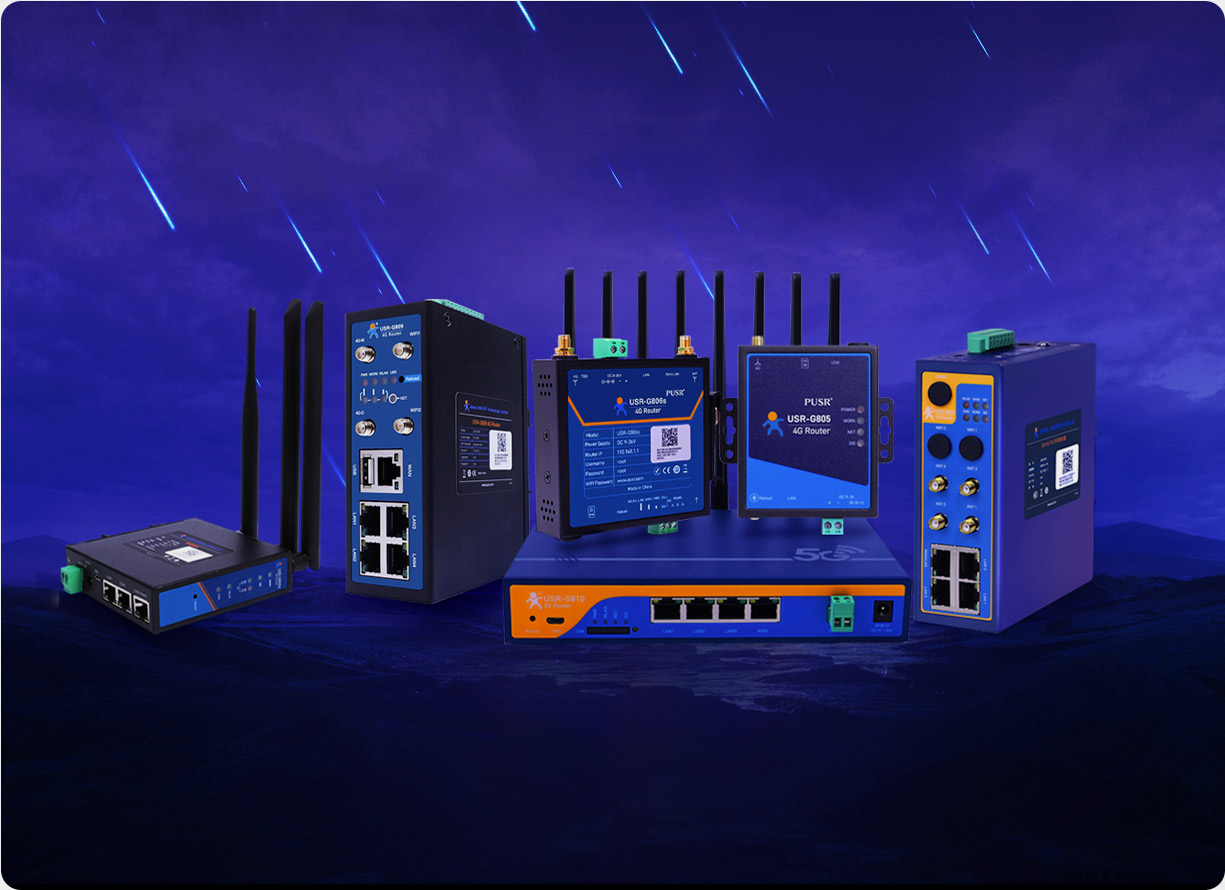
Among numerous cellular routers, the USR-G806w stands out with its unique value:
All-Scenario Adaptability: With a wide temperature design of -20°C to 70°C and an IP30 protection level, it adapts to environments such as machine rooms, outdoors, and strong electromagnetic fields.
Intelligent Networking: Supporting remote networking without the need for a public network IP to achieve cross-regional device interconnection.
Security Enhancement: Providing triple protection with five-level VPN encryption, IP black and white lists, and firewalls.
Simple Operation and Maintenance: Enabling remote configuration, firmware upgrades, and fault warnings through the USR Cloud platform.
In a smart agriculture project practice, the USR-G806w operated stably for three years in a salt spray corrosion environment with zero failure rates, becoming a benchmark case for extreme environment applications.
With the development of technologies such as digital twins and spatial computing, smart buildings are moving towards the 3.0 era. The PUSR cellular router will evolve into:
Spatial Intelligence Nodes: Integrating UWB positioning, environmental sensing, and other functions to build a digital foundation for building spaces.
AI Inference Terminals: Deploying lightweight AI models at the edge to enable real-time decision-making.
Carbon Management Hubs: Connecting to carbon trading platforms and automatically generating ESG reports.
According to Gartner's prediction, by 2028, 75% of newly built smart buildings will adopt cellular routers as core networking equipment, and their market size will exceed 20 billion yuan.
Conclusion: When Li Ming stands in front of the operation and maintenance center's large screen again, the air-conditioning energy consumption curve has smoothly returned to the designed value, the elevator fault warning and fire system have achieved millisecond-level linkage, and the intelligent lighting in the underground garage automatically adjusts its brightness according to the traffic flow. This smart building, which was once trapped in the dilemma of data silos, is now radiating true wisdom through the IoT hub built by the PUSR cellular router. In the marathon of building intelligence, choosing the right "data plumber" may be the key step to reaching the other side of success.