AGV Selection Guide for the Pharmaceutical Industry: Laser Navigation vs. Visual Navigation—Which Comes Out on Top?
In the pharmaceutical industry, automation upgrades have become an essential path for companies to enhance efficiency, ensure safety, and meet compliance requirements. Among them, AGVs (Automated Guided Vehicles), as the core equipment for logistics automation, are being widely applied in key processes such as raw material handling, finished product transportation, and sterile transfer. However, when faced with the two mainstream technology routes of laser navigation and visual navigation, many companies find themselves at a crossroads during the selection process: Which navigation method is better suited for pharmaceutical scenarios? This article will start from the special needs of the pharmaceutical industry, deeply analyze the advantages and disadvantages of the two navigation technologies, and provide practical selection advice for companies.
The demand for AGVs in the pharmaceutical industry goes far beyond simply "replacing manual handling." Its special needs are mainly reflected in the following three aspects:
Pharmaceutical workshops often involve flammable and explosive gases (such as ethanol vapor), toxic and harmful dust (such as cephalosporin antibiotics), and highly active raw materials (such as anti-tumor drugs). AGVs must have explosion-proof designs to avoid explosions caused by static electricity or sparks; at the same time, their bodies need to be made of non-polluting materials to prevent contamination of drugs; in sterile preparation workshops, AGVs must also meet GMP Class 100 cleanliness standards to avoid cross-infection.
The pharmaceutical industry has strict requirements for batch management, expiration date control, and temperature and humidity monitoring. AGVs need to seamlessly integrate with WMS (Warehouse Management Systems) to achieve full traceability of drugs from inbound to outbound; in cold chain transportation links, AGVs need to be equipped with temperature and humidity sensors to ensure that drugs remain in a compliant environment during transportation; at the same time, through intelligent scheduling algorithms, AGVs need to prioritize the handling of drugs close to their expiration dates to achieve "first-in, first-out."
The production layouts of pharmaceutical companies often change due to process adjustments and product iterations, so AGVs need to have the ability to be quickly redeployed without extensive modifications to the floor or environment; in addition, pharmaceutical products are diverse and have varying specifications, so AGVs need to support flexible handling of multi-variety, small-batch products to meet personalized production needs.
Technical Principle: Laser navigation achieves positioning and navigation by using laser radar to scan the surrounding environment and match it with a pre-constructed "laser map." Its core advantages lie in:
High Precision: The positioning accuracy can reach ±10mm, meeting the handling accuracy requirements of pharmaceutical workshops;
Strong Stability: Unaffected by light and dust, adapting to various harsh industrial environments;
Simple Deployment: No need to lay magnetic strips, QR codes, or other physical markers, with a short mapping and commissioning period (usually 2-4 weeks);
Controllable Cost: The price of a single unit ranges from 150,000 to 300,000 yuan, suitable for companies with limited budgets.
Typical Application Scenarios:
Standardized Warehouses: Where shelf layouts are relatively fixed, and AGVs repeatedly handle goods along preset paths;
Third-Party Logistics Distribution Centers: Where there is a large volume of cargo throughput and high requirements for handling efficiency;
Some Flexible Manufacturing Lines: Where production line adjustments are infrequent, and AGVs can operate stably for a long time.
Limitations:
Dependence on Reflectors: In complex environments, a large number of reflectors need to be installed, and recalibration is required when the environment changes;
Limited Dynamic Obstacle Avoidance Capability: Although it can detect obstacles, its obstacle avoidance strategies are relatively simple, which may affect handling efficiency;
High Initial Investment: Laser radars are expensive, and professional teams are required for map construction and algorithm optimization.
Technical Principle: Visual navigation uses industrial cameras to capture the surrounding environment and combines AI algorithms for real-time positioning and mapping. Its core advantages include:
No Physical Markers: Free from the limitations of magnetic strips and QR codes, without damaging the floor or modifying the environment;
Dynamic Path Planning: Real-time adaptation to layout changes, supporting human-machine coexistence and multi-AGV collaborative obstacle avoidance;
Strong Perception Capability: It can recognize landmarks, text labels, and even determine the status of goods (such as damage or contamination) through image recognition;
High Scalability: Ordinary cameras have relatively low costs, and algorithms can be continuously iterated and upgraded to support future functional expansions.
Typical Application Scenarios:
Highly Dynamic Warehouses: Where shelf layouts are frequently adjusted during promotional seasons, and AGVs need to quickly adapt to new paths;
Complex Smart Manufacturing Environments: Where production lines are frequently adjusted, and AGVs need to collaborate with robots, robotic arms, and other equipment;
Human-Machine Coexistence Public Areas: Such as hospitals, airports, and shopping malls, where AGVs need to interact safely with personnel;
Special Working Conditions: Such as low-temperature, high-humidity, and dusty environments, where visual navigation can adapt to the environment through algorithm optimization.
Limitations:
Light Sensitivity: Dim or overly bright lighting or reflective objects (such as glass and mirrors) may affect recognition accuracy;
Complex Computation: Image processing requires powerful computing power and places high demands on hardware, which may lead to system delays;
High Initial Investment: Although camera costs are low, additional investments are required for AI algorithm development and computing power deployment;
Technical Maturity: Visual navigation is still in a rapid development stage, and its stability is not as good as laser navigation in some scenarios.
In the pharmaceutical industry, AGV selection is not about "the more advanced the technology, the better," but rather requires comprehensive decision-making based on specific scenarios, budgets, long-term plans, and other factors. The following provides selection advice from four dimensions:
Fixed Path Scenarios (such as standardized warehouses and fixed production lines): Laser navigation should be prioritized. Its high stability and simple deployment can quickly achieve ROI (the investment payback period is usually 1-2 years).
Dynamic Layout Scenarios (such as highly dynamic warehouses and flexible manufacturing lines): Visual navigation should be prioritized. Its high flexibility and good scalability can support future business upgrades and have higher long-term value.
Companies with Limited Budgets: Laser navigation AGVs can be chosen, as their unit prices are moderate, and the technology is mature with lower risks.
Companies with Sufficient Budgets: Visual navigation AGVs can be considered. Although the initial investment is high, they can meet future flexible production needs and avoid repeated investments.
Short-Term Manual Replacement: If a company only needs to replace simple handling tasks, laser navigation AGVs are sufficient to meet the needs.
Long-Term Intelligent Upgrade: If a company plans to transform into a "lights-out factory" or an unmanned factory, visual navigation AGVs are more forward-looking and can support integration with technologies such as AI, 5G, and digital twins.
In actual projects, many companies adopt a hybrid solution of "laser navigation + visual navigation" to balance costs and performance:
Using laser navigation on main roads: To ensure stability and accuracy;
Using visual navigation in complex areas: To support dynamic obstacle avoidance and human-machine interaction;
Adding QR code/RFID positioning at key nodes: To improve positioning robustness.
For example, an automotive parts factory adopted a hybrid solution of "magnetic guidance (fixed paths) + SLAM (dynamic areas)," reducing total investment by 18% and improving system adaptability by 40%.
A 2,000㎡ pharmaceutical warehouse of a chain pharmacy stores over 30,000 SKUs of drugs and has an average daily outbound volume of 2,200 pieces. Originally, manual picking was used, which was inefficient and prone to errors. After introducing laser navigation AGVs:
Deployment Solution: A combination of "intelligent partitioned shelves + shuttle shelves + laser navigation AGVs" was adopted, with AGVs precisely docking with storage locations through RFID positioning;
Core Advantages: The GSP compliance rate reached 100%, the drug damage rate dropped from 1.5% to 0.2%, the batch traceability efficiency increased by 5 times, and the outbound review time was shortened by 60%;
Investment Return: The total project investment was approximately 2.1 million yuan, with costs recovered in 18-24 months.
In the sterile preparation workshop of a biopharmaceutical company, automatic transfer of raw materials from the clean area to the filling line was required. Originally, manual trolleys were used, which posed a risk of cross-infection. After introducing visual navigation AGVs:
Deployment Solution: "Stainless steel fully sealed bodies + HEPA filtration systems + visual navigation AGVs" were adopted, with AGVs achieving centimeter-level positioning through UWB ultra-wideband positioning technology;
Core Advantages: The instrument delivery time was shortened by 40%, the cross-infection rate was zero, and they could dynamically adapt to workshop layout adjustments;
Technical Highlights: Visual navigation AGVs could determine whether the packaging of raw materials was damaged through image recognition, avoiding contamination risks.
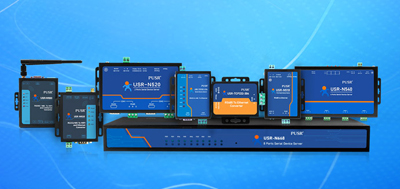
In the navigation system of AGVs, industrial PC play the role of an "intelligent brain." Take the USR-EG628 launched by PUSR as an example. Based on the ARM architecture, it is equipped with 1 TOPS AI computing power, supports edge AI tasks such as image recognition and voice judgment, and can efficiently process massive amounts of data from laser radars or cameras to achieve real-time positioning, path planning, and obstacle avoidance decisions.
Multi-Protocol Support: Compatible with industrial protocols such as Modbus, OPC UA, and MQTT, it can seamlessly integrate with systems such as WMS and MES;
High Reliability: Industrial-grade design with three-level surge protection and three-level electrostatic protection, adapting to high-humidity and high-corrosion environments in pharmaceutical workshops;
Flexible Expansion: Supports various input and output combinations such as digital, analog, serial ports, and Ethernet, enabling quick integration with various sensors and actuators;
Remote Management: Remote deployment, parameter configuration, and firmware upgrades can be achieved through the WukongEdge edge platform, reducing operation and maintenance costs.