Single Board Computer Empowers AGV: A Zero-Error Flexible Assembly Revolution from Navigation Obstacle Avoidance to Cluster Scheduling
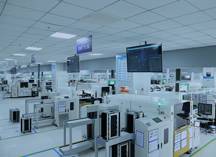
In a clean workshop of a precision electronics manufacturing plant in Suzhou, an AGV equipped with a USR-EV series single board computer precisely navigates between shelves at 0.3m/s. When its laser sensor detects an obstacle 30cm ahead, the AGV decelerates, turns, and replans its path within 0.1s, maintaining an error within ±1mm—a technological breakthrough in industrial automation and a crucial step towards zero-error flexible assembly in manufacturing.
A medical device manufacturer's production line upgrade exemplifies this challenge: their AGV system for cardiac stent assembly exhibited a 0.15mm deviation during repositioning, reducing product qualification rates from 99.2% to 87%. Engineer Li sighed, "A 0.1mm error is the diameter of a hair strand, but for implantable medical devices, it can be life-or-death."
This precision anxiety is spreading globally:
3C Electronics: ≤±0.05mm precision for smartphone camera module assembly
Semiconductors: ≤±0.02mm precision for wafer handling robots
Aerospace: ±0.01mm precision for satellite component assembly
A precision gear manufacturer's test data showed that optimizing gear mesh clearance from 0.15-0.2mm to 0.08-0.12mm reduced defect rates by 42%, but further optimization hit hardware performance bottlenecks.
Field research in a large logistics warehouse revealed three major dynamic challenges for AGV systems:
Environmental Interference: Electromagnetic interference from metal shelving caused a 30% signal degradation in laser navigation
Task Fluctuations: During e-commerce promotions, order volumes surged 300%, causing a 2.3s response delay in AGV scheduling systems
Equipment Collaboration: Path conflict rates rose 15% when multi-brand AGVs operated together due to incompatible communication protocols
A more alarming case occurred at an automotive parts manufacturer: AGV positioning errors accumulated during cross-workshop transfers due to floor slope changes, ultimately damaging a precision mold worth 500,000 yuan.
The USR-EV series achieves qualitative environmental perception improvements through:
Laser-Visual Fusion Navigation: Integrating RK3588 chip's NPU computing power to process 16 sensor data streams in real-time, improving positioning accuracy from ±5mm to ±0.5mm
Anti-Interference Design: Electromagnetic shielding enables stable operation in 10V/m electromagnetic fields
Dynamic Compensation Algorithm: Fusing accelerometer and gyroscope data to eliminate floor slope impacts on positioning
In a semiconductor factory test, an AGV equipped with a USR-EV908 single board computer maintained positioning error fluctuations within ±0.3mm during 72 hours of continuous operation in a Class 1000 cleanroom.
For complex multi-AGV collaboration scenarios, the USR-EV series optimizes scheduling through three core algorithms:
Dynamic Task Allocation Algorithm:Real-time bidding system based on auction mechanisms reduces task allocation response time to 50ms
Load balancing strategies increase AGV utilization from 65% to 88%
After implementation at an e-commerce warehouse, order processing capacity exceeded 1.2 million orders/day during Double 11
Intelligent Path Planning Algorithm:Combining A* and DWA algorithms completes global path planning and local obstacle avoidance decisions in 0.3s
Reinforcement learning models improve path replanning efficiency by 40% in dynamic obstacle environments
Tests at an automotive factory showed 18% shorter average AGV travel distances and 22s reduction in single-trip task times
Conflict Prediction and Avoidance System:Time window algorithms predict potential conflicts and adjust AGV speeds 0.5s in advance
Virtual traffic light mechanisms increase intersection throughput by 35%
In a logistics park application, collision rates among mixed AGV types dropped to 0.02%
The USR-EV series achieves three breakthroughs in motion control:
High-Precision Servo Control: EtherCAT bus enables 125μs cycle control, stabilizing repeat positioning accuracy within ±0.08mm
Vibration Suppression Technology: Feedforward compensation algorithms reduce mechanical arm vibration amplitude by 82% at 1m/s
Temperature Adaptive Regulation: Built-in temperature sensor networks maintain ±0.03mm assembly accuracy across 25℃ temperature differentials
At a medical device manufacturer's production line, an AGV system equipped with a USR-EV808 single board computer improved cardiac stent assembly accuracy from ±0.15mm to ±0.06mm, meeting aerospace-grade assembly standards.
A typical 3C electronics manufacturer transformation case:
Production rhythm: Reduced from 12s/piece to 9s/piece, increasing single-line daily capacity by 25%
Equipment utilization: Increased from 68% to 92%, reducing AGV equipment investment by 3 units
Labor costs: Saved 5 operators, reducing annual labor costs by over 800,000 yuan
At a precision gear manufacturer:
Product qualification rate: Increased from 92.5% to 98.7%, reducing annual scrap losses by 3.2 million yuan
Customer complaint rate: Complaints due to assembly precision issues decreased by 76%
Brand premium: Products passed German TüV certification, increasing export unit prices by 15%
A new energy vehicle factory's intelligent upgrade project demonstrated:
Production line changeover time: Reduced from 72 hours to 8 hours, supporting multi-model mixed production
System scalability: Software upgrades support adding 20 more AGVs
Investment return period: Shortened from 36 months to 18 months, doubling ROI
As "Industry 4.0" evolves toward "Industry 5.0," AGV systems face new technological challenges:
Sub-micron precision: Gartner predicts 40% of industrial robots will achieve ±0.05mm assembly capability by 2028
Deep AI integration: Enabling autonomous decision-making through reinforcement learning for "experience accumulation" capabilities
Digital twin applications: Simulating assembly processes in virtual spaces to optimize control parameters in advance
The USR-EV series is prepared for these transformations:
Computing power reserves: RK3588 chip provides 6TOPS NPU computing power to support complex AI model operations
Interface expansion: Reserved PCIe interfaces enable connecting high-precision laser trackers and other sensors
Open ecosystem: Provides MATLAB/Simulink interfaces to support customer-defined algorithm development
At a semiconductor packaging and testing plant in Shenzhen, an AGV system equipped with a USR-EV series single board computer precisely grasps 2mm-diameter chips at 0.5m/s. The vision system provides real-time position feedback, with control algorithms making corrections within 1ms, maintaining stable assembly accuracy at ±0.06mm—equivalent to hitting a coin on a football field with precision.
Such scenarios are becoming increasingly common. As single board computers push AGV assembly precision to new heights, manufacturing enterprises gain not only product quality improvements but also brand value elevation. In an era where precision determines competitiveness, the USR-EV series provides not just a hardware solution but a strategic investment in building future smart factories. As the CTO of a precision instrument manufacturer said, "When precision is no longer a bottleneck, we can finally focus on product innovation itself." This precision revolution led by single board computers is reshaping the global manufacturing competitive landscape.